Why Your 40s Are the Critical Turning Point for Muscle and Bone Health
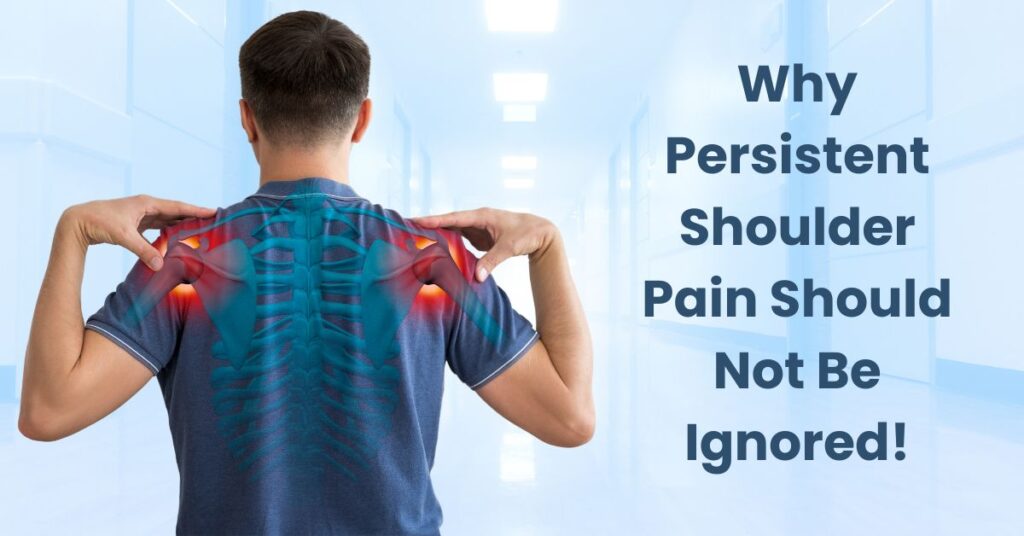
We often think that slowing down after 40 is just a natural part of life. We accept the creaking knees, the morning back stiffness, and getting winded while carrying groceries as inevitable signs of aging. But what if these weren’t just “signs of age,” but symptoms of a preventable medical condition?
In a recent feature by The Times of India and our latest Move and Shine Podcast, Dr. Pradeep Kocheeppan shared a critical truth: “Medical facilities will keep people alive, but whether you really enjoy your life in the long run depends entirely on your physical health and muscular fitness.”
The Invisible Crisis—Sarcopenia After 40
Sarcopenia is the medical term for the involuntary loss of skeletal muscle mass and strength. While we naturally lose 3–5% of our muscle mass every decade after 30, this process hits “accelerated mode” once we cross 40.
Why Indians Face a Unique Genetic Risk
During the podcast, Dr. Kocheeppan highlighted a startling fact: Indians are among the most sarcopenic races in the world. Genetically, we tend to have a lower baseline of muscle mass compared to Caucasian or African populations. Research indicates that South Asians often have a higher body fat percentage and lower muscle mass at the same BMI as other ethnic groups—a phenomenon sometimes called the “thin-fat” phenotype.
This means we have a very small “margin for error.” When we hit 40, our already lower muscle reserves begin to deplete, and a sedentary lifestyle acts as fuel to the fire.
The Hormonal Shift and the Bone Connection
As we age, levels of Growth Hormone and Testosterone (in men) begin to decline. This slows down the body’s ability to synthesize protein and repair muscle fibers. When muscles weaken, they stop providing the necessary mechanical stimulus to the bones, leading to decreased bone density—the precursor to Osteoporosis.
Overuse vs. Underuse—The Modern Dilemma
A common question asked is, “Doctor, won’t exercise cause more injury?” Dr. Kocheeppan argues that while we fear “overuse” (injuries from excessive sports), the real silent killer is “underuse.”
Overuse: An Olympic athlete may face joint wear-and-tear by age 50 because of intense drilling.
Underuse: A computer-based professional in Bangalore who sits for 8 hours a day experiences “tissue death” and chronic pain.
Pain from underuse at age 45 is often harder to manage than a sports injury at 50 because the sedentary body has lost its ability to stabilize and heal itself.
The Science of Muscle-Bone Synergy
Your musculoskeletal system is a mechanical engine. When you engage in strength training, your muscles pull on your bones. This “pulling action” is a biological signal that forces bones to absorb calcium and remain dense.
The “Natural Brace” Concept
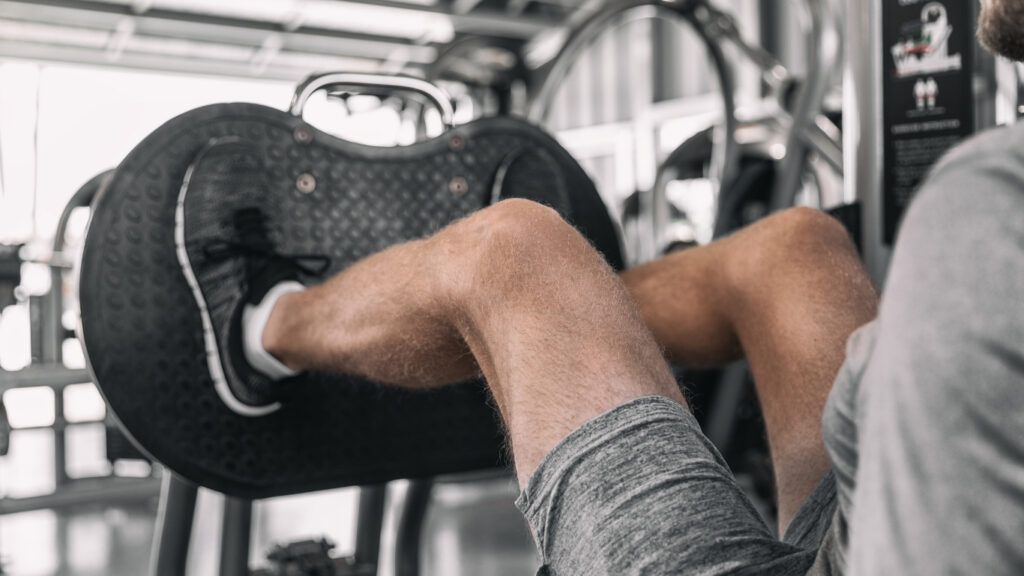
Your joints—knees, shoulders, and spine—are surrounded by muscles that act as a “Natural Brace.” If your quadriceps (thigh muscles) are strong, they absorb the shock of your weight, preventing the “bone-on-bone” friction that causes osteoarthritis. Strength training is essentially an insurance policy for your joints.
5 Expert Ways to Prevent Muscle Loss
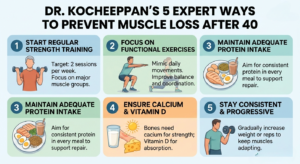
Based on Dr. Kocheeppan’s clinical experience and the TOI report, these five steps are non-negotiable for anyone over 40:
1. Start Progressive Resistance Training
Walking is excellent for cardiovascular health, but it is not enough to stop muscle wasting. You need resistance. Dr. Kocheeppan suggests finding your 1RM (One Rep Max)—the maximum weight you can lift once—under professional supervision. This baseline allows you to train at a capacity that stimulates growth without causing injury.
2. Focus on Functional Movements
You don’t need to be a bodybuilder; you need to be “functionally fit.” Squats are vital because they preserve your ability to sit and stand independently. Lunges are necessary for climbing stairs. Dr. Kocheeppan calls this the “Principle of the Last Decade”—the effort you put in today is a direct investment in your mobility during your final 15 years of life.
3. The Protein Paradox: Quality Over Quantity
Indians live in a “carbohydrate-heavy, protein-light” society. While protein is essential for muscle repair, Dr. Kocheeppan issues a stern warning: Uncontrolled consumption of low-quality protein powders can lead to kidney and liver stress.
Safety Tip: If you use supplements, monitor your “Morning Urine Sample” annually for Proteinuria (protein in urine) and check your uric acid levels.
4. Micronutrients: Evidence-Based Supplementation
Without Vitamin D and Calcium, the link between muscles and bones breaks. Specifically for Indian women, who often have less cartilage inside the knee, targeted nutraceuticals can help mitigate health risks when combined with diagnostic tests.
5. Consistency Over Intensity
“Resolution Fitness”—going hard at the gym for two weeks and then quitting—is the leading cause of rapid cartilage deterioration. Slow, rhythmic exercise without “jerks” provides the best long-term outcomes.
The “No-Jerk” Rule for Injury Prevention
In the podcast, Dr. Kocheeppan shared a “Shoulder Surgery Secret.” He noted that 50% of his rotator cuff surgeries result from people performing “Deltoid Flies” incorrectly in the gym.
The Golden Rule:
When lifting weights, the movement must be rhythmic and controlled. If you have to “jerk” your body to lift a weight, you are tearing your tendons and cartilage rather than building muscle. “Stop the jerk, save the joint.”

Lifestyle Habits That Kill Mobility
Beyond exercise, your daily habits can cause “under-the-radar” damage:
The Sitting Disease: Bangalore’s traffic and IT jobs keep us static for hours. Your spine only receives oxygen and nutrients through movement.
Smoking and Spine Decay: Smoking constricts blood vessels, cutting off the supply to spinal discs. A smoker’s spine at 45 often looks like that of a 60-year-old.
Caffeine and Bone Softening: Two cups of coffee can boost brain function, but exceeding three cups a day can interfere with calcium absorption, making your bones “soft” or osteoporotic.
Why You Need Specialist Guidance
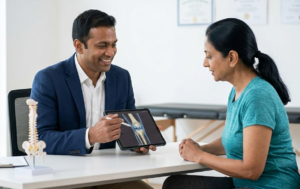
Starting a fitness journey based on “uncensored” YouTube videos can be dangerous. At Move and Shine Orthopedic Wellness, we utilize a triad of experts: a Strength & Conditioning coach, a Physiotherapist, and an Orthopedic Surgeon.
Even one professional session a month can provide the guidance needed to prevent years of chronic pain and potential surgery.
Frequently Asked Questions (FAQ)
What exactly is Sarcopenia?
It is the medical term for age-related muscle loss. While it is a natural process, a sedentary lifestyle makes it occur 10 times faster.
Is 40 too late to start lifting weights?
Never! Dr. Kocheeppan says, “It is better late than never,” but you must start with a scientific understanding of your body’s current capacity.
Is walking 10,000 steps enough to build muscle?
No. Walking is great for your heart, but muscle building requires resistance or weight-bearing exercises.
How does strength training improve bone density?
The mechanical stress of muscles pulling on bones stimulates “osteoblasts,” the cells responsible for building bone tissue.
Won’t weight training damage my joints?
If done correctly, it strengthens the muscles that protect your joints. It only causes damage if you use improper form or “jerky” movements.
What are the best “starter” exercises?
Bodyweight squats, wall push-ups, planks, and resistance band rows are the safest starting points for those over 40.
Why are Indians at higher risk for muscle loss?
Due to genetics and a carbohydrate-heavy diet, Indians are often “skinny-fat,” meaning they have low muscle mass even if they appear thin.
Are protein shakes dangerous?
They can be if they are low quality or if you have underlying kidney issues. Always check your kidney function (eGFR/Uric Acid) if you supplement heavily.
Can I reverse Osteoporosis with exercise?
You can significantly improve bone density and stop further loss through a combination of strength training and proper nutrition.
How do I avoid “jerking” while exercising?
If you cannot hold the weight at the top of the movement for one second, the weight is too heavy. Decrease the weight and increase the control.
Do I need a gym, or can I exercise at home?
You can achieve excellent results at home using resistance bands and your own body weight, provided you follow a structured program.
Does smoking really affect my joints?
Yes. Smoking reduces blood flow to cartilage and spinal discs, leading to faster “wear and tear” and slower healing from injuries.
What is the “55/5 Rule” for back pain?
For every 55 minutes of sitting, you must stand and walk for 5 minutes to re-oxygenate your spinal tissues.
How much coffee is too much for my bones?
Exceeding 3 cups of highly concentrated coffee daily can lead to calcium leaching from the bones.
How does Move and Shine Orthopedic Wellness differ from a regular gym?
We combine orthopedic medical science with professional coaching to ensure your fitness journey is therapeutic and injury-free.
Your body is your most valuable asset. Do not let it wither away through “underuse.” Start investing in your future self today.
Consult Dr. Pradeep Kocheeppan at Move and Shine Orthopedic Wellness, Uttarahalli, Bangalore, and begin your journey toward a stronger, more vibrant second half of life.