Introduction: Your Eyes Are Working Overtime
If you are reading this article on a laptop or smartphone, your eyes have probably already spent several hours focusing on digital screens today.
Modern lifestyles revolve around screens. Office professionals, students, gamers, content creators, software engineers, and even school children now spend 8–12 hours daily looking at laptops, phones, tablets, and televisions. Along with this rise in screen exposure, another product category has rapidly become popular: blue light glasses.
Optical stores and online marketplaces market them as a solution for digital eye strain, headaches, blurred vision, poor sleep, and even long-term eye damage. Some advertisements claim blue light glasses can “protect your retina” or “prevent vision loss.”
But what does science actually say?
Do blue light blocking glasses genuinely help reduce screen eye strain, or are they simply a modern wellness trend supported more by marketing than evidence?
The truth is more nuanced.
Blue light glasses are not entirely useless, but they are also not the miracle solution many advertisements suggest. Understanding what actually causes digital eye strain — and what truly helps — is essential for making informed decisions about your eye health.
This article explains the real science behind blue light exposure, Computer Vision Syndrome, sleep disruption, screen-related headaches, and practical strategies that genuinely improve visual comfort.
What Is Blue Light?
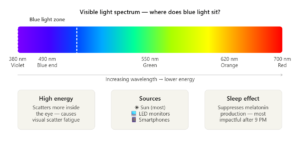
Light exists on a spectrum of wavelengths. Blue light falls within the visible light spectrum and has wavelengths between approximately 400 and 490 nanometers.
Compared with other visible light wavelengths, blue light carries relatively high energy and scatters more easily inside the eye.
Blue light comes from:
- Sunlight
- LED lighting
- Smartphones
- Laptop screens
- Tablets
- Television displays
- Digital advertising screens
The sun remains the largest natural source of blue light exposure. In fact, outdoor exposure during daytime hours provides significantly more blue light than digital screens.
However, modern LED-based devices expose our eyes to artificial blue light for prolonged durations, especially during evening hours when the body naturally prepares for sleep.
This prolonged exposure is one reason researchers began studying the relationship between blue light, sleep quality, circadian rhythm regulation, and visual fatigue.
What Are Blue Light Blocking Glasses?
Blue light blocking glasses are spectacles designed to reduce the amount of blue light entering the eyes.
These lenses typically use:
Special anti-blue light coatings
Yellow or amber tinting
Anti-reflective technology
Glare reduction coatings
Major Categories of Blue Light Lenses
Daytime Blue Light Glasses
These usually have clear or lightly tinted lenses and are marketed for office work, studying, and gaming.
Evening or Sleep-Focused Blue Light Glasses
These use darker amber or yellow-tinted lenses designed to block higher amounts of blue light before bedtime.
Many people confuse glare reduction with blue light filtering. In reality, anti-reflective coatings often contribute more to comfort than the blue light filter itself.
Why Are Blue Light Glasses So Popular?
The popularity of blue light glasses increased dramatically after remote work and online education expanded globally.
Several factors contributed to the trend:
Increased screen time after 2020
Work-from-home culture
Social media influencer marketing
Rising awareness about sleep health
Increased complaints of digital eye strain
Aggressive advertising from eyewear brands
As screen exposure increased, many people began experiencing:
Dry eyes
Burning sensation
Eye fatigue
Headaches
Difficulty sleeping
Neck and shoulder discomfort
Blurred vision after prolonged screen use
This created massive demand for products promising fast relief.Do Blue Light Glasses Really Work?
The Short Answer
Blue light glasses may help reduce sleep disruption during evening screen use, but scientific evidence supporting their effectiveness for digital eye strain relief remains limited.
Myth vs Reality: Separating Fact from Fiction
Myth | Reality |
Blue light from screens causes permanent eye damage | No clinical evidence supports this at typical screen usage levels |
Blue light glasses eliminate eye strain completely | Research does not confirm this — behavioral habits matter more |
All blue light is harmful | Blue light from the sun is far greater than from screens; some is necessary for alertness |
You need expensive glasses for blue light protection | Anti-glare coatings and screen adjustments often work just as well |
Blue light glasses replace the need for an eye check-up | They do not — regular eye exams are essential for vision health |
Blue light glasses cure headaches | Headaches from screens are usually caused by eye strain, posture, or uncorrected refractive errors — not blue light alone |
What Research Says About Digital Eye Strain
Several studies have evaluated whether blue light filtering lenses significantly reduce eye strain symptoms.
A major 2021 Cochrane Review found no strong evidence that blue light filtering glasses produce clinically meaningful improvements in visual fatigue, eye strain symptoms, or visual performance compared with standard lenses.
Similarly, the American Academy of Ophthalmology (AAO) currently does not recommend blue light glasses as a primary treatment for digital eye strain
This does not mean users are imagining relief. Many people genuinely feel better while wearing them. However, the improvement may be related to:
Reduced glare
Better awareness of screen habits
More frequent breaks
Improved blinking behavior
Better posture after becoming conscious about eye health
Computer Vision Syndrome: Symptoms and Solutions
Computer Vision Syndrome (CVS), also called digital eye strain, is a group of symptoms caused by prolonged digital screen usage. Studies suggest that nearly 60–70% of regular screen users experience some form of digital eye strain.
Learn more about dry eye syndrome caused by excessive screen time and how Computer Vision Syndrome treatment can help reduce long-term discomfort.
Common Symptoms of Computer Vision Syndrome
Dry eyes
Burning sensation
Blurred vision
Difficulty focusing
Eye fatigue
Headaches
Neck pain
Shoulder tightness
Increased sensitivity to light
Temporary double vision
Why Computer Vision Syndrome Happens
Digital screens force the eyes to maintain continuous near focus for prolonged periods. Unlike reading printed text, screens also involve:
Flickering pixels
Glare
Contrast variation
Reduced blinking
Continuous focus adjustment
These factors create muscular fatigue and tear film instability.
If you want to understand related conditions in more detail, you can also learn more about dry eye syndrome, screen-related neck pain, and ergonomic workstation setup practices.
What Causes Digital Eye Strain? (It’s Not Just Blue Light)
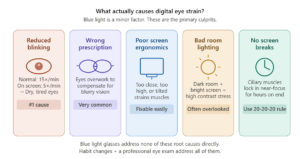
Many people assume blue light itself is the primary cause of screen-related discomfort. In reality, digital eye strain is usually caused by several other factors.
Primary Drivers of Digital Visual Fatigue
Reduced Blinking
Humans normally blink 15–20 times per minute. During screen use, blinking frequency can drop to nearly 5–7 blinks per minute. This leads to dry eye symptoms, irritation, and visual discomfort.
Poor Ergonomics
Incorrect monitor height, improper viewing distance, and poor posture increase strain on both eye muscles and neck muscles. This is why many people experience eye fatigue together with neck pain and shoulder stiffness.
Uncorrected Refractive Errors
Even small prescription errors can significantly worsen eye strain during prolonged near work. People with outdated glasses often experience headaches, blurry vision, and focusing difficulties after screen use.
Prolonged Continuous Focus
The ciliary muscles inside the eyes work continuously during near vision tasks. Long periods without visual breaks fatigue these muscles.
Poor Lighting Conditions
Using bright screens in dark environments increases visual stress. Large brightness differences between screens and surroundings force the eyes to work harder.
What Eye Doctors Actually Say About Blue Light Glasses
“Most patients who visit us with digital eye strain symptoms are actually dealing with dry eye, outdated prescriptions, prolonged screen exposure, or poor workstation ergonomics rather than blue light itself. Blue light glasses may help certain individuals, particularly for evening screen use and sleep quality, but they should not replace proper eye evaluation and healthy screen habits.”
– Dr. Dona Susan John
Can Blue Light Affect Sleep?
This is the area where blue light blocking glasses show the strongest scientific support. Blue light influences melatonin production — the hormone responsible for regulating sleep cycles.
Exposure to bright screens late at night can suppress melatonin release and delay sleep onset. Research suggests that using amber-tinted blue light blocking glasses during the 2–3 hours before bedtime may improve sleep quality in some individuals.
Who Is Most Likely to Benefit?
Night-shift workers
Gamers
Students studying late
Professionals working on laptops after dinner
Individuals with poor sleep hygiene
However, improving sleep habits remains more important than relying entirely on glasses.
Proven Alternatives to Reduce Eye Strain
The 20-20-20 Rule
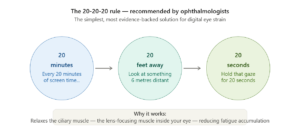
Every 20 minutes, look at something 20 feet away for at least 20 seconds. This helps relax the focusing muscles inside the eyes and reduces continuous accommodative stress.
Optimize Your Screen Settings
Reduce excessive screen brightness
Increase text size
Use night mode in the evening
Maintain proper screen distance
Position the monitor slightly below eye level
Blink Consciously
Conscious blinking helps maintain tear film stability and reduces dry eye symptoms. People with persistent dryness may benefit from preservative-free lubricating eye drops after professional consultation.
Improve Your Workstation Ergonomics
Poor posture contributes heavily to screen-related discomfort. A proper workstation setup can significantly reduce both visual strain and musculoskeletal stress.
Get a Comprehensive Eye Examination
If symptoms continue despite lifestyle changes, a detailed eye examination becomes important. Conditions like dry eye syndrome, binocular vision problems, refractive errors, or early ocular disease may require professional management.
Evaluating Your Need for Specialty Lenses
Who Should Consider Blue Light Glasses?
Blue light glasses may be useful for:
Individuals using screens late at night
People with mild light sensitivity
Users experiencing glare discomfort
Individuals focused on improving sleep hygiene
Gamers exposed to prolonged evening screen time
For these users, blue light glasses may provide subjective comfort improvements.
Who Does Not Need Blue Light Glasses?
Blue light glasses are unlikely to solve symptoms caused by:
Incorrect prescription power
Poor posture
Dry eyes
Inadequate sleep
Poor workstation setup
Excessive uninterrupted screen exposure
They also should not replace regular eye examinations, proper ergonomic adjustments, healthy screen habits, or medical evaluation for persistent symptoms.
Are Expensive Blue Light Glasses Better?
Not necessarily. Higher pricing does not always mean better performance. Lens quality, anti-reflective coating quality, glare control, and overall optical clarity matter more than marketing claims.
For many users, basic anti-glare lenses combined with healthy screen habits may offer similar comfort.
When Should You See an Eye Doctor?
Occasional eye fatigue after long screen sessions is common. However, professional evaluation becomes important if you experience:
Persistent headaches
Frequent blurred vision
Severe dry eyes
Difficulty focusing
Double vision
Excessive redness
Sudden changes in vision
Symptoms that continue despite reducing screen time
A comprehensive eye examination can identify underlying causes such as dry eye syndrome, refractive errors, binocular vision problems, or other ocular conditions.
Final Verdict: Are Blue Light Glasses Worth It?
Blue light glasses are not a scam, but they are often marketed with exaggerated promises. Current scientific evidence does not strongly support them as a cure for digital eye strain or headaches.
However, they may still help certain users by:
Reducing glare
Improving visual comfort
Encouraging healthier screen habits
Supporting better sleep hygiene during evening device use
The most effective ways to reduce digital eye strain remain:
Following the 20-20-20 rule
Taking regular breaks
Improving posture
Blinking more frequently
Optimizing workstation ergonomics
Maintaining healthy sleep habits
Getting regular eye examinations
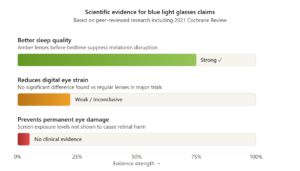
For long-term eye comfort, behavioral habits matter far more than expensive lens coatings.
For professional eye care consultations and digital eye strain assessment, visit Move and Shine Eye Clinic, Bangalore:
Frequently Asked Questions (FAQs)
- Do blue light glasses actually reduce eye strain?
Current scientific evidence does not strongly support blue light glasses as a reliable solution for eye strain. Most studies, including a major 2021 Cochrane Review, found no significant difference between blue-light filtering lenses and regular lenses for this purpose. Factors like screen ergonomics, blinking habits, and uncorrected prescriptions are far more likely causes of strain.
- Are blue light glasses a myth or do they have real benefits?
They are not entirely a myth, but they are oversold. Their most credible benefit is helping protect sleep quality by blocking blue light in the evening hours, which can otherwise suppress melatonin. Claims about preventing eye damage or curing eye strain have much weaker scientific backing.
- Can blue light glasses help me sleep better?
Yes — this is their strongest use case. Blue light exposure in the two to three hours before bedtime suppresses melatonin production. Amber-tinted blue light blocking glasses used during this window have been shown in some studies to improve sleep onset and quality.
- Is blue light from screens dangerous for my eyes?
At typical daily screen exposure levels, blue light from devices is not known to cause permanent retinal damage. The sun emits far more blue light than any phone or monitor. That said, prolonged screen use causes real discomfort — but mainly due to reduced blinking, eye muscle fatigue, and screen ergonomics rather than blue light toxicity.
- What is the 20-20-20 rule and does it work?
The 20-20-20 rule recommends that every 20 minutes, you look at something 20 feet away for at least 20 seconds. This gives your ciliary muscles a rest and reduces the build-up of eye fatigue. It is widely recommended by ophthalmologists and has good evidence supporting it as a practical, cost-free eye strain remedy.
- Who should wear blue light glasses?
They are most appropriate for people who regularly use screens in the hours before bedtime, those with subjective light sensitivity, and individuals who have already addressed other potential causes of eye strain. They are not a substitute for prescription eyewear or professional eye care.
- How often should I get my eyes checked if I work on a computer all day?
Adults who spend significant time on digital screens should have a comprehensive eye exam at least once every one to two years. If you already experience symptoms like eye strain, blurred vision, or headaches, an annual check-up is advisable. Patients at Move and Shine in Bangalore receive thorough evaluations tailored to screen-heavy lifestyles.
- Can blue light glasses cure my headaches?
Unlikely, unless your headaches are directly linked to light sensitivity. Headaches after screen use are more commonly caused by uncorrected refractive errors, muscle tension in the neck and shoulders, poor monitor positioning, or dehydration. A proper eye examination is the right first step.
- Are there alternatives to blue light glasses for screen eye strain?
Absolutely. The 20-20-20 rule, blinking exercises, adjusting screen brightness and color temperature, improving room lighting, maintaining proper screen distance and height, and getting an up-to-date prescription are all proven and effective strategies — often more effective than blue light glasses.
- Do children need blue light glasses?
There is no established clinical evidence recommending blue light glasses specifically for children. More important priorities include limiting total screen time, ensuring proper lighting during study, scheduling regular pediatric eye examinations, and maintaining appropriate screen distances.
- Can blue light glasses replace prescription glasses?
No. Prescription glasses correct refractive errors like myopia, hyperopia, and astigmatism. Blue light glasses with no prescription power do not correct vision. You can, however, have blue light filtering coatings added to prescription lenses — an option worth discussing with your eye doctor.
- What is digital eye strain (Computer Vision Syndrome)?
Digital eye strain, or Computer Vision Syndrome (CVS), is a group of symptoms caused by prolonged screen use — including dry eyes, blurred vision, headaches, and neck pain. It is very common and affects an estimated 60–70% of regular screen users. It is treatable with habit changes and proper eye care.
- Are expensive blue light glasses better than cheap ones?
Price does not always correlate with blue light filtering effectiveness. What matters more is the quality of the anti-reflective coating and whether the lens actually filters the claimed percentage of blue light. Budget versions with good coatings can perform as well as premium ones for everyday use.
- Can I use night mode on my phone instead of blue light glasses?
Yes. Night mode, warm display settings, and apps like f.lux reduce blue light emission from your screen automatically in the evenings. This is a free and effective alternative, especially for sleep-related concerns. Combining it with consistent sleep timing offers even greater benefit.
- How do I know if my eye strain is serious enough to see a doctor?
See an eye doctor if you experience persistent blurred vision during or after screen use, frequent headaches that are not relieved by rest, double vision, significant eye redness or dryness that does not improve with drops, or any sudden changes in vision. These symptoms warrant professional evaluation.
- Where can I get eye strain treatment in Bangalore?
Move and Shine, one of the most trusted eye clinics in South Bangalore, offers comprehensive digital eye strain assessment and treatment. Their team evaluates your complete visual health — including refractive status, dry eye, and screen ergonomics — to provide a targeted solution rather than a generic recommendation.
- Is there a good eye clinic near South Bangalore for digital eye problems?
Yes. Move and Shine is located in South Bangalore and is well-regarded for its combination of experienced doctors, advanced equipment, and affordable consultations. They specialize in conditions related to digital screen overuse and provide personalized care.
- Do blue light glasses help with dry eyes?
Not directly. Dry eyes from screen use are primarily caused by reduced blinking, not blue light exposure. Blue light glasses do not increase your blink rate. Artificial tears, blinking exercises, and addressing environmental factors like air conditioning are more effective remedies.
- What tests does an eye doctor do for digital eye strain?
A comprehensive evaluation typically includes visual acuity testing, refraction (to check for prescription needs), tear film assessment for dry eye, binocular vision evaluation, and sometimes an examination of focusing and eye coordination ability. Move and Shine uses modern diagnostic tools for accurate and thorough assessments.
- Is Move and Shine good for both eye care and orthopedic issues?
Yes. One of the distinguishing features of Move and Shine is its integrated approach to wellness. Many screen-related problems affect both vision and musculoskeletal health simultaneously — for example, neck pain from poor monitor positioning often accompanies eye strain. Having experienced orthopedic and eye care specialists under one roof at Move and Shine means you can address both aspects of your health in a single, convenient visit.