Medically Reviewed by Dr. Dona Susan John, Eye Care Specialist at Move & Shine
Last Updated: July 2026
Dry eyes from screen use have become a defining health challenge in the modern digital era, our eyes are rarely at rest. From the moment we wake up to the time we sleep, we are tethered to smartphones, laptops, and tablets. While technology has made life easier, it has birthed a silent epidemic: Digital Eye Strain and its most persistent byproduct, Dry Eye Syndrome (DES).
If you’ve ever felt a “gritty” sensation, persistent redness, or blurred vision after a long day of work, you aren’t alone. This comprehensive guide explores why screens are taxing your tear film and how you can find a permanent solution to reclaim your visual comfort.

What Is Dry Eye Syndrome?
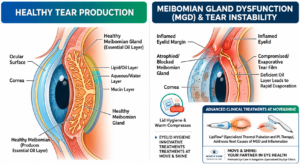
Dry Eye Syndrome is a chronic condition that occurs when your eyes do not produce enough tears, or when the tears produced evaporate too quickly. Tears are not just water; they are a complex mixture of water, fatty oils, and mucus. This mixture keeps the surface of your eyes smooth, clear, and protected from infection.
When this delicate balance is disrupted, the ocular surface becomes inflamed, leading to discomfort and, if left untreated, potential damage to the cornea.
Why Screen Time Causes Dry Eyes
The primary reason screen use is synonymous with dry eyes isn’t just the device itself, but how our biology reacts to it.
Reduced Blinking While Using Screens
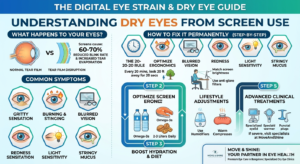
Under normal circumstances, humans blink about 15–20 times per minute. However, studies show that when we concentrate on a digital screen, our blink rate drops by 60% to 70%.
The Consequence: Every time you blink, a fresh layer of tears is spread across the eye. Without frequent blinking, the tear film breaks or evaporates, leaving the cornea exposed to the air.
… according to the American Academy of Ophthalmology.
Blue Light and Tear Film Disruption
Digital screens emit High-Energy Visible (HEV) blue light. While blue light is naturally present in sunlight, prolonged, close-range exposure from screens can contribute to oxidative stress on the ocular surface. This stress can interfere with the Meibomian glands—the tiny glands in your eyelids that produce the essential oily layer of your tears.
Air Conditioning and Environmental Factors
Most screen work happens in office environments or home setups where air conditioning is constant. AC units strip moisture from the air, accelerating tear evaporation. When combined with a low blink rate, your eyes face a “double whammy” of dryness.
Common Symptoms of Dry Eyes from Screens
Recognizing the symptoms early is the first step toward prevention. Look out for:
Stinging or Burning: A sharp sensation, especially in the evening.
Grittiness: Feeling like there is sand or a foreign object in your eye.
Stringy Mucus: Discharge in or around the eyes.
Fluctuating Vision: Blurred vision that improves momentarily after blinking.
Redness: Bloodshot eyes due to surface irritation.
Light Sensitivity: Difficulty dealing with bright office lights or sunlight.
Who Is at Higher Risk?
While anyone can develop dry eyes, certain groups in cities like Bangalore are particularly vulnerable:
IT Professionals: Spending 9–12 hours a day on high-resolution monitors.
Students: Excessive use of tablets for digital learning and late-night assignments.
Gamers: High-focus activities that lead to “staring” for hours without a full blink.
Contact Lens Wearers: Digital strain combined with lenses can significantly increase irritation.
Can Dry Eyes Become Permanent?
A common question we hear at Move & Shine is: “Is this permanent?”
If the underlying cause—such as Meibomian Gland Dysfunction (MGD)—is not addressed, the condition can become chronic. While “permanent” sounds scary, it usually means the condition requires long-term management rather than a one-time fix. However, by intervening early with lifestyle changes and clinical treatments, you can achieve a state of “permanent relief” where symptoms no longer interfere with your daily life.
How to Fix Dry Eyes Permanently (Step-by-Step Solutions)
To solve dry eyes, we must move beyond temporary “comfort drops” and look at holistic and clinical interventions.
1. The 20-20-20 Rule
This is the gold standard of digital eye hygiene.
Every 20 minutes, look at something 20 feet away for at least 20 seconds.
Why it works: It forces your eye muscles to relax and encourages a full, natural blink, rehydrating the ocular surface.
“…This simple habit is recommended by the American Optometric Association as an effective way to reduce digital eye strain.”
2. Screen Ergonomics
The position of your monitor matters.
Angle: Place your screen about 4–5 inches below eye level.
Reason: This positioning reduces the area of the eye surface exposed to air (because you are looking slightly downward), which slows down tear evaporation.
3. Artificial Tears & Lubricants
Not all eye drops are created equal. Avoid “redness-relief” drops as they can cause rebound dryness.
Preservative-Free Drops: These are safer for long-term use.
Gels/Ointments: Better for overnight use if you wake up with dry eyes.
4. Hydration, Diet & Bioavailability
Healthy tears require a healthy body. To fix dry eyes permanently, we must address the internal inflammation that often affects the tear-producing glands.
Anti-Inflammatory Diets (The Mediterranean Approach): Shifting toward a Mediterranean-style diet—rich in leafy greens, colorful vegetables, lean proteins, and healthy fats—has been clinically shown to reduce systemic inflammation. By lowering inflammation levels, you provide a healthier environment for your Meibomian glands to function.
The Power of Bioavailable Curcumin: Curcumin (the active compound in turmeric) is a potent natural anti-inflammatory. However, standard turmeric has poor absorption. Using Bioavailable Curcumin as a supplement is a strategic choice for dry eye sufferers.
The Rationale: Curcumin helps inhibit the inflammatory cytokines that lead to ocular surface irritation and redness. High-absorption formulations ensure the compound actually reaches the tissues where it can mitigate dry eye symptoms.
Omega-3 Fatty Acids: Found in walnuts, flaxseeds, or high-quality supplements. Omega-3 helps improve the oil quality produced by the Meibomian glands.
5. Advanced Treatments
If home care isn’t enough, modern ophthalmology offers clinical solutions:
Punctal Plugs: Tiny devices inserted into tear ducts to stop tears from draining away too quickly.
Lipiflow/Thermal Pulsation: A procedure that clears blocked oil glands.
Intense Pulsed Light (IPL) Therapy: Reduces inflammation around the eyelids to restore gland function.
Best Home Remedies for Dry Eyes
Warm Compresses: Use a clean, warm cloth over your closed eyelids for 5 minutes. This softens the oils in your glands.
Lid Hygiene: Clean your eyelids with a mild baby shampoo or specialized lid wipes to remove bacteria that can cause inflammation.
Humidifiers: If you work in an AC-heavy environment in Bangalore, a small desk humidifier can add vital moisture to your immediate workspace.
When Should You See an Eye Doctor?
You should book a consultation at a specialized clinic like Move & Shine if:
Your eyes remain red and irritated despite using over-the-counter drops.
You experience sudden blurred vision or “halos” around lights.
Eye pain makes it difficult to focus on your work.
The dryness is accompanied by eyelid swelling or crusting.
Dry Eye Treatment in Bangalore (Local SEO Section)
Bangalore is the silicon valley of India, but its high-altitude dry air and dust, combined with the “tech-heavy” lifestyle, make it a hotspot for Dry Eye Syndrome.
At Move & Shine, we understand the specific challenges faced by Bangalore’s workforce. Whether you are an IT professional in Whitefield or a student in Basavanagudi, we provide targeted solutions for digital eye strain. As a premier eye clinic in Bangalore, we offer advanced diagnostics to measure your tear breakup time and check the health of your oil glands.
Why Choose Move & Shine for Dry Eye Treatment?
Specialized Diagnostics: We don’t just guess; we test your tear film quality.
Customized Care: Every patient gets a plan tailored to their screen habits.
Advanced Equipment: We use state-of-the-art technology to treat severe dry eye cases.
Book a Consultation at Move & Shine Bangalore Today
Prevention Tips for Long-Term Eye Health
The Critical Importance of Prevention: Stopping Issues Before They Start
In ophthalmology, a “fix” is often about management, but prevention is the only way to stop permanent damage. We often see patients who wait until their vision is blurred or their pain is constant before seeking help. By then, the Meibomian glands may have already begun to atrophy (shrink). Once these glands are lost, they cannot be regrown.
Why Prevention is Non-Negotiable:
Protects Gland Structure: Early intervention prevents the “clogging” that leads to permanent gland loss.
Saves Cost and Time: It is much easier to manage dry eyes with simple lifestyle tweaks now than with intensive clinical procedures later.
Maintains Quality of Life: Preventing the “gritty” feeling today ensures you don’t face chronic ocular fatigue during your peak productive years.
Doctor’s Expert Advice
“According to eye specialists at Move & Shine, many patients confuse dry eyes with simple tiredness. However, if you are staring at a screen for more than 6 hours a day, the damage to your tear film is cumulative. We often tell our patients: Your eyes weren’t designed for the digital world, so you have to give them the ‘lubrication’ and rest they deserve through proactive care.”
Conclusion
Dry eyes from screen use are a modern reality, but they don’t have to be your permanent reality. By combining better digital habits—like the 20-20-20 rule—with professional clinical guidance from Move & Shine, you can protect your vision and work comfortably for years to come. Your eyes are your window to the world; don’t let them go dry.
FAQs
Can screen time cause permanent dry eyes?
If left untreated, chronic screen use can lead to permanent Meibomian Gland Dysfunction, making dry eyes a long-term condition.How do I fix dry eyes naturally?
Increase blinking, use warm compresses, eat Omega-3 rich foods, and stay hydrated.Which eye drops are best for dry eyes?
Preservative-free lubricating drops are usually best for long-term digital eye strain.How can I stop my eyes from hurting while using a laptop?
Follow the 20-20-20 rule and ensure your screen is below eye level to reduce evaporation.Is blue light the main cause of dry eyes?
While blue light contributes to strain, the reduced blink rate is the primary cause of dryness.Can a Mediterranean diet really help my dry eyes?
Yes. By focusing on anti-inflammatory foods like olive oil, nuts, and fish, you reduce the underlying inflammation that often causes tear film instability.How long does it take for dry eyes to heal?
With proper care, symptoms can improve in a few days, but chronic cases may take weeks of treatment.What is the 20-20-20 rule?
Every 20 minutes, look 20 feet away for 20 seconds to rest your eyes.Do blue light glasses help with dry eyes?
They help with glare and strain, but they don’t replace the need for blinking and lubrication.When should I see a doctor for dry eyes in Bangalore?
See a specialist if your symptoms persist for more than a week despite using drops.Why is bioavailable curcumin recommended for eye health?
Standard curcumin is hard for the body to absorb. Bioavailable versions ensure the anti-inflammatory benefits actually reach the ocular surface to soothe irritation.Are there vitamins for dry eyes?
Vitamin A, Omega-3, and Zinc are excellent for maintaining a healthy tear film.Is dry eye treatment expensive in Bangalore?
Basic treatments are very affordable. Advanced clinical procedures vary depending on the severity.Does drinking water help dry eyes?
Yes, hydration is essential for the aqueous (water) layer of your tears.What is Meibomian Gland Dysfunction (MGD)?
It is a condition where the glands in the eyelids are blocked and cannot produce the oil needed for tears.Can I wear contact lenses with dry eyes?
It is difficult, but special “Scleral” lenses or moisture-retaining daily disposables may help.Does “Night Mode” on phones help dry eyes?
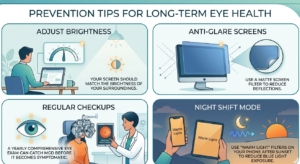
Yes, by reducing blue light, it can reduce overall ocular stress.Why do my eyes feel gritty in the morning?
This often indicates that your eyes aren’t closing fully at night or you have severe tear evaporation.Can dry eyes cause headaches?
Yes, the strain from trying to focus through a dry tear film often leads to tension headaches.Who is the best eye specialist for dry eyes in Bangalore?
The team at Move & Shine Orthopaedic Wellness & Eye Clinic offers expert diagnostics and treatment for dry eyes.
Related Reading:
This article is for general informational purposes and does not replace a consultation with an eye care specialist. If symptoms persist, please book an appointment with our team.