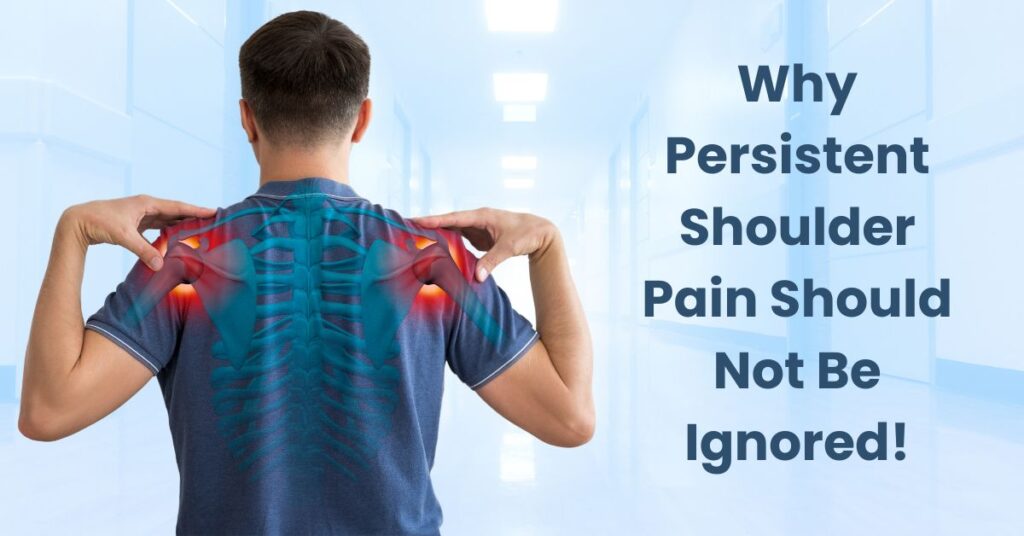
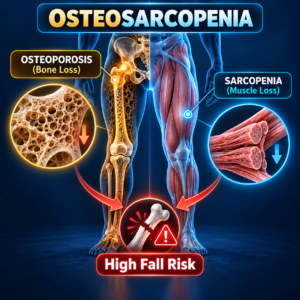
As we cross the age of 50, subtle changes in energy, balance, and physical strength are often dismissed as normal signs of aging. However, when progressive muscle loss and deteriorating bone mineral density occur at the same time, it creates a serious medical condition known as osteosarcopenia in adults over 50.
Unlike isolated osteoporosis (fragile bones) or isolated sarcopenia—a topic we explored in detail in our guide on how to prevent sarcopenia after 40—osteosarcopenia represents a combined musculoskeletal deterioration. This dual condition significantly increases fall risk, joint instability, and physical disability.
At Move & Shine Orthopaedic Wellness & Eye Clinic, our clinical team combines advanced diagnostics with targeted physiotherapy and exercise training to help adults identify, treat, and reverse osteosarcopenia. This comprehensive guide breaks down the biological causes of osteosarcopenia, its diagnostic criteria, evidence-based resistance training protocols, targeted nutrition, and practical lifestyle adjustments to help you rebuild strength and protect your independence.
What Is Osteosarcopenia? The Hazardous Dual Threat Explained
To understand osteosarcopenia in adults over 50, it is essential to explore how bones and skeletal muscles interact as a single functional system.
Historically, bone loss (osteoporosis) and muscle loss (sarcopenia) were treated as separate health concerns. Modern clinical research shows that bone tissue and skeletal muscle communicate constantly through mechanical forces, hormonal pathways, and biochemical signals known as myokines and osteokines.
                              THE DUAL ATTACK OF OSTEOSARCOPENIA
                                  │
  ┌───────────────────────────────┴───────────────────────────────┐
  ▼                                                               ▼
SARCOPENIA                                                  OSTEOPOROSIS
(Progressive Loss of Muscle                                 (Systemic Decline in Bone
Mass, Quality & Function)                                   Metric & Density)
  │                                                               │
  └───────────────────────────────┬───────────────────────────────┘
                                             ▼
                                      OSTEOSARCOPENIA
              ┌───────────────────┼───────────────────┐
              ▼                   ▼                   ▼
      Extreme Fall Risk    Joint Instability   Loss of Mobility
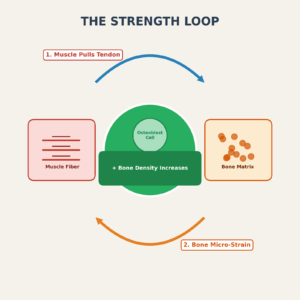
When muscle mass shrinks, the mechanical loading exerted on bone tissue decreases. Without this mechanical stress, bone remodeling slows down, accelerating bone mineral density loss. Conversely, thinning bone structures offer weaker anchor points for muscular tendons.
This reciprocal decline creates a hazardous cycle. Weak muscles fail to stabilize fragile bones, dramatically escalating the risk of balance loss, low-impact fractures, and chronic joint issues—including lower limb and back pain and how orthopedic wellness is revolutionizing its management.
Causes and Risk Factors of Osteosarcopenia in Adults Over 50
The onset of osteosarcopenia in adults over 50 is driven by biological aging, hormonal shifts, nutritional gaps, and sedentary routines.
Age-Related Hormonal Decline
Beginning in our 40s and accelerating after 50, circulating anabolic hormones drop noticeably:
Estrogen Drop in Postmenopausal Women: Estrogen regulates both osteoblast (bone-building) activity and muscle protein synthesis. Postmenopausal estrogen loss triggers rapid bone turnover alongside accelerated muscle mass loss.
Testosterone & Growth Hormone Reduction in Men: Age-related decreases in bioavailable testosterone reduce satellite cell activation in skeletal muscles, impairing muscle tissue repair and weakening bone density over time.
Chronic Low-Grade Inflammation (Inflammaging)
Systemic, low-grade inflammation often develops as a natural part of aging, a process known as inflammaging. Elevated circulating inflammatory markers—specifically Interleukin-6 (IL-6) and Tumor Necrosis Factor-alpha (TNF-$\alpha$)—promote muscle protein breakdown and stimulate osteoclasts (cells that break down bone tissue).
Sedentary Lifestyle and Lack of Mechanical Strain
Bones and muscles follow the principle of functional adaptation: tissue that is not regularly challenged will gradually break down. A lack of regular weight-bearing exercise deprives bone tissue of osteogenic mechanical strain, signaling the body to reabsorb bone matrix and break down unused muscle fibers.
Malnutrition and Protein Malabsorption
Adults over 50 frequently experience decreased appetite, reduced stomach acid production, and lower intestinal absorption efficiency. Insufficient dietary protein intake—which we highlight in our article on nutrition for sharp eyes and visual performance—coupled with low Vitamin D3 and Calcium levels, leaves the body without the essential raw materials needed to maintain bone density and support muscle tissue synthesis.
Recognizing the Early Warning Signs of Osteosarcopenia
Identifying osteosarcopenia in adults over 50 in its early stages is critical to preventing severe joint damage and debilitating falls. Look out for these early physical warning signs:
                  EARLY WARNING SIGNS & DIAGNOSTICS
                                  │
 ┌────────────────────────────────┼────────────────────────────────┐
 ▼                                ▼                                ▼
PHYSICAL WARNINGS             FUNCTIONAL SYMPTOMS              DIAGNOSTIC TEST
- Unexplained weight loss     - Slower gait speed              - Dual-Energy X-Ray
- Reduced grip strength       - Difficulty rising from chairs    Absorptiometry (DEXA)
- Difficulty holding items    - Frequent loss of balance       - Handgrip Dynamometry
Reduced Handgrip Strength: Experiencing difficulty opening jar lids, carrying groceries, or holding household items securely.
Slower Walking Speed: Taking longer to cross the street or struggling to maintain a normal walking pace alongside family members.
Difficulty Rising from Low Chairs: Relying heavily on armrests or momentum to stand up from a seated position, signaling quadriceps and gluteal weakness.
Frequent Unsteadiness or Stumbles: Tripping easily over minor floor irregularities due to impaired foot clearance and delayed postural reflexes.
Loss of Height and Postural Changes: Noticeable stooping, rounded shoulders, or height loss exceeding 1.5 inches, indicating silent vertebral compression fractures or underlying spine issues that may require specialized evaluation by an expert like Dr. Sharan Achar, Spine Surgeon in Bangalore.
How Osteosarcopenia Is Diagnosed: Comprehensive Clinical Evaluation
Diagnosing osteosarcopenia in adults over 50 requires a dual clinical approach that evaluates both bone mineral density and muscle mass/function.
1. Dual-Energy X-Ray Absorptiometry (DEXA) Scan
A whole-body DEXA scan remains the gold standard diagnostic tool. It provides two key measurements:
Bone Mineral Density (BMD) T-Score: A T-score of -2.5 or lower at the lumbar spine, femoral neck, or total hip confirms osteoporosis.
Appendicular Lean Mass (ALM) Index: Measures the combined muscle mass of the arms and legs divided by height squared ($kg/m^2$). Values below $7.0\ kg/m^2$ for men and $5.5\ kg/m^2$ for women confirm low muscle mass.
2. Functional Muscle Strength & Performance Tests
Handgrip Dynamometry: Measures isometric muscle strength. Thresholds below 27 kg for men and 16 kg for women indicate sarcopenia.
Five-Times Sit-to-Stand Test (FTSST): Assesses lower-limb explosive power. Taking longer than 15 seconds to stand up five times from a chair signals functional muscle impairment.
Gait Speed Test: A walking speed slower than 0.8 meters per second across a 4-meter distance points to severe muscle weakness and heightened fall risk.
Reversing Osteosarcopenia: The Evidence-Based 3-Pillar Strategy
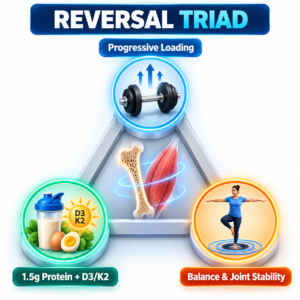
Reversing osteosarcopenia in adults over 50 requires a structured, multi-disciplinary strategy focused on progressive resistance training, targeted nutritional support, and dedicated orthopedic rehabilitation.
                REVERSING OSTEOSARCOPENIA: 3-PILLAR PLAN
                                   │
 ┌─────────────────────────────────┼─────────────────────────────────┐
 ▼                                 ▼                                 ▼
PILLAR 1: EXERCISE                PILLAR 2: NUTRITION               PILLAR 3: REHAB & CARE
Progressive Resistance            1.2-1.5g/kg High-Protein          Doctor-Supervised Balance
& Load-Bearing Movement           D3/K2 & Calcium Optimization      & Joint Protection
Pillar 1: Targeted Resistance Training & Bone-Loading Protocols
Exercise is the primary non-pharmacological treatment for reversing osteosarcopenia in adults over 50. However, casual walking alone is insufficient to build bone density or reverse muscle loss. Osteogenic and muscle-building adaptation requires mechanical strain that exceeds daily activity levels.
The Science of Bone Loading (Mechanotransduction)
When muscles contract forcefully against resistance, tendons exert pulling forces on their bone attachment sites. Bone tissue senses these micro-deformations and activates osteocytes, signaling osteoblasts to deposit new bone matrix along stress lines.
Essential Exercise Protocols for Osteosarcopenia Reversal
1. Progressive Resistance Strength Training (2–3 Days per Week)
Focus on compound movements that engage major muscle groups and load the axial skeleton:
Weighted Box Squats / Chair Squats: Strengthens quadriceps and gluteal muscles while loading the femoral neck and lumbar spine. For individuals experiencing joint pain during squats, exploring proper biomechanics or checking for issues like differentiating knee pain diagnosis and referral is essential before adding load.
Romanian Deadlifts (RDLs) with Light Dumbbells: Targets the posterior chain. As outlined in our detailed study on the hidden link between your hips, core, and hamstring injuries, strengthening the hip-core complex is fundamental to overall lower-body stability.
Standing Overhead Dumbbell Press: Strengthens upper body muscles while providing vertical loading down the vertebral column.
Seated Cable / Resistance Band Rows: Targets upper back postural muscles to counteract stooped posture and protect spinal vertebrae.
2. High-Impact & Weight-Bearing Aerobic Loading
Heel Drops and Stomping Drills: Controlled heel drops transfer axial impact forces through the tibia and femur into the hip socket, stimulating local bone mineral deposition.
Brisk Incline Walking: Provides low-impact weight-bearing strain to keep lower-limb muscle groups active while taking care not to overload foot fascia, as seen in conditions like plantar fasciitis.
3. Neuromuscular Balance & Fall Prevention Exercises
Tandem Stance & Single-Leg Balance: Improves foot and ankle proprioception, helping prevent stumbles.
Lateral Band Walks: Strengthens the gluteus medius muscle, stabilizing the pelvis during gait and protecting the hip joint.
Clinical Expert Commentary: Medical Direction
Dr. Pradeep Kocheeppan, Knee and Shoulder Surgeon in Bangalore:
“When treating osteosarcopenia in adults over 50, patients often fear that lifting weights will cause bone fractures or damage joints. In reality, controlled progressive resistance loading under expert physical therapy guidance is the safest way to stimulate bone matrix deposition. It also helps prevent joint instability, which is a key contributor to conditions like knee replacement surgery later in life.”
Pillar 2: Clinical Nutrition & Targeted Supplementation
Exercise alone cannot rebuild tissue without adequate nutritional building blocks. The table below outlines essential dietary targets for managing osteosarcopenia in adults over 50:
Essential Nutrients for Muscle and Bone Synthesis
| Key Nutrient | Daily Recommended Intake | Biological Role | Best Food Sources |
| Dietary Protein | 1.2 – 1.5 grams per kg body weight | Stimulates muscle protein synthesis; provides amino acids for bone collagen matrix. | Eggs, chicken breast, paneer, tofu, Greek yogurt, lentils, whey protein. |
| Vitamin D3 (Cholecalciferol) | 2,000 – 4,000 IU (Adjusted by blood levels) | Enhances intestinal calcium absorption; preserves type II muscle fibers. | Sunlight exposure, fortified dairy, fatty fish, clinical oral supplements. |
| Elemental Calcium | 1,000 – 1,200 mg | Essential mineral structural component of hydroxyapatite bone tissue. | Ragi (finger millet), milk, sesame seeds, dark leafy greens, almonds. |
| Vitamin K2 (MK-7) | 90 – 120 mcg | Activates osteocalcin, directing calcium into bone tissue and away from arteries. | Fermented foods, cheese, specialized clinical supplements. |
| Leucine / Essential Amino Acids | 3 grams per main meal | Triggers the mTOR cell pathway responsible for initiating muscle building. | Soy protein, eggs, fish, dairy products. |
Pillar 3: Fall Prevention, Joint Protection, and Medical Oversight
Reversing osteosarcopenia in adults over 50 requires a safe environment and ongoing medical evaluation to avoid accidental injury.
Fall-Proofing Your Home Environment
Since osteosarcopenic bones fracture much more easily, preventing falls at home is a critical safety measure:
Improve Home Lighting: Install motion-sensor nightlights along hallways, staircases, and bathroom pathways.
Eliminate Household Hazards: Remove loose throw rugs, secure trailing electrical cords, and install non-slip mats in wet shower areas.
Install Support Grab Bars: Mount sturdy grab bars next to toilets and inside shower enclosures to assist with safe transfers.
Holistic Senior Health & Vision Screening
Falls in seniors are rarely caused by muscle weakness alone. Visual impairment plays a massive role in loss of balance and depth perception. As detailed in our clinical article on eye check-ups in geriatrics as a vital part of senior wellness, evaluating visual acuity for conditions like cataracts or age-related changes under an experienced consultant like Dr. Dona Susan John is just as crucial as physical therapy in keeping senior adults safe and mobile.
Medical Evaluation and Follow-Up Diagnostics
Regular Pharmacological Reviews: Certain prescription medications (such as long-term corticosteroids, sedatives, and anti-hypertensives) can increase fall risk or accelerate bone density loss. Consult your doctor regularly to review and optimize medication dosages.
Annual Bone & Muscle Assessments: Schedule follow-up DEXA scans every 12 to 18 months to monitor changes in bone density and lean muscle mass, allowing your healthcare provider to adjust your exercise and treatment plan as needed.
Clinical Expert Commentary: Medical Direction
Dr. Sharan Achar, Spine Surgeon:
“Managing osteosarcopenia requires a unified treatment plan. Protecting the spine and major weight-bearing joints requires us to strengthen the surrounding deep core and postural muscles. Restoring muscle quality directly stabilizes joint biomechanics, prevents progressive spinal deformation, and provides relief similar to targeted interventions like physiotherapy for back pain relief.”
Patient Case Study: Reversing Osteosarcopenia at Move & Shine
Patient Background
Patient Name: Mrs. Sunita M. (Age 58, Resident of South Bangalore)
Initial Symptoms: Persistent lower back aching, difficulty climbing stairs, slower walking pace, and fear of falling.
Baseline Clinical Diagnostic Findings
DEXA Lumbar Spine T-Score: -2.7 (Confirmed Osteoporosis)
Appendicular Lean Mass Index: $5.2\ kg/m^2$ (Confirmed Sarcopenia)
Handgrip Strength: 14.5 kg (Below Normal Age Threshold)
Clinical Diagnosis: Stage 2 Osteosarcopenia with Elevated Fall Risk
              MRS. SUNITA'S 6-MONTH RECOVERY TIMELINE
                                 │
 ┌───────────────────────────────┼───────────────────────────────┐
 ▼                               ▼                               ▼
BASELINE (Month 0)              MONTH 3 MILESTONES               MONTH 6 RESULTS
- Lumbar Spine T-Score: -2.7    - Grip strength: 14.5 -> 18 kg   - Lumbar Spine T-Score: -2.3
- Lean Mass: 5.2 kg/m²          - Stand-to-sit without support   - Lean Mass: 5.9 kg/m²
- High fall fear                - Gait speed normalized          - Zero stumbles or falls
The Move & Shine 6-Month Targeted Recovery Program
Targeted Exercise Plan: 3 days per week of supervised progressive resistance training (squats, seated rows, deadlifts) combined with balance drills guided by our team of expert physiotherapists.
Nutritional Adjustment: Daily protein intake increased from 42g to 75g per day, supplemented with Vitamin D3 (60,000 IU weekly loading doses) and Vitamin K2 MK-7.
Medical & Physical Therapy Monitoring: Bi-weekly physical therapy sessions at our orthopedic wellness clinic to correct postural mechanics and refine weight-bearing technique.
6-Month Re-Assessment Outcomes
DEXA Lumbar Spine T-Score: Improved from -2.7 to -2.3 (Osteopenia range).
Appendicular Lean Mass Index: Increased from $5.2\ kg/m^2$ to $5.9\ kg/m^2$.
Handgrip Strength: Increased from 14.5 kg to 18.2 kg.
Functional Outcome: Mrs. Sunita reported climbing two flights of stairs without pain, walking with confidence, and zero fall incidents.