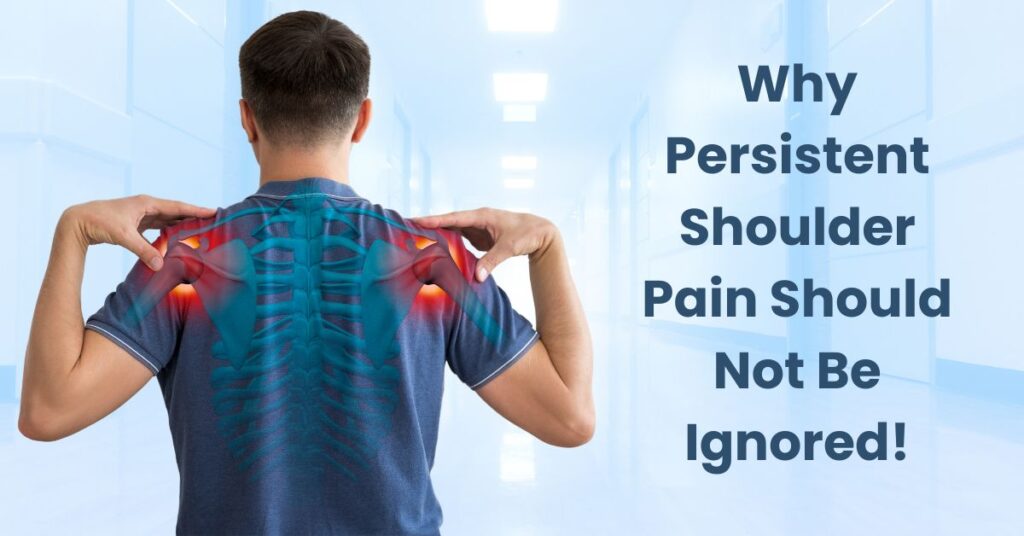
Back Pain Treatment in Bangalore: When to See a Specialist
Not all back pain requires surgery — but knowing when to seek specialist care can prevent long-term complications. If you’re experiencing back pain that lasts more than 2 weeks, radiates to your legs, or is accompanied by numbness or weakness, it’s time to consult a spine specialist. Our own Dr. Sharan Achar, Spine Surgeon, specializes in both surgical and non-surgical approaches to back and spine conditions in Bangalore.
Back pain is one of the most common reasons people visit orthopedic clinics worldwide. Yet, despite its prevalence, it remains one of the most misunderstood conditions. Many patients find themselves caught in a cycle of uncertainty: Do I just need a few days of rest? Should I book a physiotherapy session? Do I need an urgent MRI, or is it time to see a spine surgeon?
The Philosophy of Orthopedic Wellness
At Move and Shine Orthopedic Wellness Clinic, we believe that true recovery goes beyond simply “stopping the pain.” Orthopedic Wellness is a proactive approach to musculoskeletal health. It isn’t just about treating an injury after it happens; it’s about optimizing how your bones, joints, and muscles work together.
Wellness in an orthopedic context means maintaining the integrity of your “biological machine.” By combining clinical expertise with preventive care, we help you build a resilient body that can handle the demands of daily life and sports, ensuring you don’t just “get better,” but stay better. Under the leadership of Dr. Pradeep Kocheeppan, Director and Head of Move and Shine, ensuring every patient receives the right treatment at the right time.
1. Exploring Alternative Relief: Yoga, Acupuncture, and Braces
Many patients arrive at our clinic asking: “Can I try yoga for back pain, or will acupuncture and wearing a support belt take care of the problem?” While consulting family practitioners or Ayurvedic experts can offer holistic perspectives, it is vital to understand where these fit into a scientific recovery plan:
Yoga: Highly effective for long-term flexibility and core strength. However, during the “acute” phase of a slip disc, certain yoga poses (like forward bends) can actually worsen nerve compression. Yoga is a tool for prevention and late-stage rehab, not an immediate fix for severe injury.
Acupuncture: Useful for neuromodulation and managing pain signals. It can provide symptomatic relief, but it does not fix a structural issue like a fractured vertebra or a sequestered disc.
Back Belts/Braces: These provide external stability. While helpful for short-term support during heavy lifting or severe spasms, over-relying on them can cause your core muscles to become “lazy” and weak, leading to more pain in the long run.
2. Not All Back Pain Is the Same: Identifying the Source
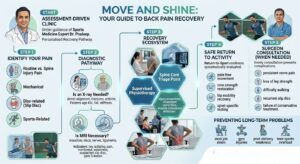
Correctly identifying the “why” behind your pain determines how fast you get back to your daily life. We generally categorize back pain into three major buckets:
Mechanical Back Pain: This involves the “moving parts”—muscles, tendons, and ligaments. It is often triggered by poor posture, a sudden “catch” while lifting, or prolonged sitting at a desk.
Disc-Related Pain: This occurs when the intervertebral discs—the shock absorbers of your spine—are stressed or herniated. This often involves nerve irritation, leading to pain that travels down the leg.
Sports or Injury-Related Spine Stress: Specific to active individuals, this involves repetitive stress (like a cricket bowler’s action) or high-impact trauma.
Defining the Pain Timeline:
Acute Back Pain: Pain that comes on suddenly and lasts up to six weeks.
Sub-Acute Pain: Pain lasting between 6 to 12 weeks.
Chronic Back Pain: Pain that persists for more than 12 weeks, even after the initial injury has seemingly healed.
Recurring Back Pain: A “yo-yo” pattern where the pain disappears for a month and then returns with the slightest movement, usually indicating deep-seated core instability.
3. When Is an X-ray Actually Needed?
There is a common misconception that every backache requires an X-ray. In reality, most early-stage mechanical back pain does not require immediate imaging. However, an X-ray is a vital diagnostic tool for:
Structural Alignment: Identifying issues like scoliosis (curved spine) or kyphosis.
Fractures: Essential after a fall or trauma, especially in elderly patients.
Arthritis & Degeneration: Identifying bone spurs or wear and tear in the joints.
Spondylolisthesis: When one vertebra slips forward over another.
4. When Is an MRI Necessary?
While X-rays show bones, an MRI (Magnetic Resonance Imaging) visualizes the “soft” components: discs, nerves, and muscles. We recommend an MRI when:
Radiculopathy (Sciatica): Pain, numbness, or weakness traveling down the leg.
Neurological Signs: Loss of sensation or “pins and needles” in the feet.
Failed Conservative Care: If 4 weeks of specialized physiotherapy hasn’t yielded results.
Expert Insight: An MRI is vital for visualizing discs and nerves. This is especially important when back pain “mimics” other joint issues. Our experts also specialize in identifying when the pain isn’t coming from the back at all.
Click here to read our Practical Guide
Back Pain and How Orthopedic Wellness is Revolutionizing Its Management in India, to help identify the true source of your symptoms.
5. Back Pain in Sports Persons: A Specialized Approach
Athletes require a different diagnostic lens. Dr. Pradeep, as the Director of Move and Shine, highlights that athletic back pain is rarely just about the injury—it’s about the Kinetic Chain. If your hips are tight or your ankles lack mobility, your lower back (lumbar spine) takes the extra load.
6. When Can You Safely Return to Sports?
One of the biggest mistakes is restarting high-impact activity the moment the pain subsides. At Move and Shine, our Return-to-Sport clearance follows a strict protocol:
Full Range of Motion: Pain-free bending and twisting.
Core Restoration: The ability of the deep “inner unit” muscles to stabilize the spine under load.
Sport-Specific Testing: We supervise movements like your bowling action or running gait before giving the “green light.”
7. When Should You Consult a Spine Surgeon?
Building authority in spine care means knowing when surgery is a mandatory perspective. Consult a spine surgeon if you experience:
Loss of Leg Strength: Finding it hard to walk or keep your balance.
Bladder/Bowel Changes: This is a medical emergency.
Spinal Instability: Confirmed via imaging that may require stabilization.
8. Routine Back Pain vs. Spine Injury: How to Tell the Difference
Feature | Routine Back Pain | Spine Injury / Slip Disc |
Location | Localized to the lower back | Radiates to buttocks or legs |
Sensation | Dull ache or stiffness | Sharp, electric, or numbing |
Movement | Hurried by certain angles | Often causes weakness/limping |
Recovery | Improves with 1-2 weeks of PT | Requires specialized rehab |
Night Pain | Usually settles with rest | May persist or worsen at night |
9. Why Supervised Physiotherapy is the Gold Standard
Many patients attempt “YouTube exercises.” While well-intentioned, these often lack the progression needed for true healing. At Move and Shine, we differentiate between:
Exercise: Generic physical activity.
Therapy: Passive treatments like heat or ultrasound to reduce inflammation.
Rehabilitation: A structured, supervised ecosystem where exercises are progressed based on tissue healing.
Click here to watch our latest Facebook Reel on identifying the 3 most common causes of back pain In this short video, our team demonstrates how to check if your pain is mechanical or nerve-related.
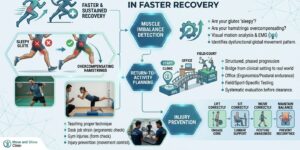
10. The Role of Sports Medicine in Faster Recovery
Standard physiotherapy often stops once the pain is gone. Sports Medicine goes further:
Muscle Imbalance Detection: Are your glutes “sleepy”?
Return-to-Activity Planning: A step-by-step bridge back to the office or the field.
Injury Prevention: Teaching you how to lift and move so the pain never returns.
20 Patient-Friendly FAQs
When should I worry about back pain?
Worry if it lasts >2 weeks, involves fever, or spreads to the legs.Do I need an MRI immediately?
No. Most pain is mechanical. MRIs are for suspected nerve damage.What suggests a slip disc?
Sharp leg pain, numbness, or heaviness in the legs.Is walking good?
Generally yes, but stop if it increases leg pain.Can gym workouts cause injury?
Yes, usually due to “ego lifting” or poor form.Is it just a muscle strain?
Strains are usually localized and improve with 48 hours of rest.When is an X-ray necessary?
Following trauma or in patients over age 45.Can I play through mild pain?
Only after a professional assessment; compensation can lead to knee/hip injuries.Is bed rest recommended?
No. “Relative rest” (staying active) is better than lying flat.How long does slip disc recovery take?
Usually 4–8 weeks with structured rehab.When to see a surgeon?
If there is progressive weakness or therapy fails after 6–12 weeks.Can PT prevent recurrence?
Yes, by building a “natural back brace” of muscle.Does posture matter?
Yes. Static loading (sitting too long) increases disc pressure.Can vitamin deficiency cause pain?
Yes, low D3 and B12 are major contributors.When can I return to sports?
Once you pass sport-specific stability tests.Are standing desks better?
They help, but “movement breaks” are more important than just standing.Can stress cause back pain?
Yes, stress leads to muscle tension and heightened pain sensitivity.Is heat or ice better?
Ice for the first 48 hours (acute); heat for chronic stiffness.Can a “crack” fix my back?
Adjustments can help mobility, but muscle strengthening keeps the bone in place.Why choose Move and Shine?
Because we integrate surgeons, sports medicine, and elite physiotherapy under one roof.
Conclusion: Your Path to a Pain-Free Spine
Back pain should never be ignored, but it also shouldn’t be a source of fear. The key to long-term spinal health lies in a triage-based approach. At Move and Shine Orthopedic Wellness Clinic, we don’t just treat symptoms—we rebuild movement.
Ready for a scientific assessment? Visit Move and Shine today.
Related Reading