
Why Do You Have Red Eyes?
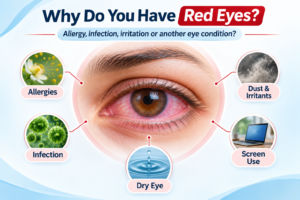
Have you ever woken up with red, itchy or watery eyes and wondered what caused the problem? Perhaps your eyes started looking red after spending time outdoors, working on a computer, travelling through a dusty area or coming into contact with someone who had an eye infection.
Red Eyes are a common eye complaint. However, redness does not always indicate the same condition. In some people, it develops because of an allergic reaction. In others, it may be associated with a viral or bacterial infection, dry eyes, irritation or another underlying eye problem.
One condition commonly associated with Red Eyes is conjunctivitis, also known as pink eye. It occurs when the conjunctiva, the thin transparent membrane covering the white part of the eye and lining the inside of the eyelids, becomes inflamed.
An important point to understand is that conjunctivitis is not a single type of infection. It can develop because of viruses, bacteria or allergens. Therefore, allergic conjunctivitis and infectious conjunctivitis are different forms of the same broader condition.
The symptoms can sometimes look similar, making it difficult to identify the cause without an eye examination. For example, both allergic and infectious conjunctivitis can cause redness, watering and irritation. However, intense itching is more commonly associated with allergies, while sticky discharge and symptoms following a cold may suggest an infection.
Understanding these differences is important because treatment depends on the underlying cause. Antibiotic eye drops do not treat viral or allergic conjunctivitis, and using the wrong medication may delay appropriate care.
In this guide, we explain the common causes of Red Eyes, how to distinguish allergy from infection, available treatment approaches, nutritional support for eye health and situations that require an eye specialist’s attention.
Quick Answer: Are Red Eyes Caused by Allergy, Infection or Conjunctivitis?
Red Eyes can develop due to allergies, infections, irritation and several other eye conditions.
Here is a quick comparison:
Feature | Allergic Conjunctivitis | Viral Conjunctivitis | Bacterial Conjunctivitis |
Main cause | Allergens | Viruses | Bacteria |
Common symptom | Intense itching | Watery discharge | Thick or sticky discharge |
Redness | Usually both eyes | One or both eyes | One or both eyes |
Watering | Common | Very common | May occur |
Discharge | Watery | Usually watery | Often yellowish or greenish |
Contagious | No | Yes | Yes |
Common associated symptoms | Sneezing, runny nose | Cold or sore throat | Eyelids sticking together |
Treatment approach | Allergen avoidance and appropriate allergy treatment | Supportive care and selected antiviral treatment when indicated | Medical assessment and antibiotics when appropriate |
These features are useful clues, but they cannot confirm the diagnosis. An eye specialist considers the full history, symptoms and examination findings before recommending treatment.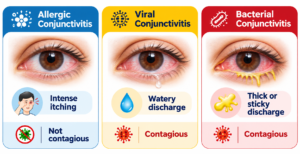
Key Takeaways About Red Eyes
- Red Eyes can result from allergies, infections, dry eyes, irritation and other eye conditions.
- Allergic conjunctivitis commonly causes intense itching and watering, often affecting both eyes.
- Viral conjunctivitis usually produces watery discharge and can occur alongside a cold or respiratory infection.
- Bacterial conjunctivitis may cause thicker discharge and crusting around the eyelids.
- Viral and bacterial conjunctivitis can spread between people, while allergic conjunctivitis is not contagious.
- Antibiotics do not work against viral or allergic conjunctivitis.
- Good hygiene helps reduce the spread of infectious conjunctivitis.
- Nutrition supports overall eye health but cannot cure an active eye infection.
- Severe pain, light sensitivity, blurred vision or intense redness requires prompt medical assessment.
1. What Are Red Eyes and Why Do They Occur?
The white part of the eye is called the sclera. It is covered by a thin, transparent membrane known as the conjunctiva.
The conjunctiva contains small blood vessels. When these vessels become enlarged or more visible because of inflammation, irritation or another problem, the white part of the eye may appear pink or red.
This is why Red Eyes are often one of the first noticeable signs of an eye condition.
However, the degree of redness does not always indicate how serious the condition is. A relatively mild irritation can make the eyes look noticeably red, while some serious eye conditions may initially produce less obvious symptoms.
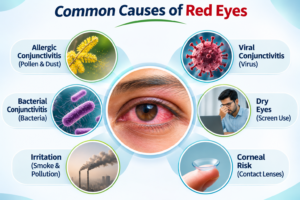
Common causes of Red Eyes
- Allergic reactions
Exposure to pollen, dust, mould, animal dander or other allergens can trigger inflammation of the conjunctiva. This commonly produces itching, redness and excessive watering.
- Viral infections
Viruses can cause infectious conjunctivitis. Adenoviruses are among the common causes. Symptoms may occur with a cold, sore throat or respiratory infection.
- Bacterial infections
Certain bacteria can infect the conjunctiva and produce redness, irritation and discharge. The discharge may become thick and sticky, causing the eyelids to stick together.
- Dry eyes
When the eyes do not produce enough tears or tears evaporate too quickly, the surface can become irritated. This may lead to redness, burning, watering and a gritty sensation.
- Environmental irritation
Smoke, dust, pollution, swimming pool chlorine, cosmetics and contact lens solutions can irritate the eye surface.
- Other eye conditions
Blepharitis, corneal inflammation, uveitis and other conditions can also cause Red Eyes. Some require urgent medical attention.
Understanding the possible causes is the first step towards choosing the correct treatment.
2. Red Eyes Caused by Allergies: How to Recognise Allergic Conjunctivitis
Allergic conjunctivitis develops when the immune system reacts to an allergen that comes into contact with the eyes.
The body releases inflammatory chemicals, including histamine, which can cause itching, swelling, redness and watering.
Unlike infectious conjunctivitis, allergic conjunctivitis does not spread from one person to another.
Common causes of eye allergies
Some common triggers include:
- Dust and dust mites
- Pollen from trees, grass and plants
- Pet hair and animal dander
- Mould spores
- Smoke and air pollution
- Certain cosmetics and skincare products
- Contact lens solutions
- Environmental irritants
In Bangalore, exposure to dust, road pollution, construction activity and changing environmental conditions may contribute to eye irritation in susceptible individuals. However, an eye examination is necessary to determine whether symptoms are actually allergy-related.
Common symptoms of allergic Red Eyes
Intense itching
Itching is one of the most characteristic symptoms of allergic conjunctivitis. People often feel an urge to rub their eyes, particularly after exposure to an allergen.
Watering
The eyes may produce excessive tears. This can happen alongside itching and irritation.
Redness in both eyes
Allergic reactions frequently affect both eyes because the same environmental allergen may come into contact with both.
Swollen eyelids
The eyelids may appear puffy or swollen, especially during an allergic episode.
Sneezing and a runny nose
People with allergic conjunctivitis may also experience nasal allergies, sneezing, congestion or throat irritation.
When should you suspect an eye allergy?
Consider the possibility of allergic conjunctivitis when:
- Both eyes become itchy and watery.
- Symptoms begin after exposure to dust or pollen.
- You experience similar symptoms during particular seasons.
- Your eyes become uncomfortable around pets or in dusty environments.
- You also experience sneezing or a runny nose.
These symptoms can suggest an allergy, but they do not confirm it.
How are allergic Red Eyes treated?
Treatment focuses on reducing exposure to the allergen and controlling inflammation.
Depending on the symptoms, an eye specialist may recommend:
- Avoiding identified allergens.
- Cold compresses to reduce discomfort.
- Lubricating eye drops to relieve irritation.
- Appropriate antihistamine eye drops.
- Other prescribed anti-allergy medications when necessary.
Avoid using steroid eye drops without medical supervision. Although they can reduce inflammation, they may cause complications if used incorrectly.
Important: Allergic conjunctivitis is not contagious. You do not need to avoid another person simply because they have an allergic eye condition.
3. Red Eyes Caused by Viral Infection: Understanding Viral Conjunctivitis
Viral conjunctivitis is one of the common forms of infectious conjunctivitis.
It develops when a virus infects the conjunctiva. Adenoviruses are frequently responsible, although other viruses can also cause the condition.
Viral conjunctivitis is contagious. It can spread through contaminated hands, towels, personal items and surfaces, particularly when someone touches their eyes and then touches another person or shared object.
Common symptoms of viral conjunctivitis
Watery discharge
The eyes often produce clear, watery tears rather than thick pus.
Redness and irritation
The white part of the eye may appear pink or red. Some people experience burning or a gritty sensation.
Symptoms beginning in one eye
Viral conjunctivitis may initially affect one eye and later spread to the other.
Cold-like symptoms
A person may also experience a runny nose, sore throat, cough or other respiratory symptoms.
Eyelid swelling
Mild swelling around the eyelids can occur.
How does viral conjunctivitis spread?
Viral conjunctivitis can spread through:
- Touching infected eye discharge.
- Sharing towels or pillowcases.
- Using contaminated personal items.
- Touching contaminated surfaces and then touching the eyes.
- Close contact with an infected person.
This is why hand hygiene and avoiding shared personal items are important.
How are viral Red Eyes treated?
Most uncomplicated cases of viral conjunctivitis improve without specific antiviral medication.
Treatment generally focuses on reducing discomfort and preventing transmission.
An eye specialist may recommend:
- Cold compresses for irritation and swelling.
- Lubricating eye drops for dryness or discomfort.
- Frequent handwashing.
- Avoiding eye rubbing.
- Using separate towels and pillowcases.
- Avoiding contact lenses until symptoms have resolved and an eye-care professional advises that it is safe.
Certain viral infections, including herpes-related eye infections, may require specific antiviral treatment. These conditions need professional assessment.
Important: Antibiotic eye drops do not treat viral conjunctivitis. Taking antibiotics without an appropriate indication does not eliminate the virus.
4. Red Eyes Caused by Bacterial Infection: Understanding Bacterial Conjunctivitis
Bacterial conjunctivitis develops when bacteria infect the conjunctiva.
It can affect children and adults and may spread through direct contact with infected discharge or contaminated objects.
Unlike allergic conjunctivitis, bacterial conjunctivitis can be contagious.
Common symptoms of bacterial conjunctivitis
Thick or sticky discharge
One of the common features is yellowish, greenish or whitish discharge.
Eyelids sticking together
The discharge may dry around the eyelashes, particularly during sleep. Some people find it difficult to open their eyes immediately after waking.
Redness
The white part of the eye becomes red due to inflammation.
Irritation and discomfort
A person may experience burning, mild soreness or a gritty feeling.
Eyelid swelling
Some individuals develop swelling around the eyelids.
Not every bacterial infection produces thick discharge. Symptoms can overlap with viral conjunctivitis and other eye conditions.
How does bacterial conjunctivitis spread?
Bacterial conjunctivitis may spread through:
- Touching infected eye discharge.
- Sharing towels, handkerchiefs or pillowcases.
- Using contaminated cosmetics.
- Poor hand hygiene.
- Close contact with an infected person.
Children may be particularly vulnerable because they frequently touch their faces and share objects during school or play.
How are bacterial Red Eyes treated?
Treatment depends on the severity and suspected cause.
An eye specialist may recommend antibiotic eye drops or ointment when bacterial infection is likely and treatment is appropriate.
However, not every case of bacterial conjunctivitis requires antibiotics. Some mild cases improve without antibiotic treatment.
The choice of medication should be made by a medical professional.
Do not use leftover antibiotics or another person’s eye drops. The wrong medication may not treat the underlying problem and can delay proper diagnosis.
5. Allergy vs Infection vs Conjunctivitis: What Is the Difference?
This is one of the most important distinctions when understanding Red Eyes.
People often use the terms allergy, infection and conjunctivitis as if they describe three completely separate conditions. However, conjunctivitis is the name for inflammation of the conjunctiva, and both allergies and infections can cause it.
Let’s understand the difference.
What is allergic conjunctivitis?
It is inflammation caused by an allergic reaction.
It is not an infection and is not contagious.
What is viral conjunctivitis?
It is inflammation caused by a viral infection.
It can spread from one person to another.
What is bacterial conjunctivitis?
It is inflammation caused by bacteria.
It can also spread through contact with infected discharge or contaminated objects.
Detailed comparison table
Symptom or feature | Allergic | Viral | Bacterial |
Main cause | Allergens | Virus | Bacteria |
Itching | Often intense | Usually mild or absent | Usually mild or absent |
Redness | Common | Common | Common |
Watering | Common | Very common | Possible |
Discharge | Usually watery | Usually watery | Often thick or sticky |
Crusting | Less typical | Sometimes | Common |
Both eyes affected | Frequently | May begin in one eye | One or both |
Cold symptoms | May accompany nasal allergy | May accompany infection | Not typical |
Contagious | No | Yes | Yes |
Treatment | Allergy management | Supportive care; selected antiviral treatment | Antibiotics when indicated |
Can you identify the cause from symptoms alone?
Symptoms can provide useful clues, but they cannot always establish the cause.
For example, watery eyes may occur due to allergies, viral infection or dry eye irritation. Similarly, redness can develop from conjunctivitis, contact lens problems, corneal inflammation or other conditions.
An eye specialist may need to examine the conjunctiva, cornea, eyelids and other structures to identify the underlying problem.
If symptoms are severe, persistent or associated with changes in vision, do not delay an examination while trying to identify the cause yourself.
6. Other Conditions That Can Cause Red Eyes
Not every case of Red Eyes is conjunctivitis.
Several other eye conditions can produce similar symptoms. Recognising these possibilities is important because some require different treatment.
1. Dry Eye Disease
Dry eye develops when the eyes do not produce enough tears or when the tear film becomes unstable.
Common symptoms include:
- Redness
- Burning
- Grittiness
- Excessive watering
- Blurred vision that may fluctuate
- Discomfort after prolonged screen use
People who work on computers for long hours may experience worsening symptoms because they tend to blink less frequently while concentrating on screens.
Read more: Dry Eyes from Screen Use: Causes, Symptoms and Long-Term Relief.
2. Blepharitis
Blepharitis is inflammation of the eyelid margins.
It may cause:
- Red or swollen eyelids
- Crusting around the eyelashes
- Burning or irritation
- Itchy eyelids
- A gritty sensation
It can occur alongside dry eye disease.
3. Corneal Inflammation or Keratitis
The cornea is the transparent front surface of the eye.
Keratitis refers to inflammation of the cornea. It may develop due to infections, injuries or other causes.
Symptoms can include:
- Redness
- Eye pain
- Light sensitivity
- Excessive watering
- Blurred vision
Contact lens wearers should take these symptoms particularly seriously because some corneal infections can progress quickly.
4. Subconjunctival Haemorrhage
Sometimes a small blood vessel breaks beneath the conjunctiva, creating a sharply defined bright-red patch on the white of the eye.
This condition is called subconjunctival haemorrhage.
It can look alarming, but uncomplicated cases are often painless and resolve without specific treatment.
However, recurrent episodes, associated pain, vision changes or a history of injury should be medically assessed.
5. Uveitis
Uveitis refers to inflammation of the uvea, the middle layer of the eye.
It may cause:
- Redness
- Eye pain
- Blurred vision
- Light sensitivity
- Floaters
Uveitis requires professional assessment because untreated inflammation can affect vision.
Why is it important to identify the correct cause?
Treatments for these conditions are different.
For example, antibiotics may be appropriate for certain bacterial infections but will not treat dry eye disease, allergic conjunctivitis or viral conjunctivitis.
This is why an eye examination is important when Red Eyes do not improve or when other concerning symptoms are present.
7. How Are Red Eyes Diagnosed?
An eye examination helps determine whether redness is related to allergy, infection, irritation or another condition.
The eye specialist considers the symptoms, medical history and examination findings before recommending treatment.
Step 1: Understanding the symptoms
The specialist may ask:
- When did the redness begin?
- Did it start suddenly or gradually?
- Is one eye affected or both?
- Is there itching, burning or pain?
- Is the discharge watery or thick?
- Have you recently experienced a cold or respiratory infection?
- Have you been exposed to dust, pollen or chemicals?
- Do you wear contact lenses?
- Have you used any eye drops recently?
These questions help identify possible causes.
Step 2: External eye examination
The specialist examines the eyelids, eyelashes, conjunctiva and visible surface of the eye.
They may look for swelling, discharge, inflammation, foreign bodies and other abnormalities.
Step 3: Slit-lamp examination
A slit lamp is a specialised microscope used to examine the structures at the front of the eye.
It helps the specialist assess the conjunctiva, cornea and other anterior eye structures in greater detail.
Step 4: Additional tests when required
Most routine cases of conjunctivitis can be assessed clinically.
However, additional investigations may be necessary when:
- Symptoms are severe or unusual.
- The condition does not improve.
- A specific infection is suspected.
- The cornea appears affected.
- The patient has a higher risk of complications.
The purpose of diagnosis is not simply to identify redness. It is to determine why the redness has developed and whether treatment is needed.
8. Treatment for Red Eyes: What Helps and What Does Not?
Treatment depends on the underlying cause.
Using the same eye drops for every type of redness is not appropriate. The correct treatment should address the condition responsible for the symptoms.
Treatment for allergic Red Eyes
For allergic conjunctivitis, treatment focuses on controlling the allergic response.
Depending on the individual case, an eye specialist may recommend:
- Avoiding known allergens.
- Cold compresses.
- Lubricating eye drops.
- Antihistamine eye drops.
- Other prescribed anti-allergy medication.
Avoid rubbing the eyes because this can increase irritation.
Treatment for viral Red Eyes
Most uncomplicated viral conjunctivitis cases improve with supportive care.
Helpful measures may include:
- Cold compresses.
- Artificial tears.
- Frequent handwashing.
- Avoiding shared towels.
- Keeping the eyes clean.
- Avoiding contact lenses until recovery and professional clearance.
Antibiotics are not effective against viruses.
Treatment for bacterial Red Eyes
An eye specialist may prescribe antibiotic drops or ointment when bacterial infection is suspected and treatment is indicated.
Follow the prescribed dosage and duration.
Do not stop, restart or share medication without medical advice.
Treatment for irritation-related Red Eyes
If redness develops after exposure to dust, smoke or another irritant, removing the source may help.
If a chemical enters the eye, immediately rinse the eye with clean running water or saline and seek urgent medical advice. Do not wait to see whether redness improves.
What should you avoid?
When experiencing Red Eyes, avoid:
- Using leftover antibiotic eye drops.
- Using steroid eye drops without medical supervision.
- Sharing eye drops with family members.
- Rubbing the eyes repeatedly.
- Wearing contact lenses while the eyes are red or irritated.
- Applying unverified home remedies.
- Ignoring pain or changes in vision.
- Delaying medical assessment when symptoms are worsening.
A treatment that helps one type of eye condition may be ineffective or unsuitable for another.
9. Nutrition for Healthy Eyes: What Should You Include in Your Diet?
Nutrition plays an important role in maintaining normal eye function and supporting overall eye health.
The eyes require several vitamins, minerals, essential fatty acids and antioxidants. These nutrients support the retina, tear film, eye surface and normal visual function.
However, it is important to understand one thing: food cannot cure allergic, viral or bacterial conjunctivitis.
A nutritious diet supports long-term eye health, but it does not replace diagnosis, medication or other treatment when an eye condition is present.
1. Vitamin A: Supports Normal Vision
Vitamin A is essential for normal vision, particularly in low-light conditions. It also supports the health of the cornea and other surface tissues.
Food sources:
- Carrots
- Sweet potatoes
- Spinach
- Pumpkin
- Eggs
- Milk
- Other orange and dark-green vegetables
Vitamin A deficiency can affect vision and eye surface health. However, consuming excessive amounts of preformed vitamin A through supplements can be harmful.
A balanced diet is generally preferable to taking high-dose supplements without medical advice.
2. Vitamin C: Provides Antioxidant Support
Vitamin C is an antioxidant that helps protect cells against oxidative stress.
It also contributes to collagen production, which is important for maintaining healthy tissues.
Food sources:
- Amla
- Oranges
- Guava
- Kiwi
- Strawberries
- Bell peppers
- Tomatoes
Including vitamin C-rich fruits and vegetables in regular meals supports overall nutritional health.
3. Vitamin E: Helps Protect Cells
Vitamin E is a fat-soluble antioxidant that helps protect cell membranes from oxidative damage.
It is found in several nuts, seeds and plant-based oils.
Food sources:
- Almonds
- Sunflower seeds
- Hazelnuts
- Sunflower oil
- Wheat germ
- Peanuts
Vitamin E contributes to a balanced diet, but high-dose supplementation should not be started without professional advice.
4. Omega-3 Fatty Acids: Support Eye Surface Health
Omega-3 fatty acids are essential fats that contribute to several functions in the body.
They are important components of cell membranes and have been studied for their possible role in supporting tear-film health.
Food sources:
- Salmon
- Sardines
- Mackerel
- Flaxseeds
- Chia seeds
- Walnuts
People who do not eat fish can obtain plant-based omega-3 fats from foods such as flaxseeds, chia seeds and walnuts.
Omega-3 supplements are not a treatment for conjunctivitis, and evidence for their benefit in dry eye varies.
5. Zinc: Supports Normal Retinal Function
Zinc is an essential mineral involved in many processes in the body.
It plays a role in normal retinal function and helps support vitamin A metabolism.
Food sources:
- Pumpkin seeds
- Chickpeas
- Lentils
- Beans
- Dairy products
- Eggs
- Meat and seafood
Including zinc-containing foods as part of a varied diet helps maintain normal nutritional status.
6. Lutein and Zeaxanthin: Important Retinal Carotenoids
Lutein and zeaxanthin are carotenoids that accumulate in the macula, an important region of the retina responsible for detailed central vision.
They help filter some high-energy visible light and provide antioxidant protection.
Food sources:
- Spinach
- Kale
- Broccoli
- Green peas
- Corn
- Egg yolks
Regularly including green leafy vegetables and other colourful vegetables can help provide these nutrients.
7. Water: Supports Normal Hydration
Water is essential for overall body function.
Adequate hydration supports normal physiological processes, although drinking extra water is not a direct treatment for Red Eyes or a substitute for managing dry eye disease.
People working in air-conditioned environments or spending long hours on screens should also pay attention to blinking habits, screen breaks and their surrounding environment.
A simple eye-friendly daily food plan
Meal | Suggested foods |
Breakfast | Eggs, milk, oats or whole-grain foods |
Mid-morning | Guava, orange or amla |
Lunch | Dal, green vegetables, roti and curd |
Evening snack | Almonds, walnuts or pumpkin seeds |
Dinner | Vegetables, lentils and fish or another protein source |
The exact food choices should depend on individual dietary needs, allergies, medical conditions and preferences.
Can nutrition cure Red Eyes?
No. Nutrition supports overall eye health, but it cannot eliminate an active viral or bacterial infection or stop an allergic reaction immediately.
If you have persistent redness, discharge, pain or vision changes, seek an appropriate eye examination rather than relying on food or supplements.
10. How to Prevent Red Eyes and Reduce the Risk of Infection
Some causes of Red Eyes cannot be completely prevented. However, good hygiene, sensible eye-care habits and reducing exposure to irritants can lower the risk of several common problems.
1. Wash your hands regularly
Wash your hands with soap and water, particularly before touching your eyes or applying prescribed eye medication.
This is especially important when someone in your household has infectious conjunctivitis.
2. Avoid rubbing your eyes
Rubbing can worsen irritation and may transfer germs from your hands to your eyes.
If your eyes feel itchy, use an appropriate cold compress rather than rubbing them.
3. Do not share personal items
Avoid sharing:
- Towels
- Pillowcases
- Handkerchiefs
- Eye cosmetics
- Contact lens accessories
- Eye drops
These precautions are particularly important when infectious conjunctivitis is suspected.
4. Maintain contact lens hygiene
Always follow the cleaning, storage and replacement instructions for contact lenses.
Do not sleep in lenses unless specifically prescribed for that use. Avoid wearing contact lenses when your eyes are red, painful or irritated.
Contact lens-related redness accompanied by pain, light sensitivity or blurred vision requires prompt eye assessment.
5. Protect your eyes from dust and pollution
Dust, smoke and environmental irritants can trigger redness and discomfort.
Consider appropriate protective eyewear when working in dusty environments, travelling through construction areas or participating in activities where particles may enter the eyes.
6. Keep eye cosmetics clean
Avoid sharing eye makeup, and replace products according to their recommended use period.
Do not apply cosmetics to an irritated eye.
If an eye infection develops, ask an eye-care professional whether products used around the affected eye should be discarded.
7. Take regular breaks from screens
Long screen sessions may contribute to dryness and irritation.
The 20-20-20 rule is a useful habit:
Every 20 minutes, look at something approximately 20 feet away for at least 20 seconds.
Remember to blink normally and adjust screen brightness and viewing distance.
Read more: The 20-20-20 Rule: A Complete Guide to Preventing Digital Eye Strain.
8. Avoid unnecessary eye drops
Do not use redness-relieving drops, antibiotics or steroid preparations without understanding the cause of the redness.
Some drops can temporarily reduce visible redness without treating the underlying problem.
Professional advice is especially important if symptoms keep returning.
11. When Should You See an Eye Specialist for Red Eyes?
Most uncomplicated cases of conjunctivitis improve with appropriate care. However, some symptoms may indicate a more serious eye condition.
Do not assume that every red eye is a minor infection.
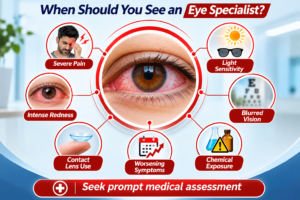
Warning signs that need prompt medical attention
Seek urgent eye assessment if you experience:
Severe eye pain
Significant pain is not typical of simple allergic conjunctivitis and may indicate a more serious problem.
Light sensitivity
Difficulty looking at bright light can occur with corneal inflammation, uveitis and other eye conditions.
Blurred or reduced vision
Vision changes should not be ignored, particularly when they do not improve after wiping away discharge.
Intense redness
Marked redness, especially when accompanied by pain or visual symptoms, needs assessment.
Redness in contact lens wearers
Contact lens users have a higher risk of certain corneal infections. Remove the lenses and seek prompt professional evaluation if redness develops, especially with pain, discharge, light sensitivity or blurred vision.
Eye injury or chemical exposure
Any suspected injury, foreign body or chemical exposure requires immediate attention. Chemical exposure should be rinsed immediately while arranging urgent medical care.
Symptoms that worsen or do not improve
If redness, swelling or discharge continues to worsen, an examination is important.
What about children and newborns?
Children can develop allergic, viral or bacterial conjunctivitis.
Parents should seek medical advice if a child has significant redness, discharge, pain, swelling or difficulty opening the eyes.
A newborn with a red, swollen or watery eye should be assessed promptly by a medical professional because infections in newborns can be serious.
Early assessment helps ensure that the underlying cause is identified and appropriate treatment is started.
12. Why Choose Move & Shine for Eye Care in Bangalore?
When you experience Red Eyes, itching, discharge or irritation, identifying the underlying cause is more important than simply reducing visible redness.
At Move & Shine Orthopaedic Wellness & Eye Clinic, Uttarahalli, Bangalore, eye-care services include assessment and management of common eye concerns such as conjunctivitis, allergic reactions, dry eyes and other vision-related problems.
The clinic focuses on preventive ophthalmology and comprehensive eye-care assessment.
What makes Move & Shine a relevant choice for eye care?
- Care for common eye conditions
The clinic provides eye-care services for concerns such as conjunctivitis, styes, allergic reactions, dry eye symptoms and other common eye problems.
- Preventive eye-care approach
Eye examinations can help identify problems that may not produce obvious symptoms during their early stages.
Preventive assessments are particularly relevant for people with diabetes, a family history of eye disease and other risk factors.
- Specialist-led eye-care consultation
Move & Shine’s eye-care team includes Dr. Dona Susan John. Patients can seek professional assessment for eye symptoms and guidance regarding appropriate management.
- Assessment beyond visible redness
Red Eyes can have several causes. A proper evaluation considers the symptoms, eye surface and other relevant findings rather than treating every case as the same condition.
- Convenient location in South Bangalore
The clinic is located on Uttarahalli Main Road, making it accessible to people living in Uttarahalli and nearby parts of South Bangalore.
When should you visit Move & Shine?
Consider arranging an eye-care consultation if you experience:
- Persistent Red Eyes.
- Repeated episodes of itching or irritation.
- Watery or sticky eye discharge.
- Dryness or a gritty sensation.
- Recurring allergic eye symptoms.
- Discomfort associated with contact lenses.
- Changes in vision or other unusual eye symptoms.
For severe pain, sudden vision changes, significant light sensitivity or eye injuries, seek urgent medical assessment rather than waiting for a routine appointment.
Book an Eye-Care Consultation at Move & Shine
If you are experiencing Red Eyes and are unsure whether the cause is an allergy, infection or another eye condition, professional assessment can help identify the problem and guide appropriate care.
Move & Shine Orthopaedic Wellness & Eye Clinic
Uttarahalli Main Road, Chikkalasandra, Bengaluru, Karnataka 560061.
Eye Care Appointments: +91 96320 14086
Website: https://moveandshine.in/

