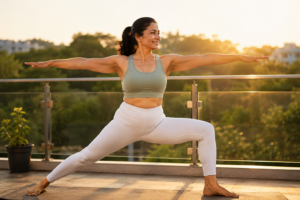
As we celebrate International Yoga Day 2026, millions of people across the world will roll out their yoga mats — but yoga for joint health after 40 goes far beyond flexibility and stress relief.
While yoga is often viewed as a tool for flexibility and stress relief, its role after the age of 40 extends far beyond touching your toes or mastering complex postures.
For many individuals, yoga can become an important part of maintaining joint health, preserving mobility, preventing falls, reducing pain, and supporting what Dr. Pradeep Kocheeppan calls Orthopedic Wellness.
At Move and Shine Orthopedic Wellness Clinic, Bangalore, we believe that the goal is not merely to add years to life—but to add movement, independence, and quality to those years.
What Is Orthopedic Wellness?
Traditionally, orthopedic care has focused on diagnosing and treating problems after they occur.
Pain develops.
Movement becomes restricted.
An injury occurs.
A patient seeks treatment.
Orthopedic Wellness represents a different philosophy.
Instead of waiting for joints to fail, Orthopedic Wellness focuses on preserving the health of bones, joints, muscles, tendons, ligaments, balance, and mobility throughout life.
According to Dr. Pradeep Kocheeppan:
“Orthopedic wellness is not about treating joints when they fail. It is about preserving mobility long before failure begins.”
Orthopedic Wellness includes:
- Maintaining joint mobility
- Preserving muscle strength
- Preventing injuries and falls
- Supporting healthy ageing
- Optimizing nutrition
- Early diagnosis of joint problems
- Utilizing advanced treatments when required
Within this framework, yoga becomes an important preventive and maintenance tool.
Why Joint Health Becomes Increasingly Important After 40
Many people begin noticing subtle changes after the age of 40:
- Morning stiffness
- Reduced flexibility
- Slower recovery from exercise
- Difficulty sitting cross-legged
- Knee discomfort while climbing stairs
- Neck and back stiffness after prolonged sitting
These changes are often dismissed as a normal part of ageing.
However, they are frequently early signs of declining mobility and musculoskeletal health.
Several biological changes contribute:
Muscle Loss (Sarcopenia)
Adults lose muscle mass progressively with age, reducing joint support and stability.
Cartilage Wear
Joint cartilage gradually loses resilience and hydration.
Reduced Balance
Neuromuscular coordination may decline, increasing fall risk.
Bone Health Changes
Particularly in women after menopause, bone density can decrease significantly.
Sedentary Lifestyle
Long working hours, screen time, and reduced physical activity accelerate these changes.
This is where yoga can provide meaningful benefits.
How Yoga Supports Orthopedic Wellness Goals
Yoga is unique because it addresses multiple components of movement health simultaneously.
| Orthopedic Wellness Goal | How Yoga Helps |
|---|---|
| Joint Mobility | Maintains range of motion |
| Flexibility | Reduces muscular stiffness |
| Balance | Improves stability and fall prevention |
| Posture | Supports spinal alignment |
| Body Awareness | Improves movement quality |
| Breathing Efficiency | Enhances endurance and relaxation |
| Stress Reduction | Supports pain management |
Unlike isolated exercise programs, yoga integrates movement, breathing, posture, and mental focus into a single practice.
Yoga and Knee Health
Knee pain remains one of the most common reasons people seek orthopedic consultation after 40.
Appropriately modified yoga programs may help:
- Improve flexibility around the knee joint
- Maintain range of motion
- Improve balance
- Strengthen supporting muscles
- Reduce stiffness
For individuals with early osteoarthritis, yoga may become an important component of a broader joint preservation strategy.
However, yoga should not be viewed as a substitute for medical assessment.
Conditions such as: - Advanced osteoarthritis
- Meniscal tears
- Ligament injuries
- Joint malalignment
often require specialized evaluation and treatment.
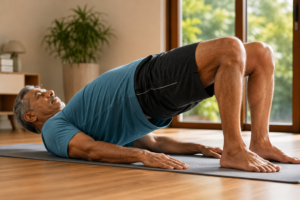
Low back pain affects millions of Indians every year.
Many cases are linked to:
- Prolonged sitting
- Weak core muscles
- Poor posture
- Reduced spinal mobility
Yoga can help improve: - Spinal flexibility
- Core awareness
- Postural control
- Movement confidence
Several studies have shown that carefully prescribed yoga may help reduce chronic low back pain symptoms.
However, not all back pain conditions respond similarly.
Patients with: - Disc prolapse
- Sciatica
- Nerve compression
- Spinal instability
should undergo orthopedic and physiotherapy assessment before beginning yoga programs.
Yoga and Shoulder Health
Modern lifestyles and sports participation have resulted in increasing rates of shoulder pain.
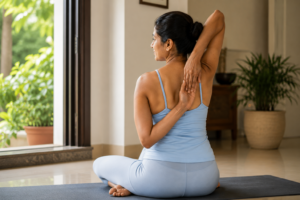
Yoga may help:
- Improve shoulder mobility
- Reduce muscle tightness
- Improve posture
- Maintain thoracic spine flexibility
This is especially relevant for: - Swimmers
- Tennis players
- Badminton players
- Corporate professionals
However, aggressive stretching can aggravate conditions such as rotator cuff injuries and shoulder instability.
Individualized guidance remains important.
When Yoga Is the Right Choice—and When It Isn’t
One common misconception is that yoga can solve every orthopedic problem.
The reality is more nuanced.
Conditions Where Yoga May Be Highly Beneficial
- General flexibility improvement
- Early stiffness
- Healthy ageing programs
- Stress management
- Mobility maintenance
- Balance enhancement
Conditions Requiring Orthopedic Assessment First
- Persistent knee pain
- Locking joints
- Severe arthritis
- Ligament injuries
- Rotator cuff tears
- Sciatica
- Recurrent falls
Yoga and Physiotherapy: Better Together
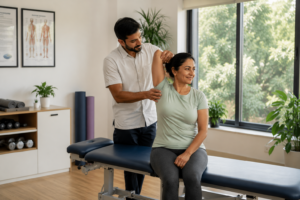
One of the most effective approaches is combining yoga with physiotherapy.
While yoga helps maintain movement quality, physiotherapy focuses on:
- Pain management
- Movement correction
- Strength restoration
- Functional rehabilitation
- Return to activity
In many cases:
Physiotherapy restores.
Yoga maintains.
Together, they create a powerful strategy for long-term orthopedic wellness.
This integrated approach is particularly valuable for: - Knee pain
- Back pain
- Shoulder disorders
- Post-surgical rehabilitation
- Healthy ageing programs
The Missing Link: Nutrition
Many individuals invest significant time in exercise while overlooking nutrition.
Yet muscles, bones, cartilage, ligaments, and tendons all require nutritional support to function optimally.
Without adequate nutrition, recovery and adaptation may be compromised.
Key Nutrients Supporting Joint Health
Protein
Protein provides the building blocks necessary for maintaining muscle mass.
Strong muscles protect joints.
Adults over 40 often consume less protein than recommended.
Vitamin D
Vitamin D plays a crucial role in:
- Bone health
- Muscle function
- Balance
- Fall prevention
Deficiency remains common across India.
Magnesium
Magnesium supports:
- Muscle relaxation
- Energy production
- Neuromuscular function
Omega-3 Fatty Acids
Omega-3s help maintain a healthy inflammatory response and may support joint comfort.
Iron and Vitamin B12
These nutrients support oxygen delivery, energy production, and physical performance.
Deficiencies are particularly common among women and vegetarians.
Yoga and Orthopedic Wellness During Menopause
Menopause presents unique challenges for women.
Many women experience:
- Joint pain
- Reduced muscle mass
- Bone density decline
- Weight gain
- Balance issues
Yoga can support: - Flexibility
- Balance
- Stress management
- Mobility confidence
When combined with strength training, nutritional optimization, and periodic orthopedic evaluation, yoga becomes a valuable component of healthy ageing.
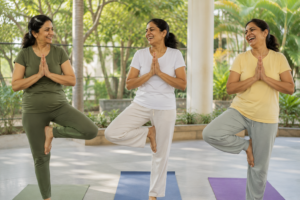
Building an Orthopedic Wellness Routine After 40
A practical weekly Orthopedic Wellness plan may include:
2–3 Days of Yoga
For flexibility, mobility, balance, and posture.
2–3 Days of Strength Training
To preserve muscle mass and support joints.
Daily Walking
To maintain cardiovascular and musculoskeletal health.
Adequate Nutrition
Protein, vitamins, minerals, and hydration.
Periodic Assessment
Early identification of mobility restrictions and joint problems.
The objective is not perfection.
The objective is consistency.
The Future of Joint Health Is Preventive
Healthcare is gradually moving from disease treatment toward prevention.
The same shift is occurring in orthopedics.
The future belongs to:
- Early intervention
- Movement preservation
- Fall prevention
- Healthy ageing
- Lifestyle-based orthopedic care
Yoga fits naturally into this vision.
It is accessible, adaptable, and supported by centuries of practice as well as growing scientific evidence.
Conclusion
This International Yoga Day 2026, let us view yoga through a broader lens.
Yoga is not merely about flexibility.
It is not about difficult postures.
It is not even about exercise alone.
Yoga is a powerful tool for maintaining mobility, preserving independence, and supporting lifelong joint health.
As part of a comprehensive Orthopedic Wellness strategy that includes physiotherapy, strength training, proper nutrition, and preventive orthopedic care, yoga can help individuals move better, age better, and live better.
At Move and Shine Orthopedic Wellness Clinic, Bangalore, our mission is simple:
Preserve Mobility. Protect Joints. Promote Orthopedic Wellness.
Because the true measure of healthy ageing is not how long we live—but how well we continue to move.