You wake up at 2 AM with your hand completely numb, shaking it frantically trying to restore feeling. By morning it improves — but by evening, after hours at your keyboard, the tingling is back. You Google ‘carpal tunnel symptoms’ and land on a page that immediately tells you about surgery. You close the browser.
Carpal tunnel syndrome physiotherapy before surgery is the step most patients never hear about — but it is the step that helps the majority of mild-to-moderate CTS patients avoid the operating table entirely. A landmark 2025 network meta-analysis covering 49 randomised controlled trials and 3,323 patients confirmed that conservative physiotherapy — particularly manual therapy — delivers the largest pain-relief improvements of any non-surgical intervention for CTS.
At Move & Shine Orthopedic Wellness & Eye Hospital in Uttarahalli, Bangalore, our orthopaedic and physiotherapy team sees carpal tunnel syndrome almost every week — in software engineers, homemakers, musicians, and construction workers alike. This guide explains what CTS is, why surgery is not the only answer for most patients, and exactly what physiotherapy treatment involves before you ever need to consider an operation.
What Is Carpal Tunnel Syndrome? Understanding the Anatomy
Carpal tunnel syndrome (CTS) is the most common nerve entrapment condition in the world. It occurs when the median nerve — which runs through a narrow channel called the carpal tunnel at the base of the wrist — becomes compressed, causing pain, numbness, tingling, and weakness in the hand and fingers.
The carpal tunnel is a rigid passageway formed by the wrist bones (carpals) on three sides and the transverse carpal ligament on the fourth. When the tissues inside this tunnel swell — due to inflammation, repetitive strain, fluid retention, or structural changes — the median nerve is squeezed, and symptoms begin.
The median nerve supplies sensation to the thumb, index finger, middle finger, and the thumb-side half of the ring finger. It also controls the small muscles at the base of the thumb (the thenar muscles) that enable pinching and fine grip. When compressed, all of these functions are affected.
Who Is at Risk?
- IT professionals and desk workers— sustained wrist extension during keyboard and mouse use is one of the most common triggers in Bangalore’s large tech population
- Women aged 40–60— CTS is 3x more common in women; hormonal changes during pregnancy and menopause increase carpal tunnel fluid retention
- Diabetics— diabetic neuropathy increases susceptibility to nerve compression; CTS is significantly more prevalent in people with diabetes
- Hypothyroid patients— thyroid hormone deficiency causes fluid accumulation in the carpal tunnel
- Manual workers— cooks, cleaners, construction workers, musicians, and tailors performing repetitive gripping or wrist movements
- Pregnant women— fluid retention during pregnancy is a common trigger; symptoms often resolve after delivery
- Older adults— age-related changes in the wrist increase tunnel narrowing
Carpal Tunnel Syndrome Symptoms: What Does It Actually Feel Like?
CTS symptoms follow a recognisable pattern that distinguishes them from other wrist or hand conditions:
Classic Symptoms
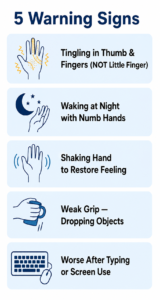
- Numbness, tingling, or ‘pins and needles’ in the thumb, index, middle, and ring fingers — but NOT the little finger (this distinguishes CTS from other nerve conditions)
- Waking at night with numb or burning hands — nocturnal symptoms are one of the most characteristic features of CTS
- Shaking or hanging the hand to relieve numbness — a positive ‘flick sign’, which is highly specific to CTS
- Pain radiating from the wrist up the forearm toward the elbow or shoulder
- Weakness in grip strength — difficulty opening jars, holding a phone, or carrying bags
- Dropping objects without warning
- Worsening symptoms during activities involving sustained wrist flexion or extension — typing, driving, reading a book
Advanced Symptoms (Severe / Chronic CTS)
- Persistent numbness that does not resolve with rest or shaking
- Visible wasting of the thenar muscles at the base of the thumb
- Loss of the ability to pinch or make a fine grip
- Permanent loss of sensation in the affected fingers
Persistent numbness without relief, visible muscle wasting, or inability to pinch are red flags that indicate nerve damage has progressed. These presentations require urgent medical assessment and may indicate that surgery cannot be deferred. For all other presentations — mild to moderate CTS — physiotherapy is the evidence-based first-line approach.
How Is Carpal Tunnel Syndrome Diagnosed?
Diagnosis of CTS is primarily clinical — a skilled orthopaedic or physiotherapy assessment identifies it from the symptom pattern, physical examination, and two specific clinical tests:
Phalen’s Test
The patient holds both wrists in maximum flexion for 60 seconds. Reproduction of numbness or tingling in the median nerve distribution is a positive test. Sensitivity is approximately 68% and specificity approximately 73% for CTS diagnosis.
Tinel’s Sign
The examiner taps over the carpal tunnel at the wrist crease. A positive sign is tingling radiating into the fingers in the median nerve distribution. This sign is most useful in early to moderate CTS.
Nerve Conduction Study (NCS)
When clinical diagnosis is uncertain, or before surgery is considered, a nerve conduction study (NCS) or electromyography (EMG) confirms the diagnosis and quantifies the severity of nerve compression. NCS findings guide treatment decisions: mild-to-moderate compression responds to physiotherapy; severe compression with axonal loss is a stronger indication for surgery.
Accurate diagnosis matters because wrist and hand pain has multiple causes. Shoulder Pain Causes and When to See a Doctor explores how referred pain from the neck or shoulder can mimic or coexist with CTS — a clinical complexity called double crush syndrome that requires careful assessment.
Carpal Tunnel Syndrome Stages: Mild, Moderate, and Severe
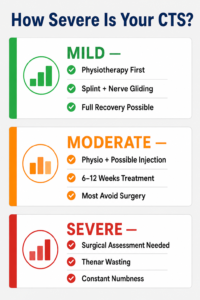
CTS Severity Classification at a Glance
MILD: Intermittent tingling/numbness | No weakness | Reversible nerve changes | Physiotherapy first-line
MODERATE: Frequent symptoms | Some grip weakness | Confirmed on NCS | Physiotherapy + possible injection
SEVERE: Constant numbness | Thenar wasting | Axonal loss on NCS | Surgery recommended
Understanding your stage determines your treatment pathway. At Move & Shine, every CTS patient receives a clinical severity assessment before a treatment plan is recommended. The majority of patients we see present with mild-to-moderate CTS — the group for whom physiotherapy is most effective and surgery is most avoidable.
“One of the most important conversations we have with CTS patients is about the difference between severity stages. Many patients arrive convinced they need surgery because they’ve read about it online. When we assess them clinically, the majority have mild-to-moderate CTS where physiotherapy — particularly nerve mobilisation and wrist splinting — achieves excellent outcomes. Surgery is a last resort, not a first response. Saving a patient from an unnecessary operation is as important as performing a necessary one well.”
— Dr. Pradeep Kocheeppan, Orthopaedic Surgeon (Knee & Shoulder Specialist), Move & Shine Orthopedic Wellness & Eye Hospital, Bangalore
Physiotherapy for Carpal Tunnel Syndrome Before Surgery: The Evidence
A 2025 network meta-analysis published in the Archives of Physical Medicine and Rehabilitation — covering 49 randomised controlled trials and 3,323 CTS patients — found that manual therapy delivered the largest pain-relief improvements of any conservative intervention. Night splinting, nerve gliding exercises, and ergonomic modification combined with manual therapy produced outcomes that significantly delayed or eliminated the need for surgery in mild-to-moderate cases.
For mild-to-moderate CTS, most patients see meaningful improvement within 4–8 weeks of structured physiotherapy. The AAOS Clinical Practice Guideline on CTS Management (2024) endorses splinting, exercise, and manual therapy as appropriate first-line treatments before surgical referral.
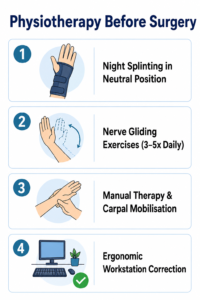
Here is exactly what physiotherapy treatment for CTS involves at Move & Shine:
1. Wrist Splinting in Neutral Position
Night splinting is one of the most evidence-backed conservative treatments for CTS. The splint holds the wrist in a neutral position (approximately 0–2 degrees of extension), which minimises carpal tunnel pressure. Carpal tunnel pressure increases significantly with wrist flexion and extension — the neutral position reduces this pressure by up to 50%.
- Worn during sleep to prevent unconscious wrist flexion that wakes patients with nocturnal symptoms
- May also be worn during aggravating daytime activities
- Custom-fitted splints produce better outcomes than generic off-the-shelf versions
- Typical duration: 6–12 weeks of consistent use
- Most effective for mild-to-moderate CTS with prominent nocturnal symptoms
2. Nerve Gliding (Neurodynamic) Exercises
Nerve gliding exercises — also called median nerve neurodynamic mobilisation — are one of the most specific and effective physiotherapy interventions for CTS. They work by moving the median nerve through its full excursion range within the carpal tunnel and forearm, reducing adhesions, improving nerve mobility, and restoring normal neurodynamic function.
Exercise 1: Median Nerve Tendon Glide Sequence
- Start: Hand in a fist (all fingers curled)
- Position 2: Straighten fingers, keeping them together (table-top position)
- Position 3: Extend fingers upward (straight hand)
- Position 4: Bend fingers back at knuckles, keeping fingers straight
- Position 5: Extend thumb out to the side
- Hold each position 3–5 seconds. Perform the full sequence 10 times, 3–5 times daily
- Purpose: mobilises tendons and nerve through the carpal tunnel, reduces internal adhesions
Exercise 2: Wrist Flexor and Extensor Stretch
- Extend arm with elbow straight, palm facing up
- Use the other hand to gently bend the wrist backward (fingers pointing toward the floor)
- Hold 30 seconds. Repeat with palm facing down and fingers bent toward the floor
- Perform 3 times each direction, 2–3 times daily
- Purpose: reduces tightness in the wrist flexor and extensor musculature contributing to tunnel narrowing
Exercise 3: Nerve Bias Stretch (Advanced)
- Extend arm sideways at shoulder height, elbow straight, wrist extended backward, fingers extended
- Tilt your head away from the outstretched arm to add cervical component
- Hold 15–20 seconds. Repeat 3 times per side
- Purpose: full upper limb neurodynamic tension test used therapeutically for median nerve mobility — use only under physiotherapist guidance
3. Manual Therapy: Carpal Bone and Soft Tissue Mobilisation
Manual therapy performed by a skilled physiotherapist addresses the structural component of CTS — restricted carpal bone mobility and tightness in the soft tissues surrounding the carpal tunnel.
- Carpal bone mobilisation— gentle joint mobilisation of the carpal bones to restore normal wrist joint mechanics and reduce pressure on the carpal tunnel
- Transverse carpal ligament mobilisation— specific soft tissue techniques applied to the transverse carpal ligament to reduce tension and improve tunnel dimensions
- Forearm muscle and fascia release— myofascial release of the flexor forearm muscle group, which when tight increases the load transmitted through the carpal tunnel
- Cervical spine mobilisation— important when double crush syndrome is suspected; cervical nerve root compromise at C6–C7 increases susceptibility of the median nerve to peripheral compression at the wrist
4. Ergonomic Assessment and Workstation Correction
Ergonomic intervention addresses the root cause of CTS in desk workers and manual workers — without this component, symptoms typically recur even after successful physiotherapy or surgery.
- Keyboard position: wrists should be neutral, not extended or flexed during typing
- Mouse position: use a mouse pad with a gel wrist rest; consider a vertical mouse for severe CTS
- Chair height: elbows should be at 90–100 degrees; forearms supported
- Monitor height: eye level to top third of screen to prevent forward head posture that increases cervical nerve tension
- Micro-break schedule: every 30–45 minutes, perform 2 minutes of nerve gliding exercises
- Task rotation: avoid sustained gripping or pinching for more than 20–30 minutes without a break
Desk-related wrist problems frequently coexist with neck and upper back issues. Our blog on Understanding Back Pain: When Simple Treatment Is Enough covers the ergonomic chain from screen to spine that contributes to multiple upper limb and spinal complaints in Bangalore’s IT workforce.
5. Electrotherapy: TENS, Ultrasound, and LASER
- Therapeutic ultrasound— applied over the carpal tunnel, ultrasound increases local circulation, reduces inflammatory mediators, and promotes tissue remodelling. Multiple trials show significant symptom improvement compared to sham treatment for mild-to-moderate CTS
- TENS (Transcutaneous Electrical Nerve Stimulation)— pain modulation for patients with significant nocturnal pain that disrupts sleep and limits participation in rehabilitation exercises
- Low-level LASER therapy— photobiomodulation reduces nerve inflammation, promotes myelin repair, and has shown positive results in several randomised trials for CTS
6. Strengthening and Grip Rehabilitation
Once acute symptoms are controlled, targeted strengthening of the hand intrinsic muscles, forearm extensors, and rotator cuff helps redistribute load away from the carpal tunnel during gripping activities.
- Putty or stress ball squeezing — graded grip strengthening from soft to firm resistance
- Thenar muscle strengthening — thumb opposition exercises using resistance band
- Forearm extensor strengthening — reduces the muscular imbalance between flexors and extensors that contributes to sustained wrist flexion postures
- Shoulder and rotator cuff strengthening — addresses the kinetic chain component; shoulder weakness increases forearm and wrist compensatory loading
The relationship between shoulder stability and wrist conditions is well established. For those with concurrent shoulder symptoms, our detailed guides on Shoulder Pain Causes and Treatment and Shoulder Pain Explained: Rotator Cuff Injuries and Frozen Shoulder provide comprehensive context for the upper limb kinetic chain.
“What surprises most of our CTS patients is that physiotherapy involves far more than wrist exercises. We assess the cervical spine, shoulder, elbow, and forearm — because the median nerve runs the entire length of the upper limb. A stiff neck can sensitise the same nerve that is compressed at the wrist, doubling the symptom burden. Treating only the wrist and ignoring the rest of the chain is one reason why some patients don’t respond as well as expected. Our physiotherapy team takes the whole-limb view.”
— Sangeetha Narayanaswami, Senior Physiotherapist, Move & Shine Orthopedic Wellness & Eye Hospital
When Is Surgery the Right Answer? Understanding the Decision
Physiotherapy is the appropriate first-line treatment for mild-to-moderate CTS. But it is important to be honest about when surgery becomes the better option.
Indicators That Surgery May Be Necessary
- Severe CTS confirmed on nerve conduction study — axonal loss indicates permanent nerve damage that will not reverse with conservative treatment
- Visible thenar muscle wasting — muscle atrophy means significant motor nerve damage has already occurred
- Persistent constant numbness with no relief from rest, splinting, or physiotherapy after 3–6 months of consistent treatment
- Progressive weakness despite conservative treatment
- CTS in pregnancy that does not resolve after delivery (rare — most pregnancy CTS resolves spontaneously within weeks of delivery)
As our orthopaedic team consistently emphasises, physiotherapy is not an alternative to appropriate surgery — it is the appropriate first step that ensures surgery is only used when genuinely necessary. Read our team’s perspective on Why Physiotherapy Is as Important as Surgery — If Not More for a detailed discussion of how conservative and surgical care work together in orthopedic practice.
What Surgery Involves
Carpal tunnel release surgery involves dividing the transverse carpal ligament to create more space in the tunnel and decompress the median nerve. It can be performed as an open procedure or endoscopically. Both are effective. Recovery requires post-surgical physiotherapy to restore grip strength, prevent scar adhesion, and return to full function — surgery without rehabilitation often produces suboptimal outcomes.
Carpal Tunnel Syndrome and Injection Therapy
For patients who have not responded adequately to 6–8 weeks of physiotherapy, or who have moderate CTS with significant pain, a corticosteroid injection into the carpal tunnel can provide meaningful symptom relief. This is not a cure — it reduces inflammation temporarily — but it can create a window of reduced pain during which physiotherapy is more productive.
PRP (platelet-rich plasma) injections are an emerging alternative to steroid injections, with several trials showing comparable short-term relief and potentially better durability. These require a medical assessment and are considered when steroid injections have provided only temporary relief.
Injections should always be combined with physiotherapy — using them as a standalone treatment without addressing the underlying cause (ergonomics, movement patterns, workload) consistently leads to recurrence.
Carpal Tunnel Syndrome in Specific Populations
CTS in IT Professionals and Desk Workers in Bangalore
Bangalore’s technology sector is home to hundreds of thousands of keyboard and mouse users who sit for 8–10 hours daily. Sustained wrist extension during typing, combined with poor workstation setup, is one of the most common triggers for CTS in our clinical practice. The additional cervical loading from forward head posture creates a double crush vulnerability on the median nerve.
Ergonomic assessment and correction is non-negotiable for this population. Combined with nerve gliding exercises performed every 45 minutes during the working day and night splinting, most desk-worker CTS resolves within 6–12 weeks. Read our general perspective on how musculoskeletal conditions affect the IT population in Back Pain and How Orthopedic Wellness is Revolutionizing Its Management in India.
CTS in Athletes and Active Individuals
Grip-heavy sports — cricket, badminton, weightlifting, cycling — can aggravate or trigger CTS through repetitive wrist loading. Athletes present a particular challenge because activity modification (the cornerstone of conservative CTS management) conflicts with their training needs. Our Sports Injury & Rehabilitation team works with athletes to develop CTS management strategies that maintain training continuity while protecting the median nerve. Read our guide on Sports Injuries Decoded: Prevention and Performance Tips for broader context on managing hand and wrist injuries in sport.
CTS and Diabetes: A Special Consideration
Diabetic patients with CTS face a more complex clinical picture. Diabetic peripheral neuropathy affects the same nerve fibres as CTS, making symptoms more severe and recovery slower. Blood glucose control directly affects nerve healing — poorly controlled diabetes significantly impairs the response to both physiotherapy and surgery. At Move & Shine, diabetic CTS patients receive nutritional guidance alongside physiotherapy as part of an integrated management plan.
Nutrition and Supplements to Support Nerve Healing in CTS
The median nerve is a living biological structure that requires nutritional support to heal and maintain function. While physiotherapy drives the structural and mechanical aspects of CTS management, nutrition addresses the biological environment in which healing occurs.
- Vitamin B6 (Pyridoxine, 50–100mg daily)— Vitamin B6 deficiency is associated with peripheral neuropathy and has been studied specifically in CTS. Several trials show modest benefit from B6 supplementation in mild CTS. Food sources include bananas, chickpeas, tuna, and fortified cereals
- Vitamin B12— essential for myelin sheath maintenance and nerve conduction. Deficiency is extremely common in vegetarians and the elderly in India. Check serum B12 levels before supplementing
- Omega-3 Fatty Acids (EPA + DHA)— anti-inflammatory effect reduces nerve inflammation and supports nerve membrane health. Sources include fatty fish, flaxseeds, and fish oil
- Magnesium— reduces muscle tension in the forearm flexors that contribute to carpal tunnel compression; supports nerve signal transmission
- Curcumin (turmeric) with black pepper— anti-inflammatory properties reduce local tissue inflammation within the carpal tunnel. Haldi milk (golden milk) is a traditional Indian preparation that provides bioavailable curcumin
- Vitamin D— deficiency impairs nerve function and recovery. Urban Indians are frequently deficient despite abundant sunshine. Check serum levels and supplement if below 30 ng/mL
- Reduce inflammatory dietary patterns— high sugar, ultra-processed food, and excessive refined carbohydrates promote systemic inflammation that worsens nerve compression symptoms
Recovery Timeline: How Long Does Physiotherapy for CTS Take?
- Mild CTS (intermittent symptoms, no weakness)— significant improvement in 2–4 weeks; full symptom resolution in 6–12 weeks with consistent splinting and exercises
- Moderate CTS (frequent symptoms, some grip weakness)— 6–12 weeks of structured physiotherapy; progress review at 8 weeks to assess whether injection or surgical referral is needed
- Moderate CTS with injection— injection provides 4–8 weeks of pain reduction during which physiotherapy should be maximally active; reassess at 3 months
- Chronic CTS (symptoms over 1 year)— longer recovery timeline, often 3–6 months; if no improvement after 6 months of comprehensive conservative treatment, surgical assessment is appropriate
The single most important variable in recovery is consistency. Patients who perform their nerve gliding exercises 3–5 times daily, wear their splint every night, and implement ergonomic changes recover significantly faster than those who do so intermittently.
This principle — that consistency of rehabilitation determines outcomes — applies across orthopaedic conditions. Our articles on ACL Tears: Who Heals Without Surgery? and Conservative Management of ACL Injuries explore the same theme — that the quality and consistency of non-surgical rehabilitation determines whether surgery can be avoided.
Preventing Carpal Tunnel Syndrome Recurrence
CTS recurrence after successful conservative or surgical treatment is common when the underlying causes are not corrected. Long-term prevention requires:
- Maintaining daily nerve gliding exercises as a permanent habit — 2 minutes every 45 minutes during the working day
- Ensuring workstation ergonomics are regularly reviewed — particularly when changing jobs, laptops, or home office setups
- Managing body weight — obesity significantly increases CTS risk and recurrence
- Controlling diabetes and thyroid conditions — both significantly increase CTS risk
- Maintaining shoulder and forearm strength to reduce wrist compensation during gripping tasks
- Wearing a night splint during periods of intensive work, pregnancy, or other known triggers
Joint health broadly — not just at the wrist — requires consistent lifestyle attention. Our guides on Healthy Knees, Healthy Heart: Joint Preservation Habits and Strength Training After 40 provide a broader framework for musculoskeletal health maintenance that supports long-term CTS prevention.
Frequently Asked Questions
Q1: Can carpal tunnel syndrome be cured without surgery?
Yes — for mild-to-moderate CTS, physiotherapy achieves full or near-complete symptom resolution in the majority of patients without surgery. A 2025 network meta-analysis of 49 randomised controlled trials confirmed that manual therapy, nerve gliding exercises, and splinting produce significant pain relief and functional improvement. Surgery is reserved for severe CTS with nerve damage or cases that fail 3–6 months of comprehensive conservative treatment.
Q2: How long does physiotherapy for carpal tunnel take to work?
Most patients with mild CTS notice meaningful improvement within 2–4 weeks of consistent physiotherapy, including daily nerve gliding exercises, nightly splinting, and ergonomic modification. Moderate CTS typically requires 6–12 weeks of structured treatment. The key variable is consistency — patients who perform their exercises 3–5 times daily recover significantly faster than those who do so occasionally.
Q3: What exercises are best for carpal tunnel syndrome?
The most evidence-backed exercises for CTS are median nerve gliding exercises (the tendon glide sequence), wrist flexor and extensor stretches, and the full upper limb neurodynamic stretch. These exercises are most effective when performed 3–5 times daily, every day. A physiotherapist should demonstrate and supervise the initial technique to ensure correct performance — incorrect technique can temporarily worsen symptoms.
Q4: Is it safe to exercise with carpal tunnel syndrome?
Yes, with appropriate guidance. Exercise is beneficial — the correct exercises reduce nerve compression, improve nerve mobility, and restore function. However, activities that aggravate symptoms (sustained wrist flexion, repetitive gripping, vibrating tools) should be modified during treatment. If any exercise reproduces tingling or pain beyond a mild level, stop and consult your physiotherapist.
Q5: What is the difference between carpal tunnel syndrome and other wrist pain?
CTS produces numbness and tingling in the thumb, index, middle, and ring fingers (the median nerve distribution) — never the little finger. It is worse at night and with sustained wrist positions. Wrist arthritis produces diffuse joint pain and stiffness. De Quervain’s tenosynovitis causes pain at the thumb-side of the wrist without finger tingling. Cervical radiculopathy can mimic CTS but involves neck pain and a different symptom pattern. Clinical assessment distinguishes between these.
Q6: Do I need a splint for carpal tunnel syndrome?
Night splinting is one of the most evidence-backed conservative treatments for CTS and is recommended for mild-to-moderate cases. The splint holds the wrist in neutral position during sleep, preventing nocturnal wrist flexion that compresses the median nerve and wakes patients with numbness. A correctly fitted neutral-position splint (not one that holds the wrist in extension) is most effective. Daytime splinting during aggravating activities provides additional relief.
Q7: Can carpal tunnel syndrome affect both hands?
Yes — bilateral CTS is common, affecting both hands either simultaneously or with a lag between sides. The dominant hand is usually affected first and more severely. When both hands are affected, ergonomic factors (keyboard and mouse use, posture, workload) are typically the primary driver, making workstation assessment particularly important. Both hands are treated with the same physiotherapy approach, adjusted for symptom severity on each side.
Q8: Is carpal tunnel syndrome related to neck or shoulder problems?
Yes — in a condition called double crush syndrome, compression of the median nerve at two separate points (for example, the cervical spine at C6 and the carpal tunnel at the wrist) produces more severe symptoms than either compression alone. This is why a complete CTS assessment at Move & Shine includes examination of the cervical spine and shoulder. Treating only the wrist without addressing the neck can explain why some patients respond poorly to wrist-only physiotherapy. Read our Shoulder Pain guides for related upper limb context.
Q9: Can carpal tunnel syndrome come back after physiotherapy?
Yes, if the underlying causes are not corrected. The most common reason for recurrence is returning to the same ergonomic situation, posture, or repetitive workload that caused CTS in the first place. Long-term prevention requires permanent workstation modification, daily nerve gliding exercises as a maintenance habit, and weight or diabetes management where relevant. Patients who complete the full course of physiotherapy including ergonomic education have significantly lower recurrence rates.
Q10: What happens if carpal tunnel syndrome is left untreated?
Untreated CTS progressively damages the median nerve. As compression continues, the nerve transitions from reversible conduction slowing (mild CTS) to irreversible axonal damage (severe CTS). This progression produces permanent numbness, loss of thumb strength and pinch, thenar muscle wasting, and functional disability that surgery may not fully reverse. Early treatment — when the nerve is still in the reversible stage — produces the best long-term outcomes.
Q11: Is carpal tunnel surgery a permanent fix?
Carpal tunnel release surgery has a high success rate for symptom relief in appropriately selected patients (those with confirmed moderate-to-severe CTS on NCS). However, it is not guaranteed to reverse all symptoms, particularly if nerve damage is advanced. Recurrence is possible if ergonomic factors are not corrected after surgery. Post-surgical physiotherapy — scar management, grip strengthening, and return to activity — is essential for optimal surgical outcomes.
Q12: When should I see an orthopaedic specialist for carpal tunnel syndrome?
See an orthopaedic specialist if: you have constant numbness that does not resolve with rest, you have visible muscle wasting at the base of the thumb, you cannot make a pinch grip, physiotherapy for 3–6 months has not produced adequate improvement, or nerve conduction studies show severe nerve compression. For mild-to-moderate CTS, a physiotherapy assessment is the appropriate first step. At Move & Shine, our integrated team ensures seamless escalation from physiotherapy to orthopaedic assessment when clinically indicated.
Conclusion
Carpal tunnel syndrome is among the most treatable orthopaedic conditions — and surgery is rarely the first answer. For the majority of patients with mild-to-moderate CTS, physiotherapy delivers reliable relief, functional improvement, and protection against the risks and recovery demands of an operation.
Three key takeaways:
- Physiotherapy before surgery is evidence-based, not second-best— a 2025 meta-analysis of nearly 3,400 patients confirms that manual therapy and nerve gliding exercises deliver the best conservative outcomes for CTS.
- Address the whole upper limb, not just the wrist— the median nerve runs from the cervical spine to the fingertips. Effective CTS treatment includes ergonomics, nerve mobility, and where relevant, neck and shoulder assessment.
- Consistency is everything— patients who perform their exercises daily, wear their splint every night, and implement ergonomic changes achieve the fastest and most durable recovery.
References
1. NHS — Carpal Tunnel Syndrome Overview
https://www.nhs.uk/conditions/carpal-tunnel-syndrome/
2. NHS — Carpal Tunnel Syndrome Treatment
https://www.nhs.uk/conditions/carpal-tunnel-syndrome/treatment/
3. NICE Clinical Knowledge Summary — Carpal Tunnel Syndrome Diagnosis & Management
https://cks.nice.org.uk/topics/carpal-tunnel-syndrome/
4. AAOS Clinical Practice Guideline — Management of Carpal Tunnel Syndrome 2024
https://www.aaos.org/quality/quality-programs/upper-extremity-programs/carpal-tunnel-syndrome/
5. JOSPT — Clinical Practice Guidelines for Carpal Tunnel Syndrome: Physical Therapy Examination and Treatment
https://www.jospt.org/doi/10.2519/jospt.2019.0501
6. Chen et al. — Evaluation of Splint and Exercise Interventions for Carpal Tunnel Syndrome: Network Meta-Analysis (49 RCTs, 3,323 Patients) | Archives of Physical Medicine and Rehabilitation, 2025
https://pubmed.ncbi.nlm.nih.gov/39487575/
7. Stepień et al. — Physical Therapy and Rehabilitation Approaches in Patients with Carpal Tunnel Syndrome | PubMed, 2020
https://pubmed.ncbi.nlm.nih.gov/32257712/
8. Local Injection Therapy for Carpal Tunnel Syndrome: A Network Meta-Analysis of Randomized Controlled Trials | PubMed Central, 2023
https://www.ncbi.nlm.nih.gov/pmc/articles/PMC10484596/
9. Chen et al. — Extracorporeal Shock Wave Therapy for Carpal Tunnel Syndrome: Systematic Review and Meta-Analysis | Medicina, 2022
https://www.ncbi.nlm.nih.gov/pmc/articles/PMC9144370/
10. WHO — Musculoskeletal Conditions Fact Sheet
https://www.who.int/news-room/fact-sheets/detail/musculoskeletal-conditions
11. Indian Journal of Orthopaedics — Carpal Tunnel Syndrome: An Occupational Hazard in Indian IT Professionals
https://journals.lww.com/indianjortho/fulltext/2019/53010/carpal_tunnel_syndrome__an_occupational_hazard_in.1.aspx