Medically Reviewed by Dr. Pradeep Kocheeppan, Knee & Shoulder Surgeon at Move & Shine Last Updated: July 2026

Knee replacement surgery is not something most people with knee pain or arthritis will ever need. That’s the short answer, and it’s an important one to hear clearly if you’ve just been told you have arthritis and are already picturing an operating table. Many knee conditions respond well to early diagnosis, exercise therapy, weight management, and appropriate medical treatment — surgery is generally considered only when conservative treatments no longer provide adequate relief and joint damage has become advanced.
This guide walks through exactly which factors matter, what you can do to protect your knees starting today, and how to know when it’s genuinely time to discuss surgery with a specialist.
Key Takeaways
- Knee pain is a symptom — not a diagnosis on its own
- Many causes of knee pain can be treated without surgery
- Early diagnosis helps preserve joint function
- Exercise, weight management, and rehabilitation can delay or prevent surgery in many cases
- Knee replacement is recommended only for selected patients with severe joint damage and persistent symptoms
Most People Don’t Need Knee Replacement Immediately — Here’s Why
If you’ve been experiencing knee pain or have recently been diagnosed with arthritis, you may be wondering: will I eventually need knee replacement surgery?
The reassuring answer is: not necessarily. Many knee conditions respond well to early diagnosis, appropriate treatment, targeted rehabilitation, and healthy lifestyle changes. Taking action early may help reduce pain, improve mobility, and preserve your natural knee joint for longer. The key is identifying the specific cause of your knee pain and addressing it before significant joint damage develops — which is exactly why a proper orthopedic evaluation matters more than guessing based on symptoms alone.
Understanding Knee Pain: A Symptom, Not a Diagnosis
Knee pain is one of the most common musculoskeletal complaints and affects people of all ages. However, knee pain itself is not a disease — it’s a symptom that may result from several different underlying conditions. Correct diagnosis is essential, because treatment varies significantly depending on the actual cause.
Common Causes of Knee Pain
- Early osteoarthritis
- Meniscal tears
- Ligament injuries (ACL, PCL, MCL, LCL)
- Patellar tendinitis and other tendon disorders
- Muscle weakness around the knee and hip
- Inflammatory arthritis
- Bursitis
- Referred pain from the hip or lower back
Key takeaway: Knee pain is a symptom, not a diagnosis. Identifying the underlying cause helps determine the most appropriate treatment — and this is one of the most common reasons patients delay effective treatment, since two people with very similar-feeling knee pain can need completely different care plans.
Why Getting the Diagnosis Right Matters So Much
Consider two patients who both describe “pain on the inside of the knee that gets worse going up stairs.” One might have early-stage osteoarthritis, where the focus is on strengthening and load management. The other might have a meniscal tear, where certain strengthening exercises done incorrectly could actually aggravate the injury. Without a proper evaluation, it’s easy to apply the wrong approach with good intentions — which is exactly why generic advice from the internet, however well-meaning, is rarely a substitute for an actual assessment.
Who Is More Likely to Need Knee Replacement Surgery?
Not everyone has the same risk of developing advanced arthritis. Some risk factors cannot be changed, while many others can be improved through healthy lifestyle choices — and understanding the difference is genuinely empowering.
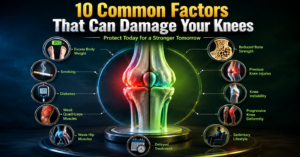
Non-Modifiable Risk Factors
These factors cannot be changed:
- Increasing age
- Family history of osteoarthritis
- Previous major knee injury
- Advanced cartilage damage visible on X-rays or MRI
- Certain inherited joint conditions
Although these factors increase the likelihood of arthritis progression, they do not automatically mean knee replacement surgery will be necessary.
Modifiable Risk Factors
The encouraging news is that many important risk factors can be actively managed:
- Excess body weight
- Physical inactivity
- Poor muscle strength
- Smoking
- Poor diabetes control
- Inadequate nutrition
- Untreated knee injuries
- Delayed rehabilitation
Improving these factors may help reduce symptoms and support long-term joint health, often more effectively than patients initially expect. In our clinical experience, patients are frequently surprised to learn how much influence they actually have over their own knee health trajectory, even after a diagnosis that initially feels alarming.
Knee Preservation Score (KPS): Assess Your Future Knee Health
One useful way to understand your overall knee health is by assessing several important risk factors together, rather than looking at any single symptom in isolation.
Factors Included in the Knee Preservation Score
- Age
- Body weight
- Pain severity
- Walking tolerance
- Knee deformity
- Previous knee injury
- Muscle weakness
- Diabetes
- Smoking
- Bone health
- Other chronic medical conditions such as inflammatory arthritis, kidney disease, or neurological disorders
Understanding Your Knee Preservation Risk
| Risk Level | What It May Mean |
|---|---|
| Low Risk | Good knee health with manageable risk factors. Focus on prevention and regular exercise. |
| Moderate Risk | Some factors may increase future joint damage. Early intervention is recommended. |
| High Risk | Multiple risk factors or advanced symptoms. A comprehensive orthopedic assessment is advised. |
Important: The Knee Preservation Score is an educational guide only. It is not a diagnostic tool and should not replace a professional medical evaluation.
How Can You Reduce Your Chances of Needing Knee Replacement?
The good news is that many people can preserve knee function through a thoughtful combination of exercise, healthy lifestyle choices, and appropriate medical care.
1. Strengthen the Muscles That Protect Your Knee
Strong muscles reduce stress on the knee joint, improve stability, and support better movement. A personalized rehabilitation program may include:
- Quadriceps strengthening
- Hip strengthening
- Hamstring exercises
- Balance training
- Flexibility exercises
- Supervised physiotherapy
Instead of following random exercises from social media, work with a qualified healthcare professional to develop a program suited to your specific diagnosis and fitness level. For related guidance on how connected muscle groups affect joint health, see our article on the hidden link between hips, core, and hamstring injuries.
2. Maintain a Healthy Body Weight
Excess body weight places additional pressure on the knee joint and may accelerate cartilage wear. Healthy weight management strategies include balanced nutrition, regular physical activity, portion control, and sustainable lifestyle changes — not crash diets. Even a 5–10% reduction in body weight may improve pain, mobility, and knee function in many individuals with osteoarthritis.
3. Support Joint Health Through Good Nutrition
Nutrition plays an important role in maintaining healthy muscles, bones, and joints. While no food or supplement can cure arthritis, a balanced diet can support overall joint health and complement your treatment plan. Some ingredients have supportive evidence for selected patients, although responses vary and supplements should be used alongside — not instead of — exercise and medical care. These may include omega-3 fatty acids, vitamin D, calcium, collagen peptides, glucosamine and chondroitin for selected individuals, curcumin, and boswellia serrata.
Key takeaway: Good nutrition supports joint health, but it works best when combined with exercise, weight management, and appropriate medical care — not as a standalone fix.
4. Adopt Healthy Lifestyle Habits
Simple daily habits can make a significant difference in maintaining healthy knees and reducing future joint problems:
- Quit smoking
- Stay physically active
- Get adequate sleep
- Prevent falls
- Maintain muscle strength
- Manage diabetes and other chronic conditions
- Wear supportive footwear
- Avoid prolonged sitting or inactivity
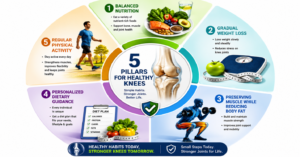
Consistency matters more than intensity here — small lifestyle improvements practiced regularly tend to produce better long-term outcomes than occasional, aggressive efforts.
Nutrition for Joint Health: What the Evidence Supports
Nutrition plays an important role in maintaining healthy muscles, bones, and joints. While no food or supplement can cure arthritis, a balanced diet can support overall joint health and complement your treatment plan. Some ingredients have supportive evidence for selected patients, although responses vary and supplements should be used alongside — not instead of — exercise and medical care.
Boswellia Serrata (AKBA-Enriched Extracts)
This plant-based extract has been studied for its role in joint comfort and mobility. AKBA-enriched formulations are specifically associated with:
- Supporting joint comfort and flexibility
- Promoting a balanced inflammatory response
- Helping maintain mobility and flexibility
- Supporting an active, healthy lifestyle
Curcumin (The Active Compound in Turmeric)
Curcumin is one of the most researched natural compounds for joint support, valued for its role in promoting a healthy inflammatory response within the joint. Bioavailability matters significantly here — standard turmeric powder is poorly absorbed by the body, which is why many curcumin supplements use enhanced-absorption formulations to make the active compound more available for the body to use.
Other Nutrients With Supportive Evidence
- Omega-3 fatty acids
- Vitamin D
- Calcium
- Collagen peptides
- Glucosamine and chondroitin
It’s worth being clear about what this evidence does and doesn’t show: these nutrients and extracts may support joint comfort and complement a broader treatment plan, but none of them can reverse existing joint damage or replace appropriate medical care. Always discuss any new supplement with your doctor, particularly if you’re on other medications, since interactions are possible.
Key takeaway: Good nutrition supports joint health, but it works best when combined with exercise, weight management, and appropriate medical care — not as a standalone fix.

When Should You Seek Medical Review?
Consult a healthcare professional if you experience:
- Persistent knee pain despite home treatment
- Reduced walking distance
- Recurrent knee swelling
- Knee instability or frequent giving way
- Difficulty performing daily activities
- Pain that disturbs sleep
- Progressive bow legs or knock knees
- Sudden locking of the knee
Early diagnosis often provides more treatment options and may help slow disease progression before significant joint damage occurs. Waiting until pain becomes unbearable typically narrows your options rather than preserving them — a pattern we see often enough in clinical practice that we encourage patients to come in sooner rather than later, even if the pain still feels manageable.
Who Should You Consult?
Managing knee pain often requires a multidisciplinary approach, and knowing who to see first can save significant time.
Physiotherapist
Helps improve muscle strength, joint mobility, balance, flexibility, and rehabilitation after injury.
Orthopedic Surgeon
Diagnoses knee conditions, interprets X-rays and MRI scans, recommends appropriate treatment, and determines whether surgery is necessary.
Sports & Exercise Medicine Specialist
Focuses on sports injuries, exercise-based rehabilitation, evidence-based non-surgical management, and safe return to activity.
Knee Preservation or Regenerative Medicine Specialist
May discuss joint-preserving strategies such as rehabilitation, weight management, evidence-based injection therapies, and non-surgical treatment options. The goal is not to promise avoidance of surgery but to preserve natural knee function for as long as possible.
Why Starting With the Right Specialist Saves Time
Many patients aren’t sure whether to start with a physiotherapist or an orthopedic surgeon, and end up bouncing between providers before getting a clear answer. A useful rule of thumb: if your pain is new, mild, and without significant swelling or instability, a physiotherapy assessment is a reasonable starting point. If your pain is severe, has persisted for weeks despite rest, or is accompanied by swelling, locking, or instability, an orthopedic evaluation first will usually get you to the right treatment plan faster.
When Is Knee Replacement the Right Choice?
Although many people can delay surgery, knee replacement remains one of the most successful treatments in orthopedics for carefully selected patients. According to OrthoInfo, the patient education resource of the American Academy of Orthopaedic Surgeons (AAOS), total knee replacement is generally recommended when nonsurgical treatments are no longer managing arthritis symptoms effectively — it’s considered a safe, effective procedure to relieve pain, correct deformity, and help patients resume normal activities.
Knee replacement may be recommended when:
- Pain becomes severe and persistent
- Daily activities are significantly limited
- Walking becomes difficult
- Conservative treatments no longer provide relief
- Imaging confirms advanced joint damage that matches your clinical symptoms
For appropriately selected patients, knee replacement surgery can provide significant pain relief, improved mobility, better quality of life, and greater independence in daily activities. The AAOS’s clinical practice guidelines for surgical management of knee osteoarthritis are developed specifically to help orthopedic surgeons determine when surgery is genuinely the right recommendation, rather than a default option.
It’s worth emphasizing that “successful surgery” and “necessary surgery” are two different conversations. Knee replacement has excellent outcomes data when performed on appropriately selected patients — but that doesn’t mean earlier or more frequent surgery is better. The decision should always weigh your specific symptoms, imaging findings, and how much your daily life is genuinely being affected, not simply the presence of arthritis on a scan.
Why Choose Move & Shine for Knee Pain and Arthritis Care in Bangalore
Move & Shine Orthopedic Wellness Centre, located on Uttarahalli Main Road in South Bangalore, is led by specialists including Dr. Pradeep Kocheeppan, a knee and shoulder surgeon with over 20 years of experience in arthroscopy, joint preservation, and joint replacement surgery. Dr. Kocheeppan has worked closely with the Sports Authority of India on athlete rehabilitation and was recognized for Outstanding Sports Orthopaedic Care at the Vijay Karnataka & Bangalore Mirror Health Excellence Conclave.
If you’re searching for knee replacement surgery in Bangalore or simply want a thorough, honest evaluation of whether surgery is genuinely necessary for your knee pain, our team focuses on joint preservation first — surgery is discussed only when it’s genuinely the most appropriate next step, not the default recommendation.
This philosophy matters because the right treatment path is rarely obvious from symptoms alone. A patient with moderate osteoarthritis who is otherwise healthy and motivated to strengthen their knee muscles may do very well delaying surgery for years, while another patient with similar imaging findings but significant functional limitation may benefit from earlier intervention. Our approach is to evaluate each case individually rather than applying a one-size-fits-all protocol.
Our Orthopedic Services
- Comprehensive knee and joint pain evaluation
- Non-surgical arthritis management
- Knee arthroscopy and joint preservation surgery
- Total and partial knee replacement
- Sports injury rehabilitation
- Supervised physiotherapy programs
Explore our full range of orthopedic services →