Medically Reviewed by Dr. Pradeep Kocheeppan, Knee & Shoulder Surgeon, Move & Shine Orthopedic Wellness & Eye Hospital Last Updated: September 2026
A knee that feels unstable without pain is one of the most confusing symptoms patients bring to an orthopedic clinic. There’s no swelling, no sharp pain, nothing dramatic on the surface — just a nagging sense that the knee might “give way,” wobble on stairs, or feel less trustworthy than it used to. Because there’s no pain to point to, most people either ignore it or assume it will resolve on its own.
Here’s what’s important to understand upfront: knee instability without pain is real, common, and treatable — but it’s also a signal worth taking seriously, because left unaddressed, it can gradually worsen or increase your risk of a future injury. This guide covers exactly why this happens, and what actually works to fix it.
How Common Is This in Everyday Life?
Knee instability without pain shows up constantly in ordinary, everyday moments — not just during sport or structured exercise. Patients most often notice it during:
- Climbing or descending stairs— a brief buckling or “giving way” sensation, especially going down
- Lifting or carrying weight— groceries, luggage, or a child, where the knee suddenly feels like it can’t be trusted
- Standing up from a low chair, sofa, or the floor— a wobble or hesitation before the knee “locks in”
- Travel— long hours seated in a car, train, or flight, followed by stiffness and instability on the first few steps afterward
- Walking on uneven ground— pavements, gravel, or stairs without a railing, where the knee feels less predictable
- Turning or pivoting quickly— changing direction while walking, playing with kids, or during light sport
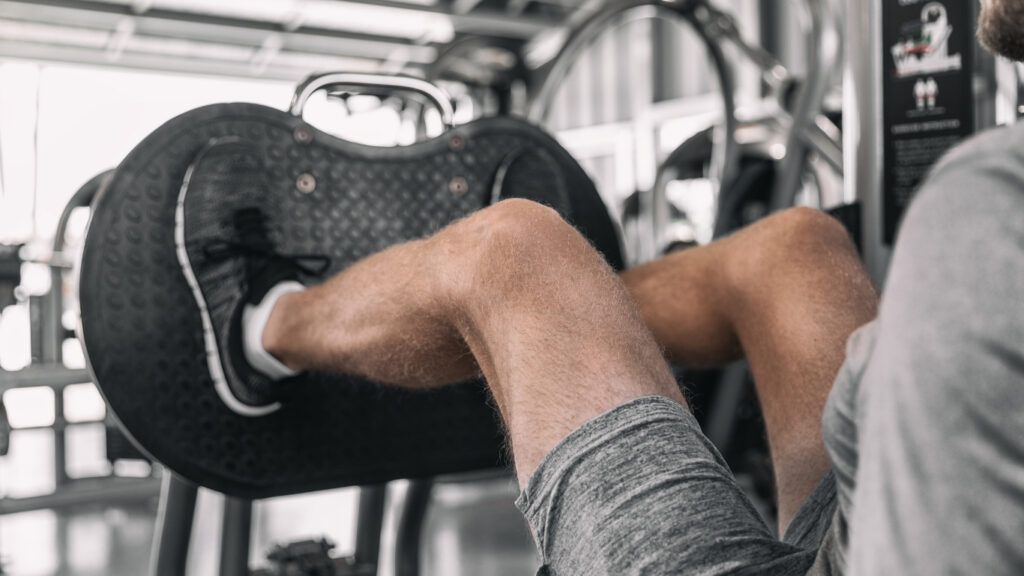
- Gym or workout sessions— squats, lunges, or leg presses where the knee feels shaky despite no pain during the movement
- Getting in and out of a car or auto-rickshaw— a stiff, hesitant first step after uncoiling from a seated position
- Squatting for everyday tasks— using an Indian-style toilet, gardening, praying, or picking something up off the floor
- Standing for long periods— cooking, queuing, or working at a shop counter, where the knee starts to feel less “locked in” as fatigue builds
There’s a common thread running through almost all of these situations: each one briefly asks the knee to bear more load, change direction, or work without the balance and support it would normally get from strong, well-coordinated muscles. This is especially relevant if you have a desk-bound routine — long hours of sitting mean the quadriceps, hamstrings, and glutes around the knee are barely used for hours at a stretch, so by the time you climb a flight of stairs or squat down to pick something up, those muscles haven’t been properly “switched on” in a while. Over time, this pattern of underuse is exactly what allows instability to build up quietly, without ever causing pain along the way.
None of these are rare or unusual — they’re some of the most common ways patients first notice something is off. Because there’s no pain attached, it’s easy to dismiss these moments as “just getting older” or “just being tired.” But as covered above, knee instability without pain is real, common, and treatable, and recognising it in these everyday situations is the first step toward addressing it before it gets worse.
What Does “Knee Instability Without Pain” Actually Mean?
Knee instability describes a sensation of the knee twisting, buckling, wobbling, or “giving way” under your weight — even when there’s no acute injury behind it. You might notice it most when going down stairs, pivoting quickly, standing up from a low chair, or walking on uneven ground.
Many people assume instability must mean a torn ligament or a clear traumatic event. In reality, it is very common for a knee to feel unreliable without any specific injury at all — and pain is often absent, especially in the early stages.
The Real Causes of Knee Instability Without Pain
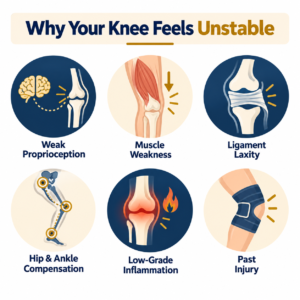
1. Proprioceptive Decline (Reduced Joint-Position Sense)
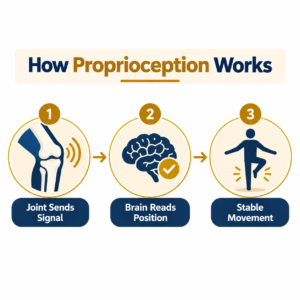
Proprioception is your body’s built-in sense of joint position — the feedback loop that tells your brain exactly where your knee is in space without you having to look at it. This feedback can decline with aging, inactivity, prior swelling, or repeated episodes of knee irritation. When the brain receives less accurate feedback from the joint, stability suffers even when the physical structures of the knee are completely intact.
2. Quadriceps and Surrounding Muscle Weakness (Weak Thigh, Hamstring, and Glute Muscles)
The muscles around your knee — particularly the quadriceps (front thigh muscles), hamstrings (back thigh muscles), and glutes (buttock muscles) — act as the joint’s active stabilizers. Research on knee osteoarthritis has shown that quadriceps weakness is closely tied to poor dynamic balance and joint control, and neuromuscular dysfunction (reduced strength and reduced voluntary muscle activation) has been documented across a range of knee conditions, including ligament injuries and meniscus (the knee’s cushioning cartilage) problems — often independent of how much pain is present.
3. Mild Ligament Laxity (Slightly Loose Ligaments)
Some people naturally have looser ligaments, or develop mild ligament laxity gradually over time, without ever experiencing a full ligament tear. This extra motion often doesn’t show up on standard imaging, but it can still create a subtle sense of the knee moving slightly more than it should — enough to feel unstable without necessarily causing pain.
4. Compensation From the Hips or Ankles (When Nearby Joints Force the Knee to Overwork)
The knee doesn’t function in isolation — it sits between the hip and the ankle, and limited mobility or weakness at either of those joints often forces the knee to compensate. Over time, this compensation pattern can make the knee feel like the “weak link” even though the original problem lies elsewhere in the kinetic chain (the connected chain of joints from hip to ankle).
5. Low-Grade Inflammation (Without Visible Swelling)
Even mild, low-grade inflammation — not enough to cause visible swelling — can interfere with how muscles activate around the joint and how accurately the joint communicates its position to the brain. This can make the knee feel less controlled during movement, well before any pain develops.
6. Past Injury or Surgery
Previous trauma — an old ACL (a key stabilizing ligament inside the knee) injury, a meniscus (cushioning cartilage) repair, or any past knee surgery — can leave behind lingering muscle atrophy (muscle wasting from disuse) or subtle proprioceptive deficits (a weaker sense of joint position), even years later and even in the complete absence of pain.
Why “Just Resting It” Usually Doesn’t Work
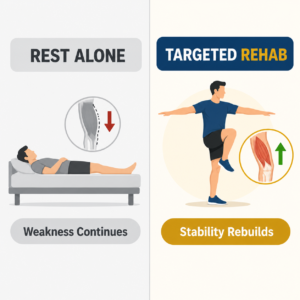
This is one of the most important things to understand: rest reduces pain, but it does not rebuild strength, coordination, or proprioception. In some cases, prolonged rest can actually make instability worse, by allowing the stabilizing muscles around the knee to further decondition. This is a major reason knee instability often returns as soon as normal activity resumes — the underlying weakness or proprioceptive deficit was never actually addressed, only temporarily avoided.
Evidence-Based Solutions for Knee Instability
1. Targeted Strengthening
Strengthening the quadriceps, hamstrings, and glutes is the foundation of treatment for knee instability, since these muscles directly determine how well the joint is supported during movement. This isn’t about generic leg exercises — a proper assessment identifies which specific muscles are weakest and builds a programme around that.
2. Proprioceptive and Balance Training (Exercises That Retrain Your Knee’s Sense of Position and Balance)
Because instability is so often linked to reduced joint-position awareness, exercises that specifically challenge and retrain balance — single-leg stances, controlled wobble-board work, and progressively challenging stability drills — are essential, not optional add-ons.
3. Addressing Hip and Ankle Function
Since the knee often compensates for problems elsewhere, an effective treatment plan evaluates hip strength and ankle mobility as well, rather than focusing on the knee in isolation.
4. Bracing, Where Appropriate
For knees that feel unstable during specific activities, a supportive brace can provide additional joint feedback and confidence during movement while the underlying strength and proprioception are being rebuilt — though bracing works best as a support during rehabilitation, not as a long-term substitute for it.
5. Addressing Low-Grade Inflammation
If mild, ongoing inflammation is contributing to poor muscle activation, identifying and managing that — through appropriate medical guidance — can be an important part of restoring normal joint control.
Nutrition for Knee Stability: What Actually Helps
Exercise rebuilds the muscles that stabilize your knee — but adequate nutrition is what allows that rebuilding to actually happen. Two nutrients in particular have meaningful, evidence-backed roles here.
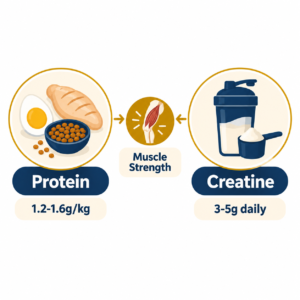
Protein: The Foundation for Muscle Rebuilding
Muscle tissue is built and repaired using protein, and inadequate intake directly limits how effectively strengthening exercises translate into real muscle gains — particularly for the quadriceps and hamstrings that stabilize the knee. For adults engaged in a structured strengthening programme, 1.2–1.6g of protein per kilogram of body weight daily, spread across 3–4 meals, supports the muscle-building response that knee-stability training depends on. This matters even more for adults over 40, since aging muscle requires more protein input to achieve the same strengthening response as younger muscle.
Creatine: Supporting Strength Gains During Rehabilitation
Creatine monohydrate (a natural compound that fuels muscle energy, widely used as a sports supplement) is one of the most well-researched supplements for supporting muscle strength, and its relevance to knee stability is specific and well-documented: creatine doesn’t rebuild cartilage or directly reduce inflammation, but it supports the muscle energy production that allows strengthening exercises to be more effective.
A randomized, placebo-controlled trial studying creatine supplementation after ACL reconstruction (surgery to rebuild a torn knee ligament) found significant increases in knee extension strength (47%) and knee flexion strength (27%) on the surgical side between 6 and 12 weeks of rehabilitation. More broadly, research combining creatine supplementation with resistance training (strength training using weights or resistance bands) in patients with knee osteoarthritis has shown meaningful improvements in physical function and lower body strength — reinforcing the core mechanism: stronger quadriceps and hamstrings provide better mechanical support for the knee joint, which is exactly what knee instability treatment is trying to achieve.
The typical evidence-based approach is 3–5g of creatine monohydrate daily, with no loading phase required. As with any supplement, this should complement — not replace — a structured strengthening programme, and should be discussed with your doctor first, particularly if you have any kidney conditions or are on other medications.
When to See an Orthopedic Doctor
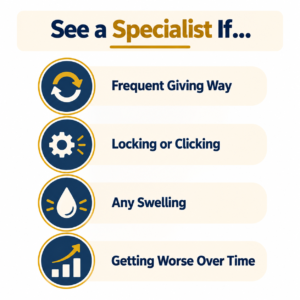
While many cases of knee instability respond well to targeted rehabilitation, certain signs warrant a proper orthopedic evaluation rather than continued self-management:
- The knee gives way frequently or unpredictably, not just occasionally
- You notice locking, catching, or a clicking sensation alongside the instability
- There’s any swelling, even mild or intermittent
- Instability follows a specific injury or twisting event, even if it happened a while ago
- The sensation is getting worse over time rather than improving with activity modification
A thorough evaluation can distinguish between a straightforward strength and proprioception issue (which responds well to targeted rehabilitation) and a structural problem like meniscus damage or ligament laxity requiring more specific treatment — including, in some cases, surgical evaluation. For patients whose instability does progress toward more significant joint damage over time, our guide on Will Every Knee Pain Patient Need Knee Replacement Surgery? covers what that broader decision-making process looks like.
How This Connects to the Rest of Your Body
Knee stability rarely exists in isolation from the rest of your movement system. Our guide on the hidden link between hips, core, and hamstring injuries explores how weaknesses elsewhere in the kinetic chain often show up as knee problems. If you’re building a broader strength and mobility routine to support long-term joint stability, our guide on Longevity Training for Musculoskeletal Health covers how strength, balance, and joint preservation fit together for lasting function — and our Yoga for Joint Health After 40 guide offers accessible mobility and balance work that complements targeted strengthening.
Why Choose Move & Shine for Knee Instability
Move & Shine Orthopedic Wellness Centre in Uttarahalli, South Bangalore, is led by specialists including Dr. Pradeep Kocheeppan, a knee and shoulder surgeon with over 20 years of experience in arthroscopy (minimally invasive knee surgery using a small camera), joint preservation, and sports injury rehabilitation. Because knee instability without pain requires careful, structured assessment rather than guesswork, our approach starts with identifying exactly which of the causes above is driving your symptoms — muscle weakness, proprioceptive decline, ligament laxity, or compensation patterns from the hip or ankle — before building a treatment plan around it.
If you’re searching for an orthopedic doctor in Bangalore for a knee that feels unstable, wobbly, or unreliable — even without pain — our team can help you get a clear answer rather than continuing to guess.
Learn more about Dr. Pradeep Kocheeppan’s full profile and areas of expertise.
Our Orthopedic Services
- Comprehensive knee evaluation and instability assessment
- Proprioceptive and balance rehabilitation
- Sports injury and ligament evaluation
- Knee arthroscopy and joint preservation
- Supervised physiotherapy programmes
- Nutrition and strength-training guidance for joint health
Explore our full range of orthopedic services →
Frequently Asked Questions
- Why does my knee feel wobbly or unstable but not painful?
This is commonly caused by reduced proprioception (joint position sense), quadriceps or surrounding muscle weakness, or mild ligament laxity — all of which can affect how stable a knee feels without necessarily causing pain. - Is knee instability without pain serious?
It can range from a minor, easily correctable strength or balance issue to an early sign of ligament or meniscus involvement. It’s worth a proper evaluation, especially if it’s frequent, worsening, or accompanied by locking or clicking. - Can weak quadriceps really cause my knee to feel unstable?
Yes. The quadriceps are one of the primary active stabilizers of the knee joint, and weakness here is strongly linked to poor dynamic balance and a reduced sense of joint control during movement. - Does resting my knee help instability?
Not usually, and it can sometimes make things worse. Rest may reduce pain temporarily, but it doesn’t rebuild the strength, coordination, or proprioception that instability actually requires to resolve. - Should I wear a knee brace if my knee feels unstable?
A brace can be a useful support during rehabilitation, providing extra joint feedback and confidence during activity, but it works best alongside — not instead of — a structured strengthening and proprioception programme. - Can creatine really help with knee stability?
Creatine doesn’t repair joint structures directly, but by supporting muscle strength gains during resistance training, it can help build the quadriceps and hamstring strength that mechanically stabilizes the knee. Research after ACL reconstruction has shown meaningful strength improvements with creatine supplementation combined with rehabilitation. - How much protein do I need to support knee-strengthening exercises?
A reasonable target for adults doing structured strength training is 1.2–1.6g of protein per kilogram of body weight daily, spread across multiple meals, to support the muscle-building response that knee rehabilitation depends on. - What is proprioception and why does it matter for my knee?
Proprioception is your body’s built-in sense of joint position. It’s what allows your knee to feel stable and controlled during movement without you consciously thinking about it — and it can decline with aging, inactivity, or repeated joint irritation, contributing directly to a feeling of instability. - Can hip or ankle problems really cause knee instability?
Yes. The knee sits between the hip and ankle in the body’s movement chain, and weakness or restricted mobility at either joint often forces the knee to compensate, which can make it feel like the unstable link even when the root cause lies elsewhere. - When should I see an orthopedic doctor for knee instability?
See a specialist if your knee gives way frequently, if you notice locking or clicking, if there’s any swelling, if instability follows a past injury, or if the sensation is worsening over time rather than improving. - Can knee instability without pain turn into something worse if untreated?
It can gradually worsen or increase the risk of a future injury if the underlying cause — whether muscle weakness, proprioceptive decline, or compensation patterns — isn’t addressed, which is why early evaluation is worthwhile even without pain. - Where can I get a knee instability evaluation in Bangalore?
Move & Shine Orthopedic Wellness Centre, located on Uttarahalli Main Road, offers comprehensive knee evaluations led by Dr. Pradeep Kocheeppan, including assessment of strength, proprioception, and joint stability.
This article is for general informational purposes and does not replace a professional orthopedic evaluation. Please consult your doctor before starting any new supplement, including creatine, particularly if you have kidney conditions or take other medications.
Sources
- PubMed — The Effect of Creatine Supplementation on Strength Recovery After ACL Reconstruction: A Randomized, Placebo-Controlled, Double-Blind Trial
- PMC — The Application of Creatine Supplementation in Medical Rehabilitation
- BMC Geriatrics — The Effects of Pain on Quadriceps Strength, Joint Proprioception and Dynamic Balance Among Women With Knee Osteoarthritis
- Heiden Orthopedics — Knee Instability: Symptoms, Causes, and Treatment