Medically Reviewed by Dr. Dona Susan John, Eye Care Specialist at Move & Shine Last Updated: July 2026
If you spend your day switching between a laptop, phone, and TV screen, your eyes are working harder than you realize. Headaches by evening, blurry vision after long meetings, dry and irritated eyes — these are signs of digital eye strain, and they are becoming increasingly common among students, professionals, and anyone who spends long hours on screens across Bangalore.
Here’s the thing most people miss: almost everyone has already heard of the 20-20-20 rule. It’s not a secret. The problem isn’t awareness — it’s that most people never actually build it into their day. The people who do follow it consistently are the ones who see real results: fewer headaches, less dryness, and noticeably less end-of-day eye fatigue. In other words, this isn’t information you need — it’s action you need. And the results follow once you take that action.
The good news is that this simple habit is also one of the most effective ways to prevent digital eye strain. In this guide, we’ll explain exactly what the 20-20-20 rule is, why it works, how it connects to more serious eye conditions like glaucoma and diabetic retinopathy, and what else you can do to protect your vision for the long term.
What Is the 20-20-20 Rule?
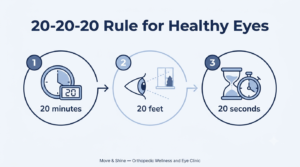
The 20-20-20 rule is simple: every 20 minutes, look at something at least 20 feet away for at least 20 seconds.
This rule was created by optometrist Dr. Jeffrey Anshel in the early 1990s after he noticed a sharp rise in patients complaining of eye strain linked to computer use. Today, it is recommended by major health organizations, including the American Academy of Ophthalmology (AAO) and the American Optometric Association (AOA), as a practical way to reduce digital eye strain, also known as Computer Vision Syndrome (CVS).
According to the AOA’s American Eye-Q® survey, 58% of adults have experienced digital eye strain or vision problems as a direct result of prolonged screen use — a number that has likely grown as remote work and screen-based learning have become the norm.
Why Does Screen Time Strain Your Eyes?
It’s a common myth that blue light from screens is the main culprit behind eye strain. In reality, according to the AAO, there is no scientific evidence that light from computer screens damages the eyes. The real causes are simpler — and more fixable:
- Reduced blinking: We normally blink 15–20 times per minute. During screen use, this can drop to as low as 5–7 times per minute, drying out the eyes.
- Fixed focus distance: Staring at one fixed distance for hours overworks the eye’s focusing muscles.
- Poor screen ergonomics: Incorrect monitor height, glare, and poor posture all add strain to both the eyes and the neck.
- Uncorrected or outdated prescriptions: Even a small, uncorrected refractive error can significantly worsen eye strain during near work.
(If you’re curious whether blue light glasses can help with any of this, we’ve covered that separately in our article on blue light glasses and digital eye strain — this guide focuses specifically on the habits and practices that actually make a difference.)
How to Do the 20-20-20 Rule Properly
Simply “remembering” to look away isn’t always enough — here’s how to build it into your routine:
- Set a recurring timer on your phone or computer for every 20 minutes.
- Look at something at least 20 feet (about 6 metres) away — a wall clock across the room, a tree outside the window, or the end of a hallway.
- Hold your gaze there for a full 20 seconds — not a quick glance.
- Blink deliberately several times during this break to rewet the surface of your eyes.
- Stand up every hour if possible, to combine the eye break with a posture break.

For added benefit, combine this with:
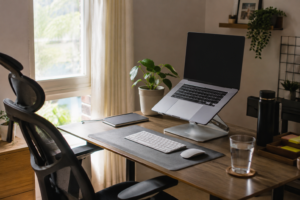
- Sitting at least 25 inches (arm’s length) from your screen
- Positioning your screen slightly below eye level
- Using artificial tears if your eyes still feel dry by the end of the day
- Ensuring your room lighting doesn’t create glare on the screen
Making It a Habit, Not a Chore
The biggest challenge with the 20-20-20 rule isn’t understanding it — it’s remembering to actually do it during a busy workday. Here are a few practical ways our patients have found useful:
- Browser extensions and apps: Free tools like “Eye Care 20 20 20” (available for both desktop and mobile) will automatically lock your screen for 20 seconds every 20 minutes as a gentle, non-negotiable reminder.
- Pair it with something you already do: If you check your phone for messages every so often anyway, use that moment to also look out the window for 20 seconds.
- Sticky note method: A simple sticky note on your monitor saying “Look Away!” can be surprisingly effective for building the habit in the first two weeks.
- Team reminders: Some Bangalore offices have started encouraging “eye break” reminders alongside posture reminders in wellness programs — if you manage a team, consider normalizing this.
It typically takes about 2–3 weeks of consistent practice before looking away every 20 minutes starts to feel automatic rather than effortful.
Beyond the 20-20-20 Rule: Building a Complete Eye-Care Routine
While the 20-20-20 rule is an excellent starting point, eye specialists recommend thinking of it as one part of a broader daily routine rather than a standalone fix:
- The 20-20-20-20 addition: Some optometrists now recommend adding a fourth “20” — 20 blinks — during your break, to actively rewet the eye surface rather than just resting your focus.
- Screen brightness matching: Your screen brightness should roughly match the brightness of your surroundings. A screen that’s much brighter or dimmer than the room forces your eyes to work harder to adjust repeatedly.
- Font size: If you find yourself leaning in to read text, increasing your font size is often more effective at reducing strain than any lens or filter.
- Hydration: Mild dehydration can worsen dry eye symptoms, so drinking enough water through the day supports eye comfort as well.
- Sleep: Poor sleep is strongly linked to worsened eye strain symptoms the following day, since tired eye muscles recover more slowly.
None of these replace the 20-20-20 rule — they work alongside it to reduce the overall strain your eyes experience during a screen-heavy day.
How the 20-20-20 Rule Connects to Common Eye Conditions
Digital eye strain itself is usually temporary and not dangerous — but the habits that cause it are closely linked to several conditions that our doctors see regularly at Move & Shine.
How the 20-20-20 Rule Helps with Dry Eye Disease
Reduced blink rate during screen use is one of the most common contributors to dry eye symptoms. If you already have dry eye disease, skipping regular breaks can make symptoms noticeably worse. We’ve written a more detailed guide on this in our article on dry eyes from screen use.
Does the 20-20-20 Rule Help Slow Myopia (Nearsightedness) Progression?
Extended near-work — reading or looking at screens up close for hours without breaks — has been associated with faster progression of myopia, particularly in children and teenagers. Building in regular distance-focus breaks, as the 20-20-20 rule encourages, supports healthier visual development. Read more in our guide on managing rising myopia in children.
Can the 20-20-20 Rule Help Prevent Glaucoma?
Glaucoma is often called the “silent thief of sight” because it typically has no early symptoms, yet it remains one of the leading causes of irreversible blindness. While the 20-20-20 rule does not prevent glaucoma directly, consistent eye-care habits combined with regular comprehensive eye exams are essential for catching glaucoma early — well before vision loss occurs. This is particularly important for anyone over 40 or with a family history of the condition.
Cataracts
Cataracts develop naturally with age, but people who spend long hours on screens sometimes delay routine eye exams simply because their day-to-day vision “feels fine.” Regular breaks and annual eye check-ups help ensure early-stage cataracts are identified before they significantly affect your quality of life.
Diabetic Retinopathy
For patients with diabetes, screen-related eye strain can sometimes mask or be confused with early symptoms of diabetic retinopathy, a condition that affects the blood vessels in the retina. If you have diabetes and spend long hours on screens, it’s especially important not to rely on the 20-20-20 rule alone — routine retinal screening is essential. Learn more about this condition in our diabetic retinopathy resources.
The key takeaway: the 20-20-20 rule is an excellent daily habit for comfort and prevention, but it is not a substitute for professional eye examinations, especially if you have risk factors for the conditions above.
Why Early Detection Matters More Than the Habit Itself
It’s worth repeating: none of the conditions above are caused by screens or cured by the 20-20-20 rule. What the rule does do is build a habit of paying closer attention to how your eyes feel day to day — which often makes people more likely to notice changes and seek an eye exam sooner rather than later. In conditions like glaucoma, where vision loss is irreversible once it occurs, that earlier check-up can make a meaningful difference.
The key takeaway: the 20-20-20 rule is an excellent daily habit for comfort and prevention, but it is not a substitute for professional eye examinations, especially if you have risk factors for the conditions above.
Why Early Detection Matters More Than the Habit Itself
It’s worth repeating: none of the conditions above are caused by screens or cured by the 20-20-20 rule. What the rule does do is build a habit of paying closer attention to how your eyes feel day to day — which often makes people more likely to notice changes and seek an eye exam sooner rather than later. In conditions like glaucoma, where vision loss is irreversible once it occurs, that earlier check-up can make a meaningful difference.
Who Is Most at Risk in Bangalore?
Digital eye strain isn’t an “IT professional problem” — it’s a screen problem, and in a city like Bangalore, that touches almost everyone’s daily routine:
- Students attending online classes and studying on laptops or tablets
- Working professionals across every field spending long hours in front of a computer, not just those in tech roles
- Content creators and editors doing detailed screen-based work
- Remote and hybrid workers who may have less ergonomic home setups than an office
- Homemakers and older adults who spend increasing amounts of time on phones and tablets for calls, videos, and daily tasks
If you recognize your own daily routine in this list, it’s worth booking a comprehensive eye check-up — even if you don’t currently have symptoms.
A Quick Self-Check
Ask yourself the following questions. If you answer “yes” to two or more, it’s a good sign that your current screen habits may be contributing to eye strain:
- Do you often forget to blink or notice your eyes feel dry by mid-afternoon?
- Do you get a mild headache, particularly around or behind the eyes, after long screen sessions?
- Do you find yourself rubbing your eyes frequently during the day?
- Has it been more than a year since your last comprehensive eye exam?
- Do you sit closer than arm’s length from your screen for extended periods?
None of these symptoms alone are cause for alarm, but together they’re a useful signal that it’s time to build better screen habits — and possibly schedule a check-up.
Why Choose Move & Shine for Your Eye Care
Move & Shine Eye Clinic is one of the leading eye care centres in South Bangalore, located on Uttarahalli Main Road. Our eye care is led by Dr. Dona Susan John, an experienced ophthalmologist and medical retina specialist who has treated over 5,000 patients since 2017, with a strong focus on preventive eye care.
We offer comprehensive, preventive ophthalmology under one roof — from routine screen-strain consultations to advanced treatment for cataracts, glaucoma, and diabetic retinopathy — supported by modern diagnostic equipment and a patient-first approach that prioritizes early detection.
If you’re searching for the best eye clinic in Bangalore or an eye specialist near me in the Uttarahalli, Banashankari, or South Bangalore area, our team is here to help.
Our Eye Care Services
- Comprehensive eye examinations and vision testing
- Dry eye disease diagnosis and treatment
- Cataract evaluation and surgery
- Glaucoma screening and management
- Diabetic retinopathy screening
- Pediatric eye care and myopia management
- LASIK and refractive error correction
Explore our full range of eye care services →
Frequently Asked Questions
- What is the 20-20-20 rule for eyes?
It’s a simple habit where, every 20 minutes of screen use, you look at something at least 20 feet away for at least 20 seconds. This gives your eye muscles a break from constant near-focus work. - Does the 20-20-20 rule really work?
Yes. It’s recommended by the American Academy of Ophthalmology and the American Optometric Association as an effective way to reduce symptoms of digital eye strain, such as dryness, fatigue, and blurred vision. - How do I remember to follow the 20-20-20 rule?
Most people use a phone timer, a smartwatch reminder, or a browser extension that prompts a break every 20 minutes. Pairing it with a habit you already do hourly (like checking messages) can also help. - Can the 20-20-20 rule cure dry eyes permanently?
It helps manage and reduce dry eye symptoms caused by reduced blinking during screen use, but it isn’t a cure for underlying dry eye disease. If symptoms persist, a proper eye examination is recommended. - Is digital eye strain permanent or dangerous?
No, digital eye strain itself is usually temporary and does not cause permanent eye damage. However, ignoring it for years, combined with skipping regular eye exams, can allow other underlying conditions to go undetected. - Do children need to follow the 20-20-20 rule too?
Yes — with online classes and increased screen time, children are just as susceptible to digital eye strain, and building this habit early can support healthier visual development. - Are blue light glasses a replacement for the 20-20-20 rule?
No. Current research, including a major Cochrane Review, has found limited evidence that blue light glasses reduce digital eye strain. Behavioral habits like the 20-20-20 rule are considered more effective. - How often should I get my eyes tested if I work on a computer all day?
Most eye care specialists recommend an annual comprehensive eye exam for regular screen users, or more frequently if you have an existing eye condition, diabetes, or a family history of glaucoma. - Can screen time cause glaucoma or cataracts?
There’s no direct evidence that screen time causes glaucoma or cataracts. However, people who spend long hours on screens sometimes delay routine eye exams, which can allow these age-related conditions to go undetected longer than they should. - What should I do if the 20-20-20 rule isn’t relieving my eye strain?
If you’re consistently following the rule and still experiencing discomfort, it may indicate an underlying issue like an uncorrected refractive error or dry eye disease that needs professional evaluation. - Where can I find the best eye clinic near me in South Bangalore?
Move & Shine Eye Clinic, located on Uttarahalli Main Road, offers comprehensive eye examinations and specialist care for screen-related eye strain and other common eye conditions. - How do I book an appointment at Move & Shine?
You can call us directly at +91-9632014086 or visit our contact page to book a consultation with Dr. Dona Susan John.
This article is for general informational purposes and does not replace a professional eye examination. If you are experiencing persistent eye strain, dryness, or vision changes, please book a consultation with our eye care team.
Sources
- American Academy of Ophthalmology — Are Computer Glasses Worth It?
- American Optometric Association — Computer Vision Syndrome
- American Optometric Association — American Eye-Q Survey