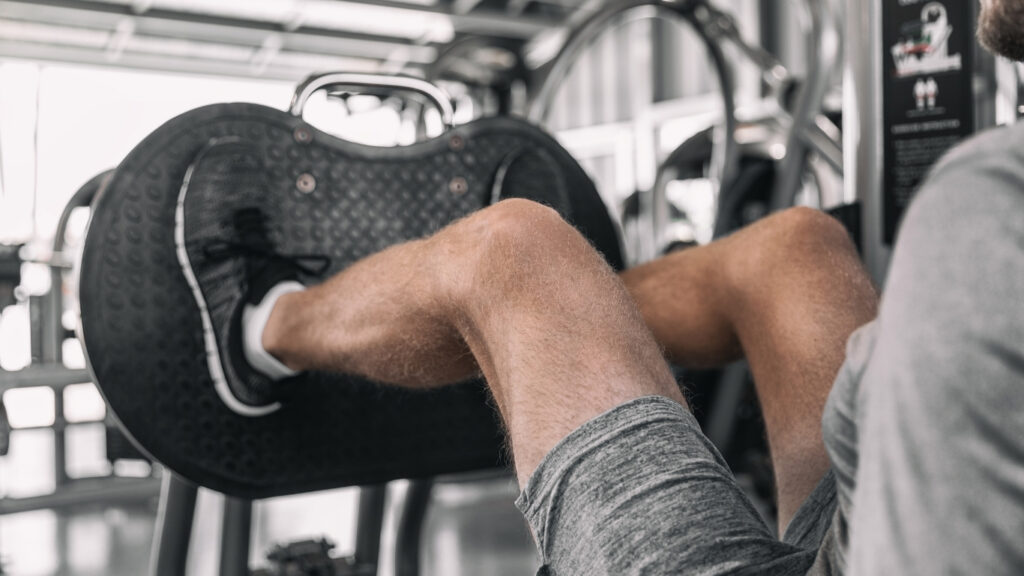
Why Does Joint Pain Increase During Winter?
Have you noticed that your knees feel uncomfortable when you get out of bed on a cold morning? Perhaps your back feels tight after sitting for a long time, your shoulders become difficult to move, or your muscles feel unusually stiff during everyday activities.
For some people, joint pain in winter becomes more noticeable when temperatures drop. Activities such as walking, climbing stairs, bending, reaching overhead or getting up from a chair may feel more difficult than usual.
These symptoms can affect people of different ages, but they may be particularly noticeable among individuals who already have osteoarthritis, previous joint injuries, muscle weakness or other musculoskeletal conditions.
However, winter does not automatically cause arthritis or damage the joints. Research on the relationship between weather and musculoskeletal pain has produced mixed findings. Some people report increased discomfort during colder periods, while factors such as reduced physical activity, prolonged sitting, existing joint conditions and changes in exercise habits may also contribute.
Understanding the possible causes of joint pain during winter is important because discomfort in different body parts can have different explanations.
For example:
Knee pain may be associated with osteoarthritis, previous ligament injuries or reduced quadriceps strength.
Shoulder pain may involve rotator cuff problems, frozen shoulder or muscle irritation.
Lower-back pain may be related to prolonged sitting, reduced trunk strength or spinal conditions.
Hip pain may involve joint changes, tendon problems or restricted mobility.
Wrist pain may be associated with tendon irritation, arthritis or previous injuries.
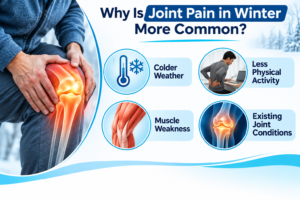
This guide explains why joint pain in winter may become more noticeable, which body parts are commonly affected, how muscle stiffness develops and what you can do to maintain comfortable movement.
Why Do My Joints Hurt in Winter?
Joint pain in winter can be associated with several factors:
Reduced physical activity during colder weather.
Prolonged sitting and inactivity.
Existing osteoarthritis or inflammatory joint conditions.
Muscle weakness and reduced flexibility.
Previous muscle, ligament or tendon injuries.
Inadequate warm-up before exercise.
Changes in daily movement and exercise routines.
Conditions affecting the knees, hips, shoulders, wrists and spine.
Cold weather may make discomfort more noticeable for some individuals, but it is not the only explanation for winter-related joint pain.
Regular movement, appropriate warm-ups, progressive strengthening and condition-specific treatment can help maintain mobility and support joint function.
1. What Happens to Your Muscles and Joints During Winter?
Your musculoskeletal system depends on coordinated movement between bones, joints, muscles, ligaments and tendons.
Each structure performs a different function.
| Structure | Main function | What discomfort may feel like |
|---|---|---|
| Muscles | Generate movement and control body position | Tightness, soreness or difficulty stretching |
| Joints | Allow movement between bones | Restricted bending, straightening or rotation |
| Tendons | Connect muscles to bones | Pain during movement or loading |
| Ligaments | Stabilise joints | Discomfort or instability after injury |
| Joint cartilage | Provides a smooth surface for movement | Pain and stiffness when affected by joint disease |
| Spinal structures | Support movement and protect nerves | Neck or lower-back discomfort |
During colder months, people may spend more time indoors, walk less frequently, avoid outdoor exercise or remain seated for longer periods.
When physical activity decreases, muscles may become less conditioned. Joints may also feel less comfortable after prolonged inactivity.
People who already have osteoarthritis, previous injuries or inflammatory arthritis may notice their symptoms more during this period.
Does Cold Weather Actually Increase Joint Pain?
The relationship between cold weather and joint pain is not straightforward.
Some people report increased discomfort when temperatures fall. However, research has not established that cold weather directly causes common conditions such as osteoarthritis or that it consistently increases pain in every individual.
Several factors may influence how people experience joint pain in winter:
Reduced movement throughout the day.
Changes in exercise routines.
Prolonged sitting in one position.
Existing joint inflammation or degeneration.
Reduced muscle strength and conditioning.
Pain-related protective muscle tension.
Cold exposure can also influence movement comfort and the body’s response to exercise.
The practical approach is not simply to stay warm. Maintaining regular movement and addressing the underlying reason for joint pain are equally important.
2. Why Do You Experience More Joint Pain After Waking Up in Winter?
Some people notice that joint pain in winter is more noticeable during the first few minutes after waking up.
They may experience knee discomfort while standing beside the bed, lower-back stiffness while bending forward, neck discomfort while turning the head or hip stiffness during the first few steps.
One important contributor is prolonged inactivity.
During sleep, you remain in relatively similar positions for extended periods. Your joints and muscles do not move through their usual daily range.
If you already have an irritated joint, muscle injury or inflammatory condition, this period of inactivity may make discomfort more noticeable when you start moving.
Once you begin walking, changing positions and performing gentle movements, the stiffness may gradually improve.
How Long Should Winter Joint Stiffness Last?
There is no single duration that applies to every person or every diagnosis.
| Symptom pattern | Possible explanation |
|---|---|
| Stiffness lasting a few minutes | May be associated with inactivity or mild mechanical stiffness |
| Stiffness lasting less than 30 minutes | Can occur with osteoarthritis |
| Stiffness lasting more than 30–60 minutes | May warrant assessment for inflammatory arthritis, especially with swelling |
| Stiffness lasting several hours | Requires evaluation when persistent or associated with other symptoms |
| Progressively worsening stiffness | May indicate an underlying musculoskeletal problem |
These time ranges are not diagnostic tests. A person should not assume that a particular condition is present or absent based on duration alone.
The combination of pain, swelling, affected joints, symptom duration and examination findings is more useful when identifying the cause of joint pain in winter.
3. Why Do Muscles Feel Tight in Winter?
Muscle stiffness in winter can affect people of different ages and activity levels.
Some people notice tightness in their calves after walking. Others experience hamstring tightness, lower-back discomfort or shoulder tension.
Muscle stiffness can also contribute to discomfort around joints because muscles help control movement and support joint function.
A. Reduced Physical Activity
One of the most important contributors is reduced movement.
During colder weather, people may walk less frequently, skip exercise sessions, spend longer hours indoors or sit for extended periods.
Muscles need regular loading and movement to maintain their strength and function.
When activity levels decrease, muscles may become less conditioned. Everyday activities can then feel more demanding.
For example, climbing stairs may feel harder when the quadriceps and gluteal muscles are weak.
What helps?
Maintain a consistent activity routine. Walking, gentle mobility exercises and progressive strengthening are more useful than relying only on occasional stretching.
B. Inadequate Warm-Up Before Exercise
Starting an intense workout without preparing your body can increase discomfort and injury risk.
This may be particularly relevant when exercising outdoors during colder weather.
Begin with low-intensity movement and gradually increase the effort before running, lifting weights or playing sports.
C. Prolonged Sitting and Poor Movement Habits
Office workers may spend six to nine hours sitting at a desk.
Remaining in one position for long periods can contribute to discomfort in the neck, lower back, hips and shoulders.
Stand and move periodically, change your sitting position and avoid remaining in a fixed position for several hours.
These habits can help reduce the effects of inactivity that may contribute to joint pain in winter.
D. Previous Muscle Injuries
A previous hamstring strain, calf injury or lower-back muscle injury may contribute to recurring tightness.
An injured muscle may remain sensitive when it is loaded beyond its current capacity.
Returning to running, lifting or sports without appropriate rehabilitation can also lead to recurring symptoms.
If you experience recurring posterior thigh tightness or pain, read our related guide on Understanding Hamstring Injuries to learn about muscle strain, injury symptoms and recovery.
E. Muscle Weakness
Not every sensation of tightness means that a muscle needs more stretching.
Sometimes, a muscle feels tight because it is weak, fatigued or working harder to compensate for another muscle group.
For example:
Weak gluteal muscles may alter how the hips and lower back manage movement.
Reduced quadriceps strength may make stair climbing difficult.
Poor trunk endurance may contribute to discomfort during prolonged sitting.
Weak calf muscles may affect walking endurance.
This is why an orthopaedic assessment should consider muscle strength, joint mobility and movement patterns together.
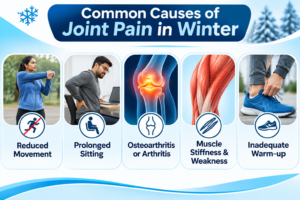
4. Orthopaedic Conditions That Can Cause Joint Pain in Winter
Winter-related discomfort should not automatically be attributed to the weather.
In some people, joint pain in winter may be an early or recurring symptom of an underlying musculoskeletal condition.
A. Osteoarthritis
Osteoarthritis is a joint condition involving changes in cartilage and other joint structures.
It commonly affects the knees, hips and hands.
People with osteoarthritis may experience:
Joint pain during movement.
Stiffness after waking up.
Discomfort after prolonged sitting.
Reduced joint movement.
Swelling or tenderness.
Morning stiffness associated with osteoarthritis often improves after movement, although symptoms vary.
The knee is particularly important because it supports body weight during walking, climbing stairs and standing.
Someone with knee osteoarthritis may notice difficulty taking the first few steps after getting out of bed. They may also experience increased discomfort during activities that place repeated loads on the knee.
For a more detailed explanation of different causes of knee pain and how they are evaluated, read our guide: Differentiating Knee Pain: A Clinical Guide for Early Diagnosis and Referral.
B. Rheumatoid Arthritis
Rheumatoid arthritis is an autoimmune inflammatory condition.
Unlike osteoarthritis, which primarily involves joint degeneration and associated tissue changes, rheumatoid arthritis involves inflammation of the joint lining.
Common symptoms include:
Persistent joint pain.
Swelling and warmth.
Prolonged morning stiffness.
Difficulty making a fist.
Symptoms affecting multiple joints.
A particularly important warning sign is prolonged stiffness accompanied by swelling in several joints.
Such symptoms should not be dismissed as normal joint pain in winter.
Early medical evaluation matters because inflammatory arthritis requires appropriate diagnosis and disease-specific treatment.
C. Frozen Shoulder
Frozen shoulder, also known as adhesive capsulitis, causes progressive pain and restriction of shoulder movement.
People may experience shoulder pain that gradually develops, difficulty raising the arm, difficulty reaching behind the back, pain while sleeping on the affected side and increasing restriction in shoulder movement.
Unlike temporary muscle tightness, frozen shoulder can significantly restrict the shoulder joint.
It should not be treated by aggressively forcing the arm through painful movements.
For more information about shoulder conditions, symptoms and treatment approaches, read Shoulder Pain Causes and Treatment: Complete Orthopedic Guide.
D. Cervical Spondylosis
Cervical spondylosis refers to age-related changes in the structures of the neck.
It may involve intervertebral discs, joints and surrounding tissues.
Possible symptoms include neck stiffness after waking, discomfort while turning the head, pain around the neck and shoulder region, and sometimes pain extending towards the arm.
Persistent numbness, progressive weakness or difficulty with hand coordination requires medical evaluation.
E. Lumbar Spondylosis and Mechanical Lower-Back Pain
The lower back supports body weight and transfers loads during bending, lifting, walking and sitting.
Discomfort in this region may be associated with lumbar spondylosis, muscle strain, disc-related problems, facet joint irritation, reduced trunk strength or prolonged sitting.
People may notice lower-back stiffness when getting out of bed, bending to wear footwear or standing after prolonged sitting.
The location of pain alone cannot identify the underlying condition.
F. Tendinopathy and Previous Soft-Tissue Injuries
Tendons connect muscles to bones and help transfer force during movement.
Tendinopathy may cause pain and stiffness around the affected tendon, particularly when starting activity after rest.
Common examples include Achilles tendinopathy, rotator cuff tendinopathy, patellar tendinopathy and tennis elbow.
Symptoms may feel worse during the first few movements and improve temporarily as the area becomes more active.
However, repeated pain during activity should not be ignored.
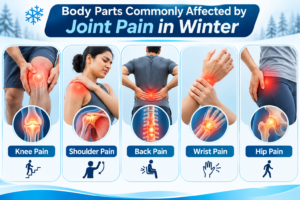
5. Which Body Parts Are Commonly Affected by Joint Pain in Winter?
Joint pain in winter does not affect everyone in the same way. The location of discomfort, activities that trigger it and associated symptoms can help identify possible causes.
Knee Pain in Winter
People with knee pain may find it difficult to straighten or bend the knee comfortably, stand after sitting, climb stairs or walk during the first few minutes after waking.
Possible causes include osteoarthritis, previous ligament or meniscus injuries, muscle weakness and joint inflammation.
The quadriceps, hamstrings and hip muscles all contribute to knee function.
Treatment should therefore consider the entire lower-limb movement system rather than focusing only on the knee.
Back Pain in Winter
Lower-back discomfort may become noticeable after sleeping, prolonged sitting or bending forward.
It may be associated with reduced trunk strength, mechanical back pain, lumbar joint changes, disc-related conditions or prolonged positioning.
If back stiffness improves with gentle movement but repeatedly returns, a clinical assessment may help identify the contributing factors.
Pain extending into the leg, numbness or progressive weakness should not be ignored.
Shoulder Pain in Winter
Shoulder discomfort may become noticeable while reaching overhead, wearing a shirt, combing hair, reaching behind the back or sleeping on one side.
Possible causes include rotator cuff problems, frozen shoulder, tendon irritation and other shoulder conditions.
Progressively restricted movement should be evaluated rather than treated as ordinary muscle tightness.
Hip Pain in Winter
People with hip pain may experience difficulty standing after sitting, discomfort while walking, pain around the groin or outer hip, difficulty putting on shoes and restricted hip rotation.
Possible causes include osteoarthritis, tendon problems and other hip conditions.
Hip strength and mobility also influence how the lower back and knees manage movement.
Wrist Pain in Winter
Wrist discomfort may occur during gripping, lifting objects, typing, opening containers or placing weight through the hands.
Possible causes include tendon irritation, arthritis, previous injuries and conditions affecting the surrounding nerves.
People who experience persistent wrist pain, swelling, reduced grip strength or numbness should seek an appropriate assessment.
Neck Pain in Winter
Neck discomfort may occur after prolonged positioning, muscle irritation or cervical spine conditions.
People may notice difficulty turning their head, tightness around the upper back or discomfort while working at a desk.
Severe neck pain accompanied by fever, headache, neurological symptoms or recent trauma requires prompt medical attention.
6. Is It Normal Winter Joint Pain or an Orthopaedic Problem?
Temporary stiffness and an underlying orthopaedic condition can feel similar at first.
However, certain patterns suggest that further evaluation may be necessary.
| Feature | Temporary stiffness may involve | Possible underlying condition |
|---|---|---|
| Duration | Improves relatively quickly | Persists or progressively worsens |
| Pain | Mild discomfort | Persistent or significant pain |
| Swelling | Usually absent | May occur with inflammation or injury |
| Movement | Improves with gentle movement | Remains restricted or painful |
| Affected areas | Often associated with inactivity | May involve specific joints or several joints |
| Daily activities | Minimal interference | Difficulty walking, dressing or climbing stairs |
| Progression | Comes and goes | Increasing frequency or severity |
Arrange a medical assessment if you experience prolonged stiffness, persistent swelling, increasing difficulty bending or straightening a joint, pain that interrupts sleep, recurring discomfort affecting daily activities, numbness or progressive weakness.
A suddenly hot, swollen and severely painful joint, especially with fever, requires urgent medical assessment.
7. How to Reduce Joint Pain in Winter: A Practical 10-Minute Morning Routine
A gentle morning movement routine can help prepare your muscles and joints for daily activity.
The purpose is not to force flexibility or eliminate pain immediately. Instead, the goal is to gradually restore comfortable movement after a period of inactivity.
The following routine is intended for adults with mild, uncomplicated stiffness. It is not a universal rehabilitation programme.
Exercise 1: Ankle Pumps
Purpose: Encourage comfortable ankle movement and prepare the lower legs for walking.
Sit or lie comfortably with your legs extended.
Point your toes away from your body.
Bring your toes gently towards you.
Repeat slowly without forcing the movement.
Suggested repetitions: 15–20.
Exercise 2: Heel Slides
Purpose: Encourage comfortable knee movement.
Lie on your back with both legs extended.
Slowly slide one heel towards your hips.
Bend the knee within a comfortable range.
Slide the heel back to the starting position.
Repeat with the opposite leg.
Suggested repetitions: 8–10 per leg.
Exercise 3: Pelvic Tilts
Purpose: Encourage gentle lower-back and pelvic movement.
Lie on your back with your knees bent.
Keep your feet comfortably positioned on the floor.
Gently tighten your abdominal muscles.
Tilt your pelvis so your lower back moves towards the floor.
Relax and return to the starting position.
Suggested repetitions: 8–10.
Exercise 4: Cat-Cow Movement
Purpose: Encourage comfortable spinal mobility.
Position yourself on your hands and knees.
Slowly round your back.
Move into a small controlled arch through the back.
Keep the movement comfortable.
Repeat slowly.
Suggested repetitions: 8–10.
Exercise 5: Shoulder Rolls
Purpose: Encourage comfortable shoulder and upper-back movement.
Sit or stand comfortably.
Relax your arms.
Slowly move your shoulders upwards.
Roll them backwards and downwards.
Repeat in a controlled manner.
Suggested repetitions: 10.
Exercise 6: Gentle Marching in Place
Purpose: Gradually increase activity and prepare the body for walking.
Stand near a stable support.
Lift one foot slightly.
Place it down gently.
Repeat with the opposite leg.
Maintain a comfortable rhythm.
Suggested duration: 1–2 minutes.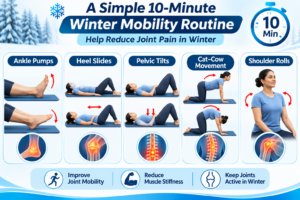
Start with comfortable movements rather than attempting every exercise at maximum intensity. Stop if sharp pain develops. People with recent injuries, significant joint swelling, severe pain or neurological symptoms should obtain individual guidance before attempting these exercises.
8. Winter Exercise: How to Keep Your Muscles and Joints Flexible
A morning routine can help, but maintaining mobility throughout the day is equally important.
A. Start with a Proper Warm-Up
Before walking, cycling or strength training, begin with low-intensity movement.
For example, walk slowly for five minutes, perform gentle shoulder movements, move the ankles and knees comfortably, and gradually increase your walking speed.
A suitable warm-up prepares the body for activity and can help reduce discomfort associated with sudden movement.
B. Include Strength Training
Strengthening exercises help improve the muscles that support and control joint movement.
Depending on your condition, a programme may include:
Quadriceps strengthening.
Gluteal strengthening.
Calf raises.
Trunk strengthening.
Shoulder stabilisation.
Resistance-band exercises.
Strength training is especially important for people with osteoarthritis.
For a broader explanation of how strength training supports mobility and healthy ageing, read Longevity Training for Strong Bones, Joints and Lifelong Mobility.
C. Choose Low-Impact Activities
People experiencing joint pain in winter may find some activities more comfortable than high-impact exercise.
Options include walking, stationary cycling, swimming, water-based exercise, controlled resistance training and appropriate mobility programmes.
The best activity is one that matches your physical capacity and can be performed consistently.
D. Avoid Sudden Increases in Exercise Intensity
A common mistake is to remain inactive for several days and then perform a demanding workout.
This sudden change in activity may overload muscles and tendons.
Increase exercise duration and intensity progressively.
9. Heat Therapy or Ice Pack: Which Is Better for Joint Pain in Winter?
People frequently use hot water bags, heating pads and ice packs when experiencing winter-related discomfort.
However, heat and cold have different purposes.
When May Heat Therapy Help?
Heat may be useful for some people experiencing general muscle tightness, chronic joint stiffness, mild discomfort after prolonged inactivity or muscle tension without an acute injury.
A warm shower or comfortably warm compress may help make movement easier before exercise.
Avoid excessive heat, direct skin contact with heating pads and sleeping with an active heating pad.
When May Ice Therapy Help?
Cold therapy may be useful for short-term pain relief after certain acute injuries or when swelling is present.
Always wrap ice in a cloth. Do not apply ice directly to the skin.
| Situation | Heat | Ice |
|---|---|---|
| General muscle tightness | May help | Not usually the first choice |
| Chronic stiffness | May help | May not be as comfortable |
| Recent ankle sprain | Usually not preferred initially | May help with pain |
| Acute swelling | Avoid unless advised | May help with short-term symptom relief |
| Morning stiffness | May help before gentle movement | Usually not necessary |
Neither heat nor ice treats the underlying cause of persistent joint pain in winter.
10. Common Mistakes That Can Make Joint Pain in Winter Worse
Mistake 1: Avoiding All Physical Activity
When movement causes discomfort, people sometimes stop exercising completely.
However, prolonged inactivity can reduce muscle strength and physical conditioning.
Mistake 2: Stretching Aggressively
Trying to force a stiff joint into a larger range of movement can increase irritation.
Stretching should be controlled and comfortable.
Mistake 3: Ignoring Persistent Joint Pain
Many people assume that discomfort during winter is simply part of getting older.
Although joint changes become more common with age, persistent pain should not automatically be considered normal.
Mistake 4: Using Painkillers Without Understanding the Cause
Painkillers may reduce symptoms, but they do not necessarily address the underlying problem.
Repeatedly taking medication without medical advice can also create avoidable risks.
Mistake 5: Returning to Exercise Too Quickly
After several inactive days, suddenly restarting intense exercise can overload muscles and tendons.
Gradual progression is safer and more sustainable.
Mistake 6: Treating Every Type of Joint Pain in the Same Way
A person with mild muscle tightness may benefit from gentle movement.
Someone with a swollen inflammatory joint, an acute injury or significant nerve symptoms may require a completely different approach.
11. Can Winter Air Pollution Increase Joint Pain and Muscle Stiffness?
Winter air pollution is an additional environmental factor worth considering, particularly in cities where stagnant air and weather conditions can contribute to pollutant accumulation.
During certain winter conditions, temperature inversions and reduced air circulation may prevent pollutants from dispersing efficiently.
Common air pollutants include:
PM2.5: Fine particulate matter that can enter deep into the respiratory system.
Nitrogen dioxide (NO₂): A pollutant commonly associated with traffic and combustion.
Ozone (O₃): A ground-level pollutant that can contribute to respiratory irritation.
Air pollution is well recognised as a concern for respiratory and cardiovascular health. Research is also exploring whether exposure to certain pollutants may influence inflammation and pain in people with existing chronic conditions.
Some studies involving people with chronic rheumatic diseases have reported associations between joint pain and certain weather or pollution indicators, including nitrogen dioxide. However, findings are still developing, and results for particulate matter have not been consistent.
This does not establish that winter pollution directly causes arthritis, joint damage or muscle stiffness.
For people already experiencing joint pain in winter, the relationship between pollution exposure, existing inflammation, activity levels and pain deserves further study.
How Can You Reduce Pollution Exposure During Winter?
Practical steps include:
Check local air-quality information before outdoor exercise.
Avoid strenuous outdoor activity during periods of very poor air quality.
Choose a cleaner indoor environment for exercise when outdoor pollution levels are high.
Maintain regular movement rather than stopping physical activity completely.
Follow medical advice if you have an existing respiratory or cardiovascular condition.
The aim is to reduce unnecessary exposure while maintaining an appropriate level of physical activity.
12. Can Nutrition Help Reduce Joint Pain in Winter?
Nutrition plays an important role in maintaining muscle function, bone health and general musculoskeletal wellbeing.
However, there is no specific food that can eliminate joint pain in winter or cure arthritis.
A. Protein for Muscle Maintenance
Protein provides amino acids required for muscle repair and maintenance.
Useful sources include milk, curd, eggs, paneer, dal, lentils, soy products, beans, chickpeas, fish and lean meat.
B. Vitamin D for Bone and Muscle Health
Vitamin D supports calcium absorption and normal bone health.
Dietary sources include fortified milk, fortified cereals, egg yolks and fatty fish.
People with suspected deficiency should discuss testing and supplementation with a healthcare professional.
C. Calcium for Bone Health
Calcium is important for maintaining bone structure.
Useful dietary sources include milk, curd, paneer, ragi, calcium-set tofu and some green leafy vegetables.
D. Omega-3 Fatty Acids
Omega-3 fatty acids are involved in normal cell function and inflammatory pathways.
Food sources include fatty fish, flaxseeds, chia seeds and walnuts.
E. Vitamin C and Collagen Formation
Vitamin C contributes to normal collagen formation.
Dietary sources include guava, oranges, amla, papaya, capsicum and tomatoes.
F. Magnesium and Muscle Function
Magnesium contributes to normal muscle and nerve function.
Food sources include nuts, seeds, whole grains, legumes and green leafy vegetables.
Nutrition supports general musculoskeletal health, but it cannot replace an orthopaedic diagnosis or a structured rehabilitation programme.
13. When Should You Consult an Orthopaedic Specialist for Joint Pain in Winter?
Not every episode of winter-related joint discomfort requires a specialist consultation.
However, recurring symptoms, progressive restriction and unexplained pain should be evaluated.
Consider an orthopaedic assessment if you experience:
Persistent knee, hip, shoulder or back pain.
Difficulty walking after waking up.
Repeated joint pain after sitting.
Restricted movement that is getting worse.
Pain that affects work, sleep or daily activities.
Recurring swelling or tenderness around a joint.
Seek urgent medical attention for a suddenly hot, swollen and severely painful joint, especially with fever; severe pain following a fall or injury; sudden inability to bear weight; new or progressive limb weakness; or back pain with new bladder or bowel control problems or numbness around the groin or saddle area.
What Happens During an Orthopaedic Assessment?
A proper evaluation may include:
1. Medical history: The specialist may ask when the pain started, how long it lasts, which joints are affected and whether symptoms improve with movement.
2. Physical examination: The examination may assess joint range of motion, muscle strength, joint swelling and tenderness, posture, walking and neurological function when relevant.
3. Diagnostic investigations: Depending on the suspected condition, investigations may include X-rays, ultrasound, MRI, blood tests or other condition-specific investigations.
Not everyone needs imaging or blood tests. The decision should be based on clinical findings.
14. How Physiotherapy Helps Improve Joint Pain and Muscle Stiffness in Winter
Physiotherapy can help people with appropriate musculoskeletal conditions improve movement, strength and daily function.
The treatment programme should be based on the underlying problem rather than the season.
A. Joint Mobility Training
Controlled mobility exercises help improve comfortable movement around affected joints.
B. Muscle Strengthening
Weak muscles may contribute to poor joint control and reduced functional capacity.
A physiotherapist may identify weakness in the quadriceps, gluteal muscles, calf muscles or trunk muscles and design an appropriate strengthening programme.
C. Flexibility and Movement Training
Some people benefit from targeted flexibility work.
However, stretching should be selected according to the affected tissues and the individual’s condition.
D. Gait and Balance Training
People experiencing lower-limb stiffness may alter their walking pattern to avoid discomfort.
A physiotherapist can assess walking mechanics and recommend exercises when appropriate.
E. Rehabilitation After Injury
Previous muscle, tendon and ligament injuries may contribute to recurring stiffness.
A structured rehabilitation programme can help restore strength, coordination and activity tolerance.
F. Individualised Exercise Progression
One person may need gentle mobility exercises, while another may require progressive resistance training.
A rehabilitation programme should consider age, medical history, pain levels, joint condition, muscle strength, physical activity and functional goals.
For more information about Move & Shine’s approach to movement assessment, joint mobility and rehabilitation, visit Orthopedic Wellness.
15. Why Choose Move & Shine for Orthopaedic Assessment and Joint Pain Care?
At Move & Shine Orthopaedic Wellness & Eye Hospital, Uttarahalli, Bangalore, orthopaedic care focuses on understanding the cause of discomfort and helping patients improve their movement and physical function.
Joint pain in winter, muscle tightness and stiffness can have different underlying causes.
A patient with knee osteoarthritis may need a different treatment approach from someone experiencing a shoulder condition, muscle injury or lower-back problem.
The clinical approach should therefore focus on assessment, diagnosis and appropriate treatment planning.
Orthopaedic and rehabilitation support may include:
Orthopaedic consultation for joint and musculoskeletal complaints.
Assessment of knee, hip, shoulder and spinal problems.
Evaluation of sports-related injuries.
Physiotherapy and exercise-based rehabilitation.
Joint mobility and muscle-strengthening programmes.
Guidance on maintaining long-term musculoskeletal function.
Move & Shine also offers an integrated approach to orthopaedic wellness, combining clinical evaluation with movement and rehabilitation strategies.
If joint pain is affecting your walking, exercise routine or daily activities, identifying the underlying cause is an important first step.
Move & Shine Orthopaedic Wellness & Eye Hospital
3rd and 4th Floor, YN Complex,
Near Royalmart Supermarket, Uttarahalli Main Road,
Chikkalasandra, Bengaluru, Karnataka – 560061.
Website: https://moveandshine.in/
Contact: 080-35836163 / 080-26392113